This week, people lay flowers at memorials. Names are read aloud. Flags are lowered. A trumpet sounds, then silence follows.
Behind every name was a life. A son, a father, a loved one. Someone who was expected home.
On 11 November 1918, at eleven o’clock, the armistice with Germany came into effect. On the Western Front, the guns fell silent after more than four years of war. For the survivors, an uncertain return to ordinary life began. For countless families, a place at the table remained empty for ever.
A small messenger also belongs in that remembrance. A bird that knew nothing of borders or war aims, yet connected people under the most difficult circumstances: the homing pigeon.
A remembrance that crosses borders
The commemorations around 11 November connect countries that once faced each other across the battlefield or sent their soldiers to Europe from far across the sea.
In the United Kingdom, Remembrance Sunday fell on Sunday 8 November this year. Armistice Day follows on 11 November. Australia also remembers the victims of war on that date. In the United States, 11 November is Veterans Day, a day honouring all American veterans. Germany holds its Volkstrauertag this year on Sunday 15 November, in remembrance of victims of war and violence. Names and traditions differ; the sense of loss crosses borders.
For our pigeon sport, these days carry a particular responsibility: to preserve the history of the birds and the people behind their flights.
When a message could mean life or death
In war, the failure of a message to arrive could be disastrous. Where were friendly troops? Was an encircled position still holding out? Was help needed?
Telephone lines could be destroyed. A connection that had worked a short time before could suddenly disappear. Homing pigeons were then one means of carrying messages. The monument in Lille explicitly recalls their role when other communications had failed.
Anyone who sees a pigeon return home today recognises its desire to reach its own loft. During the war, that familiar ability was used for messages on which human lives could depend.
The pigeon did not know their contents. The soldier who released it understood their significance all too well.
Vaillant, a last link with the outside world
One of the best-known examples is Vaillant, the French homing pigeon bearing ring number 787-15.
On 4 June 1916, Commandant Sylvain Raynal sent his last available pigeon from the encircled Fort de Vaux near Verdun. The message described the defenders’ desperate situation and asked for help. Vaillant reached his destination and later received an honourable citation. The flight belongs to the documented history of military pigeon communication.
It is tempting to tell such a flight as a story with a happy ending. The reality was harsher: the fort surrendered on 7 June. The delivered message had been unable to break the encirclement.
That is precisely what makes the story so moving. A pigeon could restore communication while the men awaiting a reply remained in danger.
Cher Ami: remembering with respect for the facts
Cher Ami also gained a special place in the remembrance of the First World War. The name is associated with American soldiers isolated in the Argonne in October 1918: the so-called Lost Battalion.
A famous rescue story grew around this pigeon. The Smithsonian, which preserves Cher Ami, nevertheless points to inconsistencies in the accounts. Military records do not establish with certainty which pigeon carried the decisive message on the afternoon of 4 October.
That qualification deserves a place in our remembrance. The true importance of pigeon communication needs no embellished tales of heroism.
Kaiser — a pigeon from the other side
On the German side too, homing pigeons carried messages through the war zone. One of the best known was Kaiser, born in Koblenz in 1917.
He flew for the German Army and was captured by American soldiers during the Meuse-Argonne offensive of 1918. He subsequently entered Allied service. After the war, he was taken to the United States, where he remained with the military Signal Corps. According to the Smithsonian, he died in 1949 at the extraordinary age of 32. His mounted body is preserved in the museum collection.
His history fits the spirit of 11 November. On both sides of the front, soldiers relied on the same small messengers. Behind the different uniforms lived the same hope that a message would arrive.
The pigeons knew no enmity. They flew to the loft that was familiar to them. People determined which message they carried along the way.
The people behind the wings
Behind every pigeon ready for service stood people: keepers, trainers and soldiers who got to know the birds and monitored their condition.
Pigeon fanciers recognise that daily care. Feeding, clean water, a good loft and attention to each bird’s behaviour: these are familiar tasks. In wartime, such simple care took on exceptional importance.
Civilians too were in danger. At its pigeon monument, the city of Lille remembers fanciers executed by the occupying forces for keeping homing pigeons. What was a hobby in peacetime could become life-threatening under occupation.
This history therefore touches our own directly: the loft, the club and the people who cared for their birds.
Lille and Brussels: remembrance in stone and bronze
At the entrance to Lille’s Citadel stands the monument ‘Au Pigeon Voyageur’, erected in 1936 at the initiative of organised pigeon sport.
A female figure represents peace. The monument also shows soldiers sending a message by pigeon from the trenches. The memorial connects the birds with the people who relied on their return. It also honours the pigeon fanciers who lost their lives.
Brussels too has a monument to pigeon fanciers and the pigeon as a wartime messenger: the ‘Monument aux Colombophiles et au Pigeon-Soldat’, on Schuitenkaai — Quai aux Barques. This shared history has thus been given a visible place in both France and Belgium.
Anyone who pauses at such a monument sees more than a bird in stone or bronze. They see the trust people placed in a small animal when their options were almost exhausted.
On 11 November, at eleven o’clock
When silence falls on 11 November, we remember the people who did not return. The wounded, those left behind and the families who carried the consequences throughout their lives.
In that silence, there may also be room for the animals people drew into their wars. For the pigeons released with a message, and the keepers awaiting their return.
For us, as pigeon fanciers, this has a special meaning. We know the moment when a bird appears on the horizon. We know how much attention and expectation can converge in a homecoming.
The soldier looked upwards with a different hope. Perhaps a pigeon’s arrival meant his message had been received. That someone knew where he was. That help was still possible.
That is why the pigeon and the soldier also belong in our remembrance of 11 November.
Being able to go home: for the pigeon, a familiar destination; for the soldier, a future he hoped for.
🇫🇷Northern France shines among Europe’s long-distance elite
Two fanciers in Europe’s top ten and three winning ace pigeons for Nord–Pas-de-Calais.
Nicolas Hamet holding a pigeon outside his loft. Photo: Fédération colombophile Nord–Pas-de-Calais.
Nicolas Hamet of Racquinghem finished seventh and Hervé Noyelle of Preures ninth in La Colombe Joyeuse’s 2026 European Cup. They were the leading French fanciers. Christiaens–De Smedt won overall.
Hamet and Noyelle placed sixth and seventh for the first two nominated pigeons. Thibaut Enguerand of Wismes was sixteenth for the first five nominated.
Samuel Turcq of Merris won European Long Distance Ace Pigeon 2026 with FR-23-110050.
Race
International position
Pigeons
Pau
49
10.606
Dax
303
7.229
Perpignan
406
10.784
Across several seasons, Éric Gheeraert of Houlle won Pau Ace Pigeon 2022–2026 with FR-20-209028. Didier Beaujean of Hargnies won Marseille Ace Pigeon 2022–2026 with FR-20-99309.
These results celebrate repeated performance, both within a season and across several years.
Objections may be submitted until 15 November 2026.
From Argentine distance racing to American club life: five reports about sport, friendship and community. Including a look back at an Australian initiative.
AI-generated conceptual illustration: racing pigeons connect the world.
Argentina — an 850-kilometre distance race
On 8 October, InfoPico reported an 850-kilometre race from Curuzú Cuatiá to General Pico. Pablo Rossetto’s Don Pedro loft had the fastest pigeon; El Chasqui opened as leader of the long-distance championship.
In Da’an, Jilin province, a pigeon competition formed part of the autumn cultural and tourism programme. Economic Daily places the competition between late September and mid-October 2026.
The AU Convention is announced for Tampa in December 2026. Racing Pigeon Digest also describes initiatives bringing veterans, first responders and new fanciers together through pigeon racing.
Argentina — a centenary with international invitations
The Argentine federation presents the Derby Centenario 2026 in Marcos Paz, linked to Ibero-American and FCI competitions. Fanciers from the Benelux countries and the United States have also been invited.
Australia — looking back: a centenary for the hospital
On 29 August, ABC reported a planned centenary race by Warrnambool’s club to support hospital equipment. The source does not confirm the outcome and also discusses concerns about bird flu.
Three international pigeon sport reports: European ace pigeons, South Africa and Zimbabwe.
European marathon racing — ace pigeon rankings published
On 17 October, Colombe Joyeuse published the Pau and Marseille Ace Pigeon rankings for 2022–2026 and the European Long Distance Ace Pigeon ranking for 2026. The announcement gives 15 November 2026 as the deadline for objections. Full rankings are available through the source.
Want to know more? Click the source links in this article.
According to PIPA’s report dated 15 October, Dr Henk de Weerd’s Sunfire Wing won the 601-kilometre AFRIKAPRO final against 1,212 pigeons, at 1,229 metres per minute. Die Painters & SG Ullrich won the Black Jacket competition for best fancier.
The Victoria Falls World Challenge Pigeon Race reports that pigeon intake remains open. The final is scheduled for Friday 2 July 2027. The organiser advertises a total prize fund of one million US dollars across the final and other competitions. Consult the organiser for entry conditions and arrangements.
More than 1,300 fanciers responded to an NPO poll about the maximum number of pigeons entered per race. According to the federation, a clear majority sees scope for adjustment. This is a poll, not an announced rule change.
Junior fanciers racing independently in their own name can enter until 30 October. The competition is for those under 21 on 1 January 2026 who meet the membership and entry requirements. See the source for the full rules.
The RPRA is accepting pre-orders for GB27 rings. Clubs and paid-up members can order online; orders by form or telephone are also possible. Rings are supplied in multiples of 20. According to the announcement, parcels will be dispatched in the first week of December.
Canadian researchers track eyes in flight. Tiny cameras reveal how homing pigeons adjust their gaze while flying and landing.
Redactie
Artistic illustration created with AI; not a photograph of the actual research setup.
Watching pigeons return, we admire the ease of their landing. Behind that familiar movement lies a finely coordinated relationship between vision and flight.
Taking a camera home
Anthony B. Lapsansky, Douglas R. Wylie and Douglas L. Altshuler, affiliated with institutions including the University of British Columbia and the University of Alberta, studied eye movements in homing pigeons. Their paper appeared online in Current Biology on 6 July 2026, followed by the journal issue on 3 August.
The team developed a camera system with a miniature computer and motion sensors. The complete equipment weighed 27 grams. A fitted hood held the camera near the head; a small backpack carried the other components. The pigeons flew a familiar route home, where the recordings were collected.
Watching the landscape move
As a pigeon flies, images move across its retina. Nearby objects appear to pass faster than distant ones. This visual movement, called optic flow, provides information about the bird’s own motion.
The pigeons made slow eye movements matching the visual flow along the horizon. The researchers interpret this as stabilising the image in the lateral visual field. Laboratory tests using moving computer images supported that explanation.
A different gaze for landing
When approaching a perch, both eyes turned inward towards the landing target. This may help the pigeon judge depth by comparing the slightly different images from its two eyes.
What can fanciers learn?
The study improves our understanding of visual flight and landing control. It did not test links between the appearance of an eye, racing performance or breeding value. Nor does it by itself explain long-distance homing.
Questions remain. The research team points to another study with apparently different results. Differences in the speed of the visual environment may help explain this. Further work is needed to understand how pigeons adapt their eye movements to different conditions.
Learning from pigeons
The findings could inspire flying robots. Movable camera systems might eventually help drones make better use of visual information, but that remains a potential application.
For fanciers, the fascination is closer to home. The next time a pigeon comes in to land, look again: there is more eye work behind that smooth arrival than we can see.
The man who knew everything, except when his pigeons would arrive
The weekly satire
My clubmate had earned his diploma in pigeon expertise. He must have done, because for several weeks he had known exactly what was wrong with pigeon racing.
We used to just talk about our pigeons.
“Did they come well?”
“Could have been better.”
“Same here.”
Then we had a beer. A straightforward existence.
But these days he no longer came to the club to basket his birds. He came to enlighten us.
“It all starts with the gut flora,” he said, taking a pigeon out of his basket, which immediately shat on his shirt.
He studied the stain.
“See? Exactly what I mean.”
I asked whether he had won a prize on Saturday.
Apparently that was an outdated way of looking at the sport.
“You have to look at the bigger picture.”
The bigger picture consisted of eighteen birds sent and one small prize near the bottom. But that was down to the liberation.
The week before, it had been the wind.
And before that, an inversion.
I wasn’t quite sure what an inversion was, but I had gathered that it mostly affected you when your neighbour clocked before you did.
“Beer?” asked the man behind the bar.
“Please.”
“Alcohol-free?”
“No, they put all sorts in that these days.”
He leaned towards me.
“Have you actually looked into DNA yet?”
I said that for now my basketing sheet was giving me quite enough trouble.
That was precisely the problem, he thought. The sport was standing still because people weren’t developing.
He himself had watched three videos, half-read two articles and joined a group chat where somebody knew a vet. His scientific grounding was therefore considerably broader than that of most vets.
“You need to watch the markers.”
“Which ones?”
He glanced at his phone.
“The important ones.”
A month earlier he had said you could recognise a good pigeon by its eye. Before that, by its throat. And in the spring he had spent five minutes feeling between the toes of one of my yearlings.
“That’s a proper one.”
It was now living with a lady in Brittany.
But according to my clubmate, that could actually be evidence of exceptional qualities.
“Birds like that find their own way.”
He knew everything about transport too.
Too many birds in a basket was wrong. Too few was wrong as well, because they missed the calm of the group. An early liberation was irresponsible. A late liberation was asking for trouble.
“So when should they go up?”
“It depends.”
The liberation committee could learn a thing or two from that.
He was brief about the committee.
“Those people have no idea what matters to fanciers.”
Would he like to serve on it himself?
No, Thursday evenings didn’t suit him.
A subcommittee, then?
He was more of a big-picture man.
That was true. Whenever chairs needed putting out, he was usually already home.
His latest speciality was electronic timing.
“Do you actually know where your data goes?”
I said I was happy enough if my arrival time stayed on the clock.
He shook his head.
“The cloud.”
He said it as though a van full of intercepted loft lists were hovering above the clubhouse.
“And those electronic rings? They’re making us dependent.”
Five minutes later he asked whether somebody would connect his clock. He didn’t dare press anything himself.
“You can lose everything before you know it.”
As the last basket was being filled, he started on the future.
We needed the youngsters back. Costs had to come down. Racing had to become fairer. The federation had to be more transparent. Fanciers had to listen better.
Especially that last bit.
By now he had spent so long explaining how everything ought to be done that his own birds were still in the corridor.
“How many are you sending, actually?” I asked.
“Not this week.”
“Why not?”
“They’re not right.”
There was a short silence.
The man behind the bar put a fresh beer in front of him.
“Some more beer nuts?”
“No,” he said. “Too many calories.”
I looked at his basket. A beak poked out through a gap.
I had the feeling somebody in there would quite like a second expert opinion.
Editorial team
09 · 11 · 2026
🇵🇱 🇩🇪 After three years, still knowing where home is
A breeding cock that escaped in Poland appeared at his former loft in Heidelberg almost two days later, some 925 kilometres away.
Three years in another country, in an aviary. Yet the old loft had not been forgotten.
According to a report published by the German pigeon federation, a pale-coloured breeding cock escaped on 18 July 2026 at Radoslaw Mroczka’s loft in Samokleski, Poland. During feeding, he slipped past Mroczka’s wife and outside.
On 20 July, Ariel Thiemel and his loft partner Ullrich noticed a pigeon in Heidelberg persistently trying to enter a particular loft compartment. Once allowed inside, he flew straight to a nest box.
The ring explained the mystery: they had given this cock to their Polish fancier friend three years earlier.
A telephone call connected the two lofts again. They agreed to return the pigeon at a forthcoming exhibition.
According to the federation’s report, the two places are about 925 kilometres apart in a straight line. The actual route, resting places and flying time are unknown. This is a return reported by fanciers, not a recorded race performance.
Finding that familiar place again is what makes the story remarkable.
A loft can change owners. For a pigeon, the meaning of home sometimes lasts a surprisingly long time.
Eight young fanciers, a shared task and a meeting between generations: in Brummen, the future of pigeon racing takes practical shape.
The Netherlands
Hans Eijerkamp celebrated his 92nd birthday on 25 October 2026. According to the report on Hans and Evert-Jan Eijerkamp’s website, he remains closely involved with his pigeons and greatly enjoys supporting young fanciers.
Working together in the breeding loft
On 23 and 24 October, eight young Dutch pigeon fanciers visited Greenfield Stud in Brummen. Together with loft managers Rick and Nick, they cleaned the breeding lofts and helped prepare the facilities for the coming breeding season. On 24 October, they posed for a group photograph with Hans and Evert-Jan.
As a thank-you, the helpers received pigeons to strengthen their own teams. The family’s report highlights Hans’s pleasure in seeing young people develop in the sport and sharing his experience with them.
An invitation to take part
For our editorial team, the appeal of this story lies in its simplicity. A young person who feels welcome at a loft can ask questions while working. Conversation starts around the birds and their daily care. Interest can then develop into involvement.
Any club can take the first step: invite a few beginners for a morning at a loft, show them how preparations for breeding work and make room for their questions. Experience only becomes a future for the sport when someone is willing to share it and someone else has the opportunity to learn.
The visit to Brummen is an engaging example of such a meeting. It also shows how many different ages pigeon racing can bring together through a shared passion.
Australia brings pigeon fanciers together in Adelaide
Loft visits and international guests at the national convention in November.
In Adelaide, pigeon racing will focus on meeting fellow fanciers in mid-November. The South Australian Homing Pigeon Association and the South Australian Long-Distance Club are jointly organising the SAHPA Racing Pigeon Convention. The full programme runs from 12 to 15 November 2026, beginning with an informal welcome on Thursday evening.
Friday features visits to four lofts. Participants can see everyday practice and exchange experiences with the fanciers behind the pigeons. Saturday and Sunday sessions take place at Angle Park.
Belgian fancier Tom Van Gaver and Eijerkamp manager Henk Jurriëns are announced as Saturday guest speakers. Sunday brings a panel of Australian fanciers with international guest Esther Noorderijk. Auctions will also raise funds for the organisations involved.
The combination of loft visits, conversation and shared meals makes the programme appealing. A talk can convey knowledge; a loft visit also raises the questions that arise at home between the feeding trough and nest boxes.
Adelaide offers a fine opportunity to exchange experiences across borders. Visitors have room to learn both from the guest speakers and from one another.
Experienced mentors support pigeon racing in the Western Cape
South African organisation reports membership recovery and provides personal guidance to young participants.
Giving a young fancier a place in pigeon racing takes more than a registration form. At the Federated Board of Homing Unions, active in South Africa’s Western Cape, guidance is part of the approach: according to the organisation, every junior or young participant is assigned an experienced mentor.
The FBHU began a Junior Racing Pigeon Championship in 2019 with 27 participants under eighteen. Its organisation profile says participation grew to more than eighty in 2020–2023. The mentor helps newcomers build knowledge and take part in races.
The broader membership message is also positive. In his opening message for the 2026 season, the chairman reports recovery to more than six hundred members. The Cape Provincial Homing Union also returned after a lengthy period of inactivity as the fourteenth affiliated union.
These figures concern the FBHU and do not describe the trend in South Africa’s total membership. The seasonal message does not state the size of the increase over the preceding year.
The organisation also sees a social role for itself. It aims to offer opportunities to disadvantaged communities through pigeon racing and teach young people responsibility and care for animals.
For European clubs, the practical guidance is particularly interesting. Beginners have questions about housing, care, training and participation. A regular mentor gives them someone to turn to.
This is not a proven explanation for the reported membership recovery. It is a concrete example of supporting the first steps in the sport: welcoming young people and appointing someone who actually helps them get started.
Eighty years of Les Ailes d’Acier with racing pigeons and schoolchildren
Eleven clubs contribute to the anniversary in Fort-Mardyck.
An eightieth anniversary is a good reason to look back. Les Ailes d’Acier in Fort-Mardyck, near Dunkirk, is also using its anniversary to introduce pigeon racing to the public.
A free anniversary day is announced for 11 November 2026 in the function hall on rue du Général Leclerc. According to the local announcement, around two hundred racing pigeons will be exhibited and all eleven clubs of the Dunkirk groupement are participating.
The club’s history will feature in the presentation. There will also be stands, and schoolchildren will be involved through an exhibition and a drawing competition about pigeon racing.
This combination makes the initiative appealing. Visitors can see the pigeons up close, while children discover the subject through drawing. Fanciers have an opportunity to explain what draws them to the loft every day.
An anniversary can thus become more than a celebration for existing members. In Fort-Mardyck, it is also an invitation to the surrounding community to discover a club that has existed for eight decades.
Everyone has good pigeons. Until the results appear.
Artistic illustration of wind currents over Europe; not a current weather map.
My first reflex: the entire result is wrong.
It usually happens on Saturday afternoon, as soon as I find my name. These days I have to scroll so far down that my phone asks whether I want to go to next year.
Keep calm, I tell myself. Look for nuance. Perhaps the winner simply had better pigeons.
Fortunately, that thought passes of its own accord.
There are plenty of other explanations. The wind. The liberation. The line of flight. The location. Especially the location. My loft has been in the wrong place for thirty years, except on the Saturdays when I win.
Then it is perfectly situated.
A fancier twenty kilometres away had almost all his birds home before my first appeared.
‘Good pigeons,’ he said.
That is the trouble with people like that. You try to have a serious discussion about unfair conditions and they start talking about pigeons.
Still, I congratulate him.
‘Brilliant flying. Of course, you were in exactly the right spot.’
Sportsmanship costs nothing, provided you are allowed to add a subordinate clause.
At the club I otherwise keep a low profile. I merely say that the liberation was a disgrace, the result raises questions and perhaps the committee should listen to the members for once.
‘Did you attend the meeting?’ asks the chairman.
No. I cannot make time for everything. That evening I had to explain on Facebook everything that is wrong with the club.
At home I check my preparation. It can hardly be to blame. My feeding schedule has so many colours that my wife thought we were redecorating the kitchen.
I also give three kinds of minerals and a supplement that promises explosive performance on the packet.
The only thing that has exploded so far is my bill.
But you have to give these things time. The manufacturer recommends six weeks. By then the racing season is over and nobody can prove it does not work.
My neighbour just gives feed and clean water.
He clocks early too.
An extremely damaging example for the sport.
Fortunately, I have modern technology. My phone tells me to the second that nothing is coming in. In the old days I still had to go outside for that.
I now have three weather apps. The first forecasts a west wind, the second a northwesterly and the third favourable conditions.
I use the first two for my explanation afterwards. I deleted the third.
The group chat also provides valuable information.
‘Wonderful race!’ someone writes.
He has an early one.
‘Who authorised this liberation?’ writes another.
He is still waiting.
A third just sends a photo of his clock.
You need to avoid him for the rest of the week.
Personally, I only judge once my first pigeon is home. If he is early, it was a fair contest. If he is late, we must seriously ask ourselves where the sport is heading.
After two hours of staring, a speck finally appears.
I jump up, knock over my coffee and shout something that must never appear in any club’s minutes.
A woodpigeon.
My wife says I should be glad I can still get out of a chair so quickly at my age.
A little later my first actual competitor arrives. He lands on the roof and looks calmly around, as though he has come to value the house.
I whistle. I rattle the feed tin. I crouch down and make noises that would prompt my wife to book a doctor’s appointment if she did not know what was going on.
The pigeon starts preening.
There sits a pedigree worth thousands of euros, meticulously grooming his backside while every second counts.
‘Come on, darling,’ I whisper.
That is phase one.
What I say in phase two stays between me and the gutter.
Once inside, he turns out to be barely tired. He drinks a little, eats a little and starts courting his hen.
I have spent three hours on edge. Apparently, he has had a lovely day out.
That evening I study the result again. The winner is still at the top. Even after refreshing.
I look at his sales advertisement.
‘Exclusively from rigorously selected performance lines.’
As it happens, I have those too. I just have not yet established which performance I am selecting for.
My wife asks whether it might be wise to start with fewer pigeons.
I explain that she does not understand the sport.
Then I order two youngsters from the winner.
After all, you have to do something about that location.
Before bed I make a decision. Next week, less time on the phone. Less grumbling. More faith in my pigeons. Simply enjoy a wonderful hobby.
‘So you are entering again?’ asks my wife.
‘Of course.’
‘With the same pigeons?’
‘Yes.’
‘From the same loft?’
‘Yes.’
She looks at me for a moment.
I understand her doubts. She has not seen the wind forecast yet.
Editorial team
28 · 10 · 2026
The champion’s secret
A satirical pigeon racing story
It is Sunday morning. The village is still asleep, but a meeting is already under way in my garden. The pigeons sit on the roof, looking at the feed bowl. I suspect they think I am late.
Inside, the coffee is ready. A pigeon racing post appears on Facebook: the champion’s secret has been discovered.
Good news. The last secret was only three weeks old and I had just bought a bag of it.
According to the post, one special feather can identify a future winner. There is a beautiful photograph and an explanation so convincing that I nearly take my coffee straight to the loft.
But first I read the comments.
One fancier has found the feather on his best pigeon. A second has too. A third says his best pigeon has no such feather at all.
He is advised to look again.
A fourth says he has selected for that feather for years. His neighbour replies that he has not won a prize for years either.
“That’s true,” he replies. “But I have beautiful feathers.”
Further down the village I see a well-known fancier cycling past. He has won more first prizes than I have bought bags of feed. Has he read the news?
Should I call out? “Have you heard? All these years we have been looking at the wrong feathers!”
But he cycles calmly on. He would probably say what he always says: “Let’s see the pigeon come home first, then we can talk.”
That is awkward for someone who likes to give an opinion before the race.
At the loft I look at my old hen. She has no famous pedigree, but she has often returned while I waited impatiently, watching the sky.
I gently pick her up and examine her wing. One feather does look different.
For a moment I think I have found the secret.
Then I see she is moulting.
Meanwhile a Facebook advertisement appears: “Discover the champion feather yourself!” For an attractive price I can buy a magnifying glass and a guide.
I look at the hen. She looks at the feed bowl.
We both know where my money would be better spent.
Soon the pigeons are eating. I silence my phone and stay to watch them.
Perhaps tomorrow someone will discover the feather means something else. Or a new secret will appear.
I just hope it comes in a smaller bag this time.
Editorial team
27 · 10 · 2026
Sharing a loft: an Australian welcome to pigeon racing
In Townsville, fanciers are finding ways to introduce pigeon racing to people who do not have a loft of their own.
For someone new to the sport, the first step can seem daunting. Where do you begin without a garden, a loft or experience?
In Townsville, Queensland, fanciers are trying to make that first step easier. According to an Australian newspaper, two people can race from the same loft, with an experienced fancier housing and caring for the birds.
Discovering the sport
A loft takes space, time and money. Sharing an existing loft gives a newcomer the chance to help, ask questions and learn about care and racing. They can see how the pigeons are fed, how their health is monitored and how much preparation a race requires.
Fancier Rodney Lowe says children are involved too: at some lofts family members or neighbourhood children help and get to know the birds at close quarters.
Following a young pigeon
The article also describes sponsorship: for 10 Australian dollars, someone can support a young pigeon and receive updates on its progress. The trainer cares for the bird, and any proceeds from the named Emerald Gold Band race are shared between sponsor and trainer.
An idea for clubs?
Rules differ between countries and determine whether and how more than one person may compete from a loft. The wider idea is simple: let people experience pigeon racing for themselves.
A club could invite interested people to follow a fancier through the season, from care and basketing to waiting for the birds to return, or arrange an introductory day for children and parents.
The sport has passed from person to person for generations. Sometimes that interest begins when someone opens the door to their loft.
Pigeon racing is good for you. Until the results arrive.
A watch demanding more exercise, a neighbour who always wins and an AGM that raises the pulse. A satirical look at the healthy life of a pigeon fancier.
Pigeons above the loft: fresh air, open space and a reason to step outside every day. Photograph supplied by the editorial team.
My watch thinks I should exercise more.
It has no idea. I have already been to the loft seven times this morning. Twice with feed, once with water and four times because I thought something was happening.
Nothing was happening.
But you have to keep an eye on things.
According to my watch, I have taken too few steps. Apparently the distance between my chair and the loft is not enough for a healthy life. Bending, lifting, scraping, carrying and cleaning a drinker in which an entire nature reserve has developed since yesterday do not count.
Climbing stairs does.
Dragging a twenty-kilo sack of feed upstairs apparently only counts if you wave your wrist at the same time.
So I considered attaching the watch to a young pigeon. I could finally meet my exercise target sitting down.
Nobody measures the greatest health benefit of pigeon racing, either: fresh air.
We stay outside long after everyone else has gone indoors. Especially when one pigeon is still missing.
“You’ll get cold,” people say.
True. But somewhere between here and the liberation point is a pigeon that has apparently decided my immune system needs more training.
The eyes get plenty of exercise too. You look southwest, southeast and then north just in case, because the neighbour has already clocked three and claims they all came from behind.
The neighbour always says that.
His pigeons never just come home. They come low, high, from behind, alone, well clear or straight from the right direction.
Mine usually arrive when I am in the toilet.
The sport is excellent for mental health as well. You learn to put things in perspective.
At least, that is what everyone who has won says.
Anyone a minute short mainly learns arithmetic. The wind. The distance. The loft position. The time lost when the pigeon first sat on the roof ridge to evaluate its own performance.
Then come the results.
A results sheet is a document showing that someone with less knowledge, worse feed and, in your opinion, entirely unsuitable pigeons has beaten you again.
It keeps the brain flexible.
After all, you have to find an explanation.
Fortunately, club life offers plenty of opportunities to discuss it. Around a table, coffee in hand, listening to one another. Until someone asks whether next year we might use a different liberation point.
Then everyone’s heart rate rises without anyone leaving their chair.
A gym charges money for that.
We have an annual general meeting.
Financially, pigeon racing is healthy too, of course. I only buy essentials.
It is just that the essentials expand every spring.
A supplement for immunity. A product for recovery. Something for the airways. Something for the gut. And an extra cupboard to store all that natural health.
“How much did that cost?” they ask at home.
“It was on special offer.”
In pigeon racing that is not an answer. It is an accounting method.
Yet there I was at the loft again this morning. One pigeon landed on my shoulder. Another tapped my hand. Otherwise, a moment of quiet.
No results, no meeting and nobody asking why I still kept that particular bird.
My watch vibrated.
Time to relax.
I switched it off.
For today, we finally agreed.
Editorial team
24 · 10 · 2026
🇬🇧Gustav flies back into remembrance
A new painting by English artist Michelle Rose brings an extraordinary messenger back into view. With The First Messenger, she honours Gustav, the homing pigeon who carried an important news report from the waters off Normandy to England on D-Day.
In an article published on SussexWorld on 21 October 2026, Rose, from Guestling, presents her tribute. She has always been creative but says she only began painting on paper on 25 July this year.
For The First Messenger, she combined different materials and techniques. Gustav appears against a Channel seascape, with warships, aircraft, a soldier and remembrance poppies. The composition places the pigeon within the events in which he played a part.
With the British remembrance period approaching, Rose wants to honour both the people and the animals who served during the war. The painting is not for sale. She is offering it to local museums for temporary display. The article does not yet name a confirmed exhibition venue.
A small messenger with an important mission
On 6 June 1944, Reuters correspondent Montague Taylor was aboard a ship off the Normandy coast. He entrusted a report on the landings to Gustav.
According to The D-Day Story museum in Portsmouth, Gustav was a cock pigeon bred by Frederick Jackson of Cosham. With the message attached to his leg, he flew roughly 240 kilometres to RAF Thorney Island. The journey took five hours and sixteen minutes in a strong headwind. His handler, Sergeant Harry Halsey, received him on arrival.
At the start of the operation, the Allied fleet maintained radio silence to give the German defenders as little information as possible. This gave Gustav’s flight particular significance: he brought an early report of the landings back to Britain.
In September 1944, he received the PDSA Dickin Medal, recognising exceptional animal courage and devotion to duty. During the Second World War, 32 pigeons received this distinction. Gustav’s medal can now be seen at The D-Day Story.
A memory that keeps travelling
Michelle Rose’s painting gives this history a new face. It invites viewers to remember the animals on whom people relied.
For pigeon fanciers, Gustav’s story touches on something familiar: a pigeon’s ability to find its way home. On that flight across the Channel, this ability became part of a much larger story. More than eighty years later, it is still inspiring someone to pass on his name.
Jacksonville: young enthusiasm gives pigeon keeping wings!
A child stops in wonder beside a pigeon cage. A young exhibitor proudly presents a bird. An experienced fancier happily explains what to look for. This is where the future of our hobby begins!
AI-created concept illustration: young pigeon enthusiasts learn from an experienced fancier.
In Jacksonville, Illinois, that enthusiasm has room to flourish. On 21 November 2026, the Jacksonville Area Pigeon Club will hold its 52nd annual pigeon show. Youth contests, rare breeds and opportunities to buy, sell and trade birds promise a day of encounters and discoveries.
Taking part and discovering
Young exhibitors aged 5 to 18 have their own category. Advance entry costs two dollars per bird, half the open-show rate. It is a practical way to make participation more accessible.
Imagine the excitement: you have cared for your pigeon at home and prepared it carefully. Now you can show what you have worked for. A prize is wonderful, but even a first appearance can spark an interest that lasts for years.
Deep roots and fresh energy
The club began in 1973 with twelve enthusiasts. Its anniversary show in 2023 featured 33 breeds. Young people also had opportunities to practise judging pigeons and identifying breeds, an engaging way to develop their interest.
Looking closely brings questions. Why does this pigeon hold its wings that way? What makes this breed special? How do you keep a bird in such good condition?
For experienced fanciers, these are rewarding questions: a chance to share something they have enjoyed for years. For beginners, a whole world opens up.
Enthusiasm worth sharing
European clubs can take inspiration too. Invite young people, give them something to do and take their curiosity seriously. Let them examine a pigeon, recognise a breed or discuss an assessment with a judge.
A show can produce much more than results. Friendships can grow, ideas can circulate and new enthusiasts can take their first steps.
Another Jacksonville show is approaching. May its young participants go home with a prize, a good story and above all the desire to continue.
A spark of pigeon enthusiasm today can bring a lifetime of enjoyment!
Inside a transport lorry for Barcelona 2025: baskets and drinking troughs requiring daily attention on the journey. Photo source: PIPA, Barcelona International 2025. PIPA
When the pigeons leave for Barcelona, the waiting begins for their fanciers. For the convoyers, a period of intensive work begins: caring for the birds, replenishing water, checking their condition and finally deciding when they can safely be released. Behind the famous race lies a story of dedication, improvisation and occasional smiles.
Cureghem Centre: the organisation behind the tradition
The journey to Barcelona cannot be told without Cureghem Centre. This Belgian organisation was closely associated with the race for many years. The Catalan sports encyclopaedia already records a Cureghem Centre liberation in Barcelona in 1924, supported by the then Reial Societat Columbòfila de Catalunya. Its relationship with local pigeon racing therefore has deep roots.
From 1951 through 2020, Cureghem Centre organised the post-war Barcelona International. That tradition was not guaranteed. According to a historical account, only 885 pigeons competed in 1956, and ending the race was even considered. A year later, entries rose to 3,350. Barcelona continued to grow into a meeting point for fanciers from different countries.
Behind the name were people: chairman Patrick De Muylder, secretary Luc De Geest, Guy Libotte and many drivers, attendants and volunteers. Their work extended from preparing the journey to honouring the winners. From 1989, the Constant Vanden Stock stadium in Anderlecht was the regular venue for the annual celebration; in 2018, it moved to Wolvertem. The late convoyer Franky Delbecque was also remembered there. De Geest spoke of the charm of a printed result: a tangible reminder to leaf through later. Cureghem Centre’s story therefore embraces the journey, the people and the memories that hold the sport together.
In the days of rail transport, head convoyer Guy Libotte divided the work among ten pigeon wagons. At stops, the attendants replenished the water. The route passed through Vierzon, Limoges, Brive and Narbonne before reaching the Spanish border. When the men ate grilled chickens there, a customs officer joked that he now understood why so many Barcelona pigeons failed to return.
Another recollection from that railway era shows how quickly circumstances could change. In clear weather, the convoyers had already begun unloading baskets. A telephone call to the weather institute changed everything: bad weather along the flight route and a strong mistral around the Pyrenees. Libotte stopped the work immediately. The pigeons had to wait another day. Blue skies at the liberation site told only part of the story.
Libotte became a familiar face at Barcelona. In 2017, Cureghem Centre honoured his fifty years of service as a convoyer. The following year, at the French champions’ presentation, he received a medal from the French Senate. Half a century accompanying pigeons is a remarkable expression of loyalty to the sport.
The journey remained an undertaking even with lorries. In 2018, the agreed liberation site became unavailable only hours before the convoy arrived. The organisers moved to a hotel car park near Vilafranca, about 45 kilometres further west. Meanwhile, the pigeons spent an afternoon in the cool surroundings of a vineyard.
The reporter met a group of Dutch fanciers led by Wil Vollebregt, the 2013 Dutch national Barcelona winner. They had come to see the liberation but had to fly home on Friday while the race was postponed. The pigeons could wait; their aircraft could not. A fancier had even travelled from Uruguay solely to witness the release. Barcelona draws people from far beyond the participating countries.
Albert van Dongen’s account of the 2020 journey highlights the daily care. The convoy travelled through Châteauroux, Cahors and Fitou to Cunit, near Barcelona. At every stop, the pigeons were checked and drinking troughs topped up as needed. Overnight stops meant cleaning, feeding and replenishing water reserves. In temperatures of 32 to 34 degrees, drinking remained a constant concern. After liberation, the long return journey still lay ahead.
The same responsibility applies to other international races. During the journey to Narbonne in 2014, temperatures reached 38 degrees. When water reserves were almost exhausted, the local fire brigade and municipality helped replenish them. Such helpers also belong to the story behind a liberation.
Since 2021, Barcelona has been organised by the Belgische Verstandhouding — Entente Belge. The extreme heat of 2025 again underlined the preparation required. Belgian, French, German, English and Luxembourg pigeons were divided among five lorries instead of four; the Netherlands provided its own transport. Additional space between baskets improved ventilation. On arrival, the lights remained on for an hour to give the pigeons time to drink. At Vilanova del Vallès, the municipality helped provide a mains water connection.
The railway wagons have disappeared, but the responsibility still travels with the birds. Behind every liberation lie long days, short nights and decisions that the fancier at home barely sees.
When the pigeons take to the sky, their journey home begins. For the convoyers, the empty baskets, clearing up and return trip remain. They too are then longing to get home.
Want to know more? Click the source links in this article.
🇫🇷ALCN Normandy forty years of pigeon racing in a family atmosphere
Forty years of long-distance racing, sporting achievements and the people behind the association.
Amicale des Longs Cours de Normandie
Results tell us much about pigeon racing, but they do not tell the whole story. Behind every race are people who prepare, organise, help and wait together for their pigeons to return. At the Amicale des Longs Cours de Normandie, known as ALCN, these people are the heart of the association.
In 2026, ALCN celebrated its fortieth anniversary. On Sunday 22 March, its members gathered in Surville to mark forty years of long-distance racing, international competitions and a shared passion.
Sharing a passion for long-distance racing
The association’s name expresses its purpose: bringing long-distance fanciers together. Barcelona, Marseille, Narbonne and Perpignan demand patience, careful preparation and confidence in the pigeon.
ALCN enables members to take part in these international races by organising basketing and their collective participation. This involves considerable voluntary work: checking pigeons, verifying records and preparing baskets. Its basketing instructions specify responsibilities and clear rules for participants.
Basketing is also a chance to meet. A coffee, a conversation about preparation, hopes for the race and a helping hand with the baskets: these simple moments give an association its character.
An association that feels like a family
Kina van Breene put it this way: “L’ALCN, c’est comme une famille !” — ALCN is like a family!
The words also appear on the association’s website. They describe something no result can measure: the bonds between people who share the same passion.
Meetings, prize ceremonies and shared meals contribute to this atmosphere. The programme for the 2022 general meeting included a welcome, a meal together and the presentation of prizes. At ALCN, competition and companionship go together.
National and international successes
ALCN’s sporting history includes national and international wins and numerous podium places. Overall results, hens and yearlings must be distinguished: one pigeon can win several categories. The performances below describe documented successes and do not constitute an exhaustive record of all forty years.
From early successes to major victories
In 2004, Gérard and Sylvain Cuffel won national Perpignan. In 2005, Daniel and Catherine Busnel won national Pau. Pascal Dudouit then won national Perpignan in 2006.
Hanin-Lamoulen J. & Y. won international Perpignan hens in 2007. In 2008, Daniel and Catherine Busnel won Narbonne nationally and internationally, while Guy Lecarpentier won international Narbonne hens.
In 2011, Jacques Vandermeersch won national Narbonne yearlings and national yearling hens with pigeon 004254-10. ALCN’s honours list also credits him with first international in the category presented as Narbonne hens and second international yearlings.
Pascal and Gérard Dudouit won national Perpignan hens in 2013, followed by national Perpignan in 2014, when they also finished second internationally.
The year 2015 left a lasting mark. Gérard, Sylvain and Mathieu Cuffel won Barcelona internationally and nationally. Pascal and Gérard Dudouit won international and national Perpignan hens; the same pigeon also finished second in the overall national and international results.
The victories continue
In 2020, Bertrand Dulong won international Perpignan hens in the race relocated to Rieux-Minervois. That year, Pascal Dudouit won national Narbonne yearlings and hens and finished second international yearlings. Jacques Vandermeersch finished second national Narbonne old birds.
In 2022, the Cuffel family won international Perpignan. Pascal Dudouit won national Barcelona and international Barcelona hens, also finishing second in the overall international result. In 2024, he added another national Perpignan victory.
Podium places deserve recognition too
First places do not tell the whole story. Gérard and Sylvain Cuffel finished second nationally and internationally at Perpignan in 2003, second national Narbonne in 2006 and third international Perpignan in 2007.
Carl Ginfray finished second nationally and internationally at Vitoria in 2010. In 2011, he was second national Narbonne yearlings and yearling hens and third in the international Narbonne hens category published by ALCN. Maurice Hue finished third national Vitoria in 2009.
Roger Delamare finished third national Pau in 2005, behind Daniel and Catherine Busnel and Guy Lecarpentier, respectively first and second. Alain Follier finished second national Pau in 2004. Jacques Vandermeersch finished second national Marseille in 2008. Pascal Dudouit also took second national Perpignan in 2005 and third national Pau in 2002.
More recent results include the Cuffel family’s second international Perpignan in 2020 and third international Marseille in 2025. These podium places belong alongside the victories.
ALCN race winners in 2026
The anniversary year brought another highlight. Patrice and Jérôme Cholet won international Narbonne 2026 and also took third place. Gérard Dudouit finished second: an entirely Norman international podium.
Within ALCN, Gérard Dudouit won Barcelona and Patrice and Jérôme Cholet won Narbonne old birds. Bertrand Dulong won Narbonne yearlings, while Jean-Claude Pluriau won the final race, Perpignan, relocated to Mazamet.
At Marseille 2026, Jacques Moriceau of Les Sables-d’Olonne was the ALCN winner. The association also identifies Nicolas Sammartano of Saint-Pierre-lès-Elbeuf as the Norman winner. This distinction recognises both performances at their proper level.
These results show the variety of lofts contributing to the association’s history. Behind each name are years of preparation, observation and care. Each homecoming is a reminder of why these fanciers remain devoted to long-distance racing.
The people behind the performances
An international victory is built at the fancier’s loft. An association helps create the conditions needed to take part in such races.
People give their time to basketing, administration, baskets and gatherings. Their commitment turns a group of fanciers into a community.
ALCN’s value therefore lies in its everyday life as much as in its honours list. Champions and fanciers still waiting for their big result meet around the same interest: the pigeon and its ability to find its loft after a long journey.
Forty years and the future
The anniversary gathering in Surville offered a chance to look back on forty years of pigeon racing. The results of 2026 show that ALCN remains active on the international stage.
An association’s future depends on those who keep organising, helping and participating. At ALCN, this takes a familiar form: basketing together, hoping together and sharing the joy of a pigeon’s return.
Perhaps that is the finest achievement of these forty years: an association where a passion for long-distance racing and a sense of family continue to strengthen each other.
Want to know more? Click the source links in this article.
🇫🇷Antoine Le Moigne and the history of the military homing pigeon
From besieged Paris to Allied forces in Normandy
The beginning in Paris, 1870 and 1871
During the Franco-Prussian War, Paris was besieged and almost cut off from the outside world. Telegraph lines had been severed, and couriers could scarcely cross enemy lines. Homing pigeons offered another way to bring messages into the city.
The birds were carried by balloon from Paris to areas beyond the siege. From there they could fly back with messages to their familiar loft in the city. By greatly reducing the size of the text, a great deal of information could fit into a small tube.
Their use during the siege showed what a homing pigeon could do when ordinary communications failed. A safe arrival was never certain: weather, birds of prey and enemy activity all posed risks.
Engraving number 5, WvB collection.
From experiment to military pigeon service
After 1870, several European armies began organising the use of homing pigeons. They established permanent lofts, appointed handlers and set rules for training, transport and processing messages. The bird was one part of a larger communication system.
During the First World War, homing pigeons were used extensively at the front. When telephone lines were destroyed or other links were unavailable, they could carry short messages back about a unit’s position or need for reinforcements. They flew in harsh conditions amid noise, smoke and shellfire. Some reached their loft despite injuries and received official recognition.
The mobile loft between the wars
After the First World War, radio and telephone became increasingly important. Armies nevertheless kept pigeons available for situations in which technical connections failed, were disrupted or could not be used.
Alongside permanent lofts there were mobile ones, allowing birds to be housed nearer a military unit. A loft could not simply be moved to a new location and immediately serve as a reliable home base. The pigeons had to become familiar with their surroundings; care, training and planning remained essential.
A mobile pigeon loft at a D-Day commemoration in Normandy on 7 June 2026.
The Second World War and D-Day
During the Second World War, various belligerents again used homing pigeons. Resistance groups and Allied units also used them to return information to a known base. The birds could be valuable when radio silence was needed or a connection was unavailable.
A message was attached to a pigeon in a small tube. Once released, it flew back to the loft it knew as home. This was both the method’s strength and its limitation: the bird could bring a message home, but could not choose an arbitrary destination or carry a reply without being transported again.
A mobile loft provided space to house and care for birds near a unit. It made communication in the field possible without cables or electricity, but depended on well-prepared pigeons and experienced handlers.
Antoine Le Moigne presenting an American mobile pigeon installation in Normandy.
Antoine Le Moigne in Normandy
At D-Day commemorations in Normandy, Antoine Le Moigne brings this history to life. From Airel and a member of L’Hirondelle d’Isigny-sur-Mer, he presents an American mobile loft from the Second World War and explains how military units could use homing pigeons.
The installation invites visitors to look beyond the equipment. It shows how much preparation and trust lay behind a seemingly simple act: releasing a bird with a message and hoping it reached its loft.
Antoine Le Moigne with a homing pigeon.
A history that still speaks to us
Modern pigeon fanciers know the bird’s ability to find its way home. The conditions in which military pigeons flew were very different from those of the sport. Yet the return to a familiar base links then and now.
Children and adults listen to an explanation about homing pigeons at the commemoration.
Through his presentation, Antoine Le Moigne brings a lesser-known part of history to life. His stories form a collection about ingenuity, trust and the special bond between people and pigeons. That bond remains at the heart of pigeon racing today. Every flight begins with daily care and patient training at the loft. Then comes the release and the wait for the bird’s return. Anyone who experiences that homecoming understands why this sport continues to captivate people. Antoine connects stories from the past with today’s sport and invites young and old to get to know the homing pigeon and its carers.
Editorial team
01 · 10 · 2026
When the network falls silent, the pigeon has a message again
A small USB drive. A homing pigeon. And a message that must still reach its destination.
It sounds like an unusual combination. Yet on 7 August 2026, Le Monde described how transporting digital data by pigeon was being considered within the French military in the event of a complete communications outage. No deployment has been announced, but an interviewed officer said the possibility remained on the table.
Our familiar homing pigeon suddenly has a place in a very contemporary story. How dependent have we become on connections we expect to work all the time?
Sending a message seems straightforward — until the screen says there is no connection.
The message changes, the messenger remains
A thin note once fitted inside the capsule. Today, a small storage device could carry documents, photographs and other information. The contents change; the task remains familiar: bringing a message home.
At Mont-Valérien near Paris, France still keeps around two hundred military pigeons. Hen 737 is at the centre of the report. Her keeper Sylvain currently has no orders to train the birds to carry messages, but says he still has the necessary knowledge and manuals.
Pigeon fanciers need little explanation of the bird’s abilities. What makes this story interesting is its question: can an age-old messenger still be useful when modern technology lets us down?
A different value from a placing
There is no prize percentage here. This is about information needed somewhere. An arrival takes on another meaning: the message is in.
We need not call the pigeon a miracle solution. It has limitations too. But the idea deserves attention precisely because it is simple and tangible.
As communication systems grow ever more complex, a bird still returns to its loft — and can carry something for people along the way.
Perhaps 737 will never receive such an assignment. Hopefully the connections will keep working. But the fact that this possibility is still discussed in 2026 gives renewed meaning to the carrier pigeon.
A message does not always need a cable. Sometimes it can grow wings.
Want to know more? Click the source links in this article.
On a fresh and rather rainy morning in September, here in Normandy, I turned my attention to a new challenge: creating a modern, international pigeon magazine.
With the help of ChatGPT, I have made a first start on Pigeon Magazine. This modern support makes it easier to find information online, consult different sources and compare a range of opinions. The aim is not to replace independent thought, but to investigate subjects more quickly and thoroughly.
The idea of creating an international pigeon-racing newspaper was once a dream of mine. Thanks to today’s possibilities, I have now begun developing Pigeon Magazine myself. Fortunately, several friends will also contribute articles and additional content in the future, ensuring that the magazine does not become a one-man show. 😉
I hope to expand the magazine almost daily, both by developing and adding to existing articles and, of course, by publishing entirely new contributions.
The goal is an independent digital pigeon newspaper bringing together current news, practical experience, care, technology, science and developments within the sport. It will not be written solely from the perspective of one country, organisation or personal conviction, but will make room for different points of view.
Pigeon Magazine is published without any profit motive whatsoever. There will therefore be no advertisements or commercial banners that could influence its editorial independence.
By comparing information carefully, we hope to reach clear and balanced conclusions supported as broadly as possible. In this way, Pigeon Magazine should grow into an accessible international platform, created by and for racing pigeon enthusiasts.
Willem van Breene
September 2026
European Heritage Days: visiting Château de Vouilly
Château de Vouilly during the European Heritage Days, September 2026. Photo: Willem van Breene.
For a little variety, Pigeon Magazine will occasionally look beyond pigeon racing to events that tell us something about our surroundings, culture and history.
Last weekend’s European Heritage Days took us to Château de Vouilly, only a few kilometres from Isigny-sur-Mer. Behind its dignified façade lies an extraordinary story: in the summer of 1944 the château became headquarters for some fifty Allied war correspondents.
From country estate to press centre
A fortified medieval castle once stood here. The present building took shape mainly during the seventeenth and eighteenth centuries. Around 1760, the de Cussy family added pavilions, an orangery and formal French gardens. In the nineteenth century, old defensive structures disappeared and the property became an elegant country estate. The Hamel family acquired it in 1934. Ten years later, war abruptly disturbed its peace.
The dovecote: wealth built in stone
The château also has an impressive dovecote whose inner walls contain 1,050 nesting recesses, known in France as boulins. According to the information given at the château, it once accommodated more than five hundred pairs of pigeons.
A dovecote of this size was both practical and a visible symbol of wealth and prestige. Under the Ancien Régime, dovecote rights were associated with seigneurial privilege and the extent of an estate. Pigeons provided meat, while their valuable manure fertilised the land. The number of nesting recesses therefore reflected the owner’s prosperity.
Inside the historic dovecote: its 1,050 nesting recesses once accommodated more than five hundred pairs of pigeons. Photo: Willem van Breene.
The press follows the invasion
Days after the Allied landings of 6 June, the U.S. Army requisitioned the château. From 10 June until 10 August 1944, journalists, photographers and radio reporters covered the Battle of Normandy from here. Ernest Hemingway, Robert Capa, Ernie Pyle, Walter Cronkite and Andy Rooney were among them. They worked for newspapers, news agencies and magazines including Reuters, Associated Press, Life and The New York Times.
They largely slept in tents in the grounds, travelled towards the front by day and returned to Vouilly to write and transmit their reports.
The dining room where the correspondents prepared their dispatches. Military censorship operated in the adjoining room. Photo: Château de Vouilly.
Dispatches under censorship
A transmitter in the orangery sent their stories onwards. The dining room was assigned to the correspondents, while the adjoining room was used for military censorship. Every report was checked to prevent sensitive information about troop movements and plans from reaching the enemy. General Omar Bradley, commander of the U.S. First Army, also held press conferences at the château.
Eyewitnesses to history
The journalists wrote about soldiers and civilians as well as military operations, devastated villages and daily life in a liberated but badly damaged Normandy. Their reports shaped how millions outside France experienced the Battle of Normandy. A plaque from the Overseas Press Club of America still commemorates this period.
A peaceful place with a powerful past
Today the château, garden, pond and orangery seem almost completely peaceful. It is difficult to imagine the military vehicles, tents and clattering typewriters while the fighting continued only a few kilometres away.
European Heritage Days do more than open historic doors: they bring the stories behind them back to life. This visit was an encounter with a place where history was experienced, recorded and told to the world.
Want to know more? Click the source links in this article.
Feathers, droppings, appetite and behaviour reveal the true condition of a pigeon every day.
09 · 11 · 2026
How pigeon racing in England is organised
Independent unions, race organisations and shared representation: how the structure works, from membership to life rings and reporting a found pigeon.
Three independent unions
England has three separate unions: the Royal Pigeon Racing Association (RPRA), North of England Homing Union (NEHU) and North West Homing Union (NWHU). The RPRA operates widely in England and beyond; NEHU mainly serves the northeast and NWHU the northwest. The RPRA does not govern the other two. Its thirteen administrative regions, covering more than England alone, send representatives to the national Council. These regions differ from the racing sections of competition clubs.
Membership figures
The RPRA recorded 11,742 paid memberships at 31 October 2025, excluding young fanciers, confirmed in its Council minutes of 27 February 2026. This covers the entire RPRA, not just England, and was 1,873 fewer than the previous year. A historical press pack gives 4,495 NEHU members and 1,735 NWHU members, but its reference date has not been established. These are historical figures, not verified 2025 or 2026 totals. They must not be added together as a current English membership total. The figure of over 20,000 in the RPRA director’s 2026 report concerns all six unions across the United Kingdom and Ireland.
Organisation chart
The chart shows the three unions side by side. The confederation represents cooperation between independent unions; Scottish, Welsh and Irish unions are omitted from this English diagram for clarity.
Pigeon racing in England
Confederation
Cooperation between independent unions
RPRARoyal Pigeon Racing AssociationEngland and beyond
Affiliated organisations
Fanciers
NEHUNorth of England Homing UnionMainly northeast
Affiliated organisations
Fanciers
NWHUNorth West Homing UnionMainly northwest
Affiliated organisations
Fanciers
Clubs, federations and major race organisations
The local club is the fancier’s meeting place. Clubs may cooperate in a federation or combine to arrange transport and racing, although the precise structure varies. The West of England South Road Combine explicitly seeks cheaper shared transport, affiliates clubs and applies supplementary rules within the RPRA framework.
The National Flying Club, Midlands National Flying Club and North Road Championship Club organise races; they are not three additional national unions. The Midlands National Flying Club sets geographical and RPRA membership conditions. The North Road Championship Club specialises in north-road racing, with Lerwick its historic flagship. National races may have both overall and section results.
Cooperation while retaining independence
The RPRA’s 2026 report identifies six unions across the United Kingdom and Ireland. The Confederation of Long Distance Racing Pigeon Unions of Great Britain, Ireland and the Channel Islands provides joint representation, agreements and dispute mediation. NWHU’s admission on 23 April 2026 was confirmed in the 5 May update. [16] The RPRA director advocates shared administration and less duplication while retaining regional identity. This is a future direction, not an accomplished merger.
Life rings and annual distribution
The permanent life ring identifies a pigeon’s origin. GB rings are issued by the RPRA; NEHU and NWHU rings belong to those unions’ separate records. The first reporting route follows the ring inscription wherever the pigeon is found in Europe. A life ring differs from an electronic timing ring, race rubber or additional telephone ring. Record the complete union code, year, series letters and digits. [6]
RPRA: Clubs and individual paid-up members can order online, by post with cheque or postal order, or by telephone with card payment. Rings come in multiples of twenty. The GB27 order page specifies dispatch in the first week of December 2026; dispatch is not itself permission to ring youngsters on that date. Club secretaries collect orders, distribute rings and record the numbers allocated to each member. Send allocation lists to headquarters after the first distribution rather than waiting until all rings are allocated. [7, 8]
NEHU: Public documents describe supply to clubs and individuals. A notice for 2021 describes rings prepared by club and distributed through federation secretaries for delivery or collection. This is a historical example, not confirmation of the 2027 arrangements. Current deadlines, payment methods and dispatch dates should be obtained from the office; old prices and exceptional pandemic arrangements are not current conditions. [9, 12]
NWHU: Ring orders are generally combined with annual subscriptions. A form and online ordering are available, with PayPal, card or bank transfer; postal orders with cheque or postal order are also possible. Organisations can discuss bulk orders with the secretary. Club ring lists must reach the union before 1 March, with further allocations reported monthly. [10, 11]
Registration and ownership transfers
RPRA ring numbers are linked to the member’s loft number and address. Moves, formation or ending of partnerships, and transfers must be recorded to avoid reports reaching a previous keeper. Transfers can be made by post or electronically; the electronic route is for two paid-up RPRA members. Other unions maintain their own records. NEHU also records lofts, transfers and address changes, although its public information is older. NWHU provides an electronic transfer form alongside club allocation lists. The ring identifies the pigeon; updated records make its current registered keeper traceable. [8, 9, 11, 13]
An English pigeon found elsewhere in Europe
First look for a telephone ring or wing stamp. Otherwise contact the ring-issuing union. Supply the full life-ring number and preferably a clear photograph, country and precise location, whether the pigeon is alive, injured or dead, whether safely contained or still flying free, and your name, email and telephone number including country code. [6, 12]
GB pigeons can be reported to the RPRA online, by text or by telephone. According to the union, online reporters providing an email receive the registered owner’s contact details automatically; the owner is also notified. NEHU and NWHU have separate forms. Identifying the owner and arranging return are separate steps: reporting does not promise collection or paid international transport. Make concrete arrangements with the owner. [6, 12, 14]
Official contacts
Contact details checked on 2 November 2026. Prefer the unions’ own websites to older directories. Office hours below are British local time.
RPRA
Royal Pigeon Racing Association Unit 35–41, Upper Mills Trading Estate Stonehouse, Gloucestershire GL10 2BJ United Kingdom Report · +44 1452 713529 Text: +44 7888 860186
NEHU
North of England Homing Union K. D. Sample 58 Ennerdale Road, Walker-Dene Newcastle upon Tyne NE6 4DG United Kingdom Report · +44 191 262 5440 nehu@nehu.co.uk Monday–Friday 09:30–16:30
NWHU
North West Homing Union Ken Owen 4 Friends Lane, Great Sankey Warrington, Cheshire WA5 3JU United Kingdom Report · +44 7933 068638 nwhuhelp@gmail.com Monday–Friday 10:00–18:00, except public holidays
What this means for the fancier
England combines independent unions, separate race organisers and cooperation through a confederation. For a finder, the practical route is straightforward: read the entire permanent ring and report the pigeon to the organisation corresponding to its inscription. For an owner, traceability starts with correct allocation lists, registered transfers and current contact details.
Almost lost, starting again: La Rapide finds its wings
In Decazeville, a small group of volunteers is bringing fresh energy to an established pigeon club. An encouraging story of shared effort and local visibility.
A club worth keeping alive
A club does not have to be large to matter. In Decazeville, Aveyron, La Rapide is working to become a meeting place for pigeon fanciers again. A recollection published by La Dépêche described around forty members in 1969. At its lowest point, only three licensed fanciers remained; seven members were reported in March 2025. Those still involved wanted to continue and offered personal guidance to beginners.
A new team and a shared purpose
The general meeting on 29 August 2025 gave the revival a new leadership team. Didier Bouscal became chairman. The aim was to bring together fanciers from several towns, reach young people and develop training, races and public activities. The first steps were practical: invite people and help them take part.
Bringing pigeons back into public view
La Rapide provides pigeon releases for commemorations and national celebrations, allowing people outside the sport to discover the birds and their carers. Members also competed from Brive, La Souterraine, Nexon and Souillac. The newspaper reported twelve licensed members in May 2026 and eleven members on 6 November. These snapshots indicate recovery from the lowest point; they do not establish uninterrupted growth or proven recruitment of young people.
Sport with care for the birds
Renewed activity also involved restraint. In July, the chairman said longer flights had almost stopped because of the heat, pending cooler temperatures. Avoiding exhaustion took priority over continuing the programme. The report of 6 November also describes two teams entering a regional derby with four stages ranging from 120 to 325 kilometres. One pigeon completed all four, totalling 827 kilometres.
Hope starts close to home
The club continues to welcome enquiries from interested people. Other clubs can find encouragement in its willingness to share experience, work together and introduce local residents to racing pigeons. La Rapide does not prove that national membership decline has been reversed. It does show that a club close to disappearing can find a place again in the lives of its members and its community.
Belgium prepares for 2027: higher ring prices for larger orders, cloudmasters and action in extreme heat
At its meeting in Halle on 6 November, the Belgian federation KBDB/RFCB took decisions directly affecting fanciers and clubs. Progressive ring pricing is being introduced, digital basketing is moving forward and national sporting officials will be able to choose a shorter liberation point in extreme heat. Other proposals were deferred or rejected.
Ring prices rise in bands
The national general meeting adopted these prices for permanent identification rings in 2027:
Quantity
Price per ring
First 150 rings
€1.30
151st to 300th ring
€3.60
From the 301st ring
€5.60
The higher rate applies only to the next band. An order of 200 rings costs €195 for the first 150 and €180 for the next 50: €375 in total. For 300 rings, the total is €735.
The scale therefore represents a noticeable expense for fanciers ordering large numbers. The published decision does not give a detailed explanation of the purpose of this pricing structure.
Cloudmaster: a conditional requirement
For 2027, the federation provides for compulsory club basketing using a cloudmaster. There is an important condition: at least two manufacturers must bring an approved cloudmaster to market in 2027.
Clubs preparing for the season must therefore consider both the intended requirement and the approved equipment available.
Rubber rings will also cease to be used as the primary timing method in 2027. Their use for control timing remains under examination by the relevant electronic timing advisory body.
Shorter national races in extreme heat
In extreme heat, the chair of the National Sporting Committee will have the authority to move a national race to an approved, shorter liberation point on the same flight line.
The decision will be based on available weather data and pigeon welfare. It will be binding on the national organiser and the transport companies involved. The competent animal welfare authority will be informed.
This clarifies who can intervene when conditions require a change.
The full liberation manual is still being developed. Heat protocols, colour codes, decision times, ventilation, drinking water and stacking arrangements need further work.
National sector system not yet introduced
A national sector system for sprint and short middle-distance racing cannot yet be introduced under the existing regulations. National rules must first be amended.
Provincial entities may nevertheless introduce sectors from 2027 under the approved conditions. Boundaries and operating rules must be clearly communicated before the season.
The proposal to require circles for every local participation area was unanimously rejected.
The proposed commitment to one reference basketing club per discipline is not a final rule either: consideration has been deferred.
Brive and Bergerac on the distance programme
Changes adopted for 2027 include:
Date
Decision
3 July 2027
Brive replaces Limoges II
31 July 2027
Bergerac replaces Brive
An amendment admitting yearlings only from Tulle, rather than from Aurillac I, was also adopted.
What is settled and what remains open?
Ring prices are fixed and authority to choose a shorter liberation point in extreme heat has been approved. The cloudmaster requirement remains conditional on approved equipment being marketed by at least two manufacturers.
Further steps are needed for national sectors, basketing club commitments and the liberation manual. The National Sporting Committee will discuss the 2027 national championship criteria again in January 2027.
Source: KBDB/RFCB — national general meeting decisions, 6 November 2026. Position as of 8 November 2026. Ring cost examples calculated by the editorial team from the published scale. KBDB / RFCB
Editorial team
06 · 11 · 2026
Taiwan: pigeon racing from the open sea
A first contribution from the FCI introduces Taiwan’s distinctive offshore racing tradition. Birds leave vessels at sea and navigate across open water to their home lofts.
Fédération Colombophile Internationale (FCI)
A different world of pigeon racing
Pigeon racing connects enthusiasts worldwide, yet formats vary by region. Taiwan is known for offshore pigeon racing, locally called sea racing (海翔). Instead of land-based releases, designated vessels carry the birds to offshore release points.
From collection to arrival
Birds are collected and checked under the organizing association’s procedures. Vessels take them to designated points, where release depends on the organizer’s decision and prevailing conditions. Returns to registered lofts are recorded under the applicable timing and competition rules. Training and qualification may precede successive official races with progressively longer scheduled distances.
South Sea racing
Release points are generally southwest of Taiwan, with distances commonly referenced from Kaohsiung. The supplied 2026 programme lists stages of approximately 150–320 km, depending on the event. Spring: March 1–April 12; summer schedule 1: June 7–July 19; summer schedule 2: June 14–July 12; winter: October 11–November 22.
North Sea racing
Release points lie north and northeast of Taiwan, commonly referenced from Keelung. Training, qualification and official races form the programme. Training may begin around 60 km; later stages reach approximately 300 km. Spring 2026: March 22–April 15; summer: July 19–August 5; winter: November 15–December 9.
Navigation over open water
For part of the flight, familiar land-based visual references are absent. Wind, visibility and maritime weather affect conditions. Successive stages emphasize repeated performance. Organizers coordinate vessels, collection procedures, releases and reliable timing.
Sharing knowledge internationally
Taiwan’s experience can enrich discussions about organization, electronic timing, identification, pigeon welfare and transparent competition procedures. Regular reports on activities, people and technology aim to connect Taiwan’s racing community with enthusiasts worldwide.
About the schedule
Dates and distances come from the 2026 programme graphics supplied with the FCI report. They are scheduled events, not verified completed results, and may change with weather, maritime conditions or association decisions.
Source and further reading
Contribution supplied through the FCI · Dr. Michael Chen, FCI Taiwan Correspondent · October 2026. Adapted by the editorial team.
Contribution supplied through the FCI · Dr. Michael Chen, FCI Taiwan Correspondent · October 2026. Adapted by the editorial team.
05 · 11 · 2026
One international race: which calculation rules apply?
From 2026, the French federation requires rankings in metres per minute, including below 800 m/min. A different method remains in international use. Night neutralisation also involves different reference points. A clear joint explanation is needed.
One liberation, thousands of pigeons and competitors from several countries: international long-distance races unite European pigeon racing. Yet different calculation rules can lie behind their results.
This does not automatically mean an error. It does require clarity: which method governs the international result, which governs the national ranking, and how is each loft’s geographical position taken into account?
France changes the calculation
On 21 February 2025 in Martigues, the Fédération Colombophile Française decided to abolish the old calculation method below 800 metres per minute. The FCF confirms mandatory implementation from the 2026 season. The preceding season allowed classifiers and software developers to adapt their systems.
Article 15 requires ranking in metres per minute regardless of speed. Separate provisions for night neutralisation and multi-day races remain applicable.
The international 800-metre rule remains
Article 81 of Belgium’s 2026 sporting regulations retains an 800 m/min threshold. Below it, distance differences are compensated at one minute per 800 metres.
A ten-kilometre difference therefore means twelve minutes and thirty seconds of time allowance. Below the threshold, ranking no longer depends solely on each pigeon’s calculated actual average speed.
The 2026 international Barcelona result shows the transition: speeds are listed through place 756, followed by adjusted times from place 757. The base distance is 1,045 kilometres.
Differences in French results
All seven published 2026 CIF general national results examined show a conversion to a reference distance:
Race
Reference distance
Pau
910 km
Agen — old birds
820 km
Barcelona
1045 km
Dax — old birds
905 km
Marseille
850 km
Narbonne, liberated at Mazamet
860 km
Perpignan, liberated at Mazamet
820 km
Four other French races examined — Festubert, Venlo, Brussels and Calais — continue to show speeds below 800 m/min without the same switch to adjusted times.
This review concerns the named general results and the visible method. It is neither a complete recalculation of every pigeon nor a review of every separate category.
Which provision takes precedence?
The French regulations need clarification here. Article 15 abolishes the old calculation. Article 16 also requires rankings that are subsidiary classifications of a larger race to use the same underlying basis.
Which provision takes precedence when the international calculation differs from the French general rule?
The observed differences alone do not establish a breach of regulations. The current agreements, exceptions or decisions governing French national subsidiary classifications must be identified. A joint explanation from FCF and CIF could resolve the uncertainty.
The sun does not follow national borders
Night neutralisation also deserves attention. De Bilt is a reference point within Dutch arrangements. French regulations refer to Paris for French races. Belgian and international arrangements refer to Uccle near Brussels. The margins around sunset and sunrise may differ too.
An important distinction is necessary: a national reference point does not automatically determine the international result’s neutralisation period. For international races, France refers to the organiser’s neutralisation. Dutch provisions also distinguish national and international arrangements.
Competitors therefore need to know beforehand which rule governs each result.
The underlying geographical question remains: why use central reference points when the exact coordinates of every participating loft are known?
Sunrise and sunset do not occur everywhere at the same time. A border does not alter local daylight. A central reference point may be hundreds of kilometres from a loft.
Investigating neutralisation for each loft
The proposal previously discussed in Pigeon Magazine offers a direction for joint study: calculate sunset and sunrise from each loft’s coordinates and apply the same agreed time margins to every competitor.
The coordinates are already available for distance calculation. Technical possibilities therefore deserve evaluation alongside existing arrangements.
The effects on night arrivals, multi-day classifications and software must also be examined. Individual calculation remains a proposal requiring careful assessment; its implementation will determine whether it provides a better comparison of performances.
The proposal has also been brought to the Fédération Colombophile Internationale (FCI). Secretary General Geert Philips confirmed that it was referred to Mr Kawaler, chair of the FCI Sports Commission, for further consideration. The matter is therefore with the relevant international commission. Referral does not yet constitute substantive approval.
Clear agreements before the 2027 season
The 800-metre rule and night neutralisation are separate elements of result calculation. Both affect comparisons between lofts at different distances and locations.
Four questions deserve a joint answer before the next season:
Which calculation method governs French national subsidiary results of international races?
Which current regulation or approved agreement authorises that choice?
Which neutralisation applies to each result, including its reference point and time margins?
How can neutralisation based on individual loft coordinates be studied jointly?
This article does not seek to reopen 2026 results or prize allocations. Its purpose is clarity for future seasons.
Every fancier should know before basketing how their pigeons will be ranked. International cooperation deserves jointly agreed calculation rules explained in understandable terms.
Pigeon Magazine — previously published proposal and written response from FCI Secretary General Geert Philips.
Editorial team
14 · 11 · 2026
France announces high bird flu risk level
A rise from moderate to high has been announced, provisionally taking effect on 20 November.
On 13 November, the Nord–Pas-de-Calais federation reported a planned move to high risk throughout metropolitan France. The proposed date is 20 November 2026, possibly earlier. As of 14 November, the official order still specifies moderate risk, in force since 5 November.
Exhibitions may continue under conditions
Racing and sporting pigeons fall within the gathering exemptions in Article 18 and Annex I of the order of 25 September 2023. Exhibitions are therefore not automatically cancelled. Organisers must check the formalities and local health requirements with the departmental DDPP beforehand.
Different rules for races
At high risk, Article 18 prohibits racing pigeon competitions between 1 September and 31 March. Before transporting birds or taking part, check the final risk-level order and any local restrictions.
Updated 14 November 2026. This article replaces our earlier report on moderate risk.
The pigeon has been released. Now for the committee.
A satirical column about committees, their reviewers and an old cock pigeon who keeps it brief.
The pigeon has been released. The committee is still meeting. AI-generated illustration.
From our correspondent in France
I used to be naïve.
When there was a problem in pigeon racing, I thought you should gather a few sensible people, discuss it and find a solution.
I am now deeply ashamed of myself.
Such an approach reveals a shocking lack of administrative insight. You skip the most important stage: establishing who is authorised to investigate whether there might be grounds for provisionally recognising the problem as a problem.
So you appoint a committee.
It starts with an exploratory report. This explains that the problem is more complex than first thought and requires further investigation. I always find that reassuring. A committee that says, after two evenings, ‘The pigeon is home’ seems rather unprofessional.
Besides, what would you do with the third evening already booked for a meeting?
To avoid any suggestion of amateurism, we then hire a commercial consultancy. It understands processes. Pigeons rather less, but that can be refreshing. Anyone who has never released a pigeon is not troubled by the thought that sometimes you simply need to open the loft.
Three months later, a splendid report appears.
I have read it. The cover, anyway. It was excellent.
It featured a pigeon, so they had clearly researched the subject.
Inside, it discussed stakeholder buy-in, future-proof structures and strengthening connections. I did not understand everything, but for the amount invoiced you were entitled to expect a few difficult words.
My pigeons usually strengthen their connections by sitting next to each other on a perch. But then, they have never attended management school.
Naturally, the report had to be checked.
A steering committee was appointed.
It found that the consultancy had worked carefully, but recommended an independent review committee to assess whether the supervision had been sufficiently independent.
That seemed sensible. You cannot be too careful these days.
I also check each evening that the loft is shut. Kina then asks whether I have really checked. The only difference is that we have never hired an outside expert for the job.
Perhaps we are missing opportunities.
After the review, a summary was needed. The original report now had so many pages that nobody read it except those paid to do so.
A reporting committee was therefore appointed.
It summarised the conclusions of the review of the supervision of the investigation into the original problem.
The original problem itself had temporarily gone missing.
Fortunately, it was still somewhere in the minutes.
At last, everything could go before the meeting.
I settled into my chair. Now we would decide.
But an attentive member asked whether the papers had been circulated in time.
That brought us firmly back to business.
The chairman proposed postponing the matter until the next meeting and, meanwhile, appointing a small committee to prepare the decision-making process.
Carried unanimously.
I voted in favour too. I had to get home to feed the pigeons.
That is my weakness, of course. I write all this quite cheerfully, but I have spent plenty of time around boardroom tables myself. I have attended meetings, taken minutes and undoubtedly suggested that we ‘look into something a little more carefully’.
Somewhere, a committee is probably still waiting for my answer.
My belated apologies.
Meanwhile, a fancier asked what the whole operation had cost.
A fair question, but unfortunately premature. The financial evaluation would follow completion of the process. And the process could only be completed once the evaluation committee had evaluated its own work.
Back in my loft, an old cock pigeon was watching me.
‘Well?’ he seemed to ask. ‘Have you sorted it out?’
I explained that important steps had been taken, that the process was proceeding carefully and that we would probably soon be able to establish who would prepare the next steps.
He turned round and dropped something.
A brief response.
No attachment.
I am considering nominating him as chairman. He gets straight to the point, never sits longer than necessary and delivers a tangible result every day.
There is just one objection.
He works for a handful of grain.
At that rate, of course, nobody takes him seriously.
Editorial team
September 2026
A season of waiting, perseverance and returning home
Taken together, the reports and results of 2026 tell more than a sequence of winners. Weather, liberation decisions, geographical differences and the pigeons’ ability to recover shaped the season.
The season in figures
Race
Entry
Defining feature
Agen
Old birds and yearlings
Repeated delays for heat and thunderstorms; old-bird winner at 1,223 m/min
Barcelona
16,278 old birds
Northerly wind; winner at 1,082 m/min over 1,057 km
Marseille
6,857 old birds
Two delays and a northerly wind; winner at 970 m/min
Narbonne
17,592 old birds and yearlings
Light easterly wind; winners around 1,058–1,106 m/min
Perpignan
10,658 old birds
Moved to Mazamet-Castres; winner at 1,080 m/min
Weather wrote the programme
Agen was postponed several times because of extreme heat and a threat of thunderstorms. Marseille also waited for a responsible release window. Weather and forest fires in France led organisers to move the final Perpignan race to Mazamet-Castres. A marathon race begins before the baskets open: transport, rest at the liberation site, temperature, cloud cover and wind all affect the reserves a pigeon has at release. Speed alone does not describe the true difficulty of a flight.
Barcelona remained the great benchmark
With 16,278 entries, Barcelona grew compared with 2025. A northerly wind made the route demanding. The winner covered more than 1,057 kilometres at 1,082 m/min, but the continuing Saturday and Sunday returns also demonstrated orientation, character and recovery.
The lesson: one early pigeon can make a result, but a high return percentage over several days says just as much about the quality of a team.
Marseille: the character test
The international winner recorded about 970 m/min and some national winners arrived only the following morning. Marseille again showed how distance, wind and arrival times must be considered when international results are compared.
Narbonne and Perpignan
Narbonne drew 17,592 pigeons, the largest entry in this series. A light east wind created a different race from the north-wind flights, and old birds and yearlings had separate international classifications. Perpignan, flown from Mazamet-Castres, attracted 10,658 pigeons, fewer than in 2025. At the end of a long season, natural reserves and recovery mattered especially. Experienced birds often had an advantage, yet healthy, motivated debutants could also surprise without being overburdened.
What 2026 taught
Health, consistency, a calm build-up and full recovery mattered more than forced form. Live clocking makes the wait visible but also increases the need for correct coordinates, accurate timekeeping and auditable systems. In multi-day races, the question of neutralisation adapted to each loft’s geographical position remains relevant.
The 2026 marathon season was not decided by speed alone. It was about responsible liberation, intelligent preparation, patient waiting and pigeons that retained the will and ability to return home.
Want to know more? Click the source links in this article.
Photo: Willem van Breene · Edited with AI / Pigeon Magazine
Enter the cock’s and hen’s DNA results. Calculate possible offspring genotypes, with a plain-language explanation of the qualities associated with each marker.
The calculator opens in your browser. Enter the DNA test results there to calculate possible offspring results.
September 2026
DNA in racing pigeons: seven genetic markers examined
This anonymised profile shows the additional information genetic analysis can provide. The seven results are interesting, but they are not a performance passport: health, experience, motivation, training and conditions remain essential.
Anonymised analysis report. Personal details, pigeon identification and every reference to the laboratory have been removed.
Marker
Result
Cautious interpretation
LDHA
AA
Interesting for energy metabolism and breeding
DRD4-1
CT
Together with DRD4-2: CTCT
DRD4-2
CT
Double-heterozygous profile
CRY1
AG/AG
Common baseline variant
LRP8
TT
Interesting, but research is nuanced
GSR
TT
Promising, not yet sufficiently confirmed
CASK
GA
Exploratory marker
1. LDHA – AA
LDHA is involved in lactate conversion and muscle energy supply during intense exertion. Several studies found the A allele more frequently among successful pigeons. An AA bird also passes an A allele to every offspring. A 2022 prospective study, however, found no general independent performance effect for LDHA. This is therefore a highly interesting result, particularly for breeding, but not a guarantee of racing quality.
2 and 3. DRD4-1 and DRD4-2 – CT/CT
DRD4 is linked to the dopamine system and studied in relation to behaviour, initiative and goal-directedness. CT at both markers produces the CTCT combination. It occurred relatively often among successful pigeons. In the original study, the association was strongest at short and middle distances; beyond 500 kilometres the difference was not statistically demonstrated. CTCT is a positive indication, but not exclusively a “marathon gene”.
4. CRY1 – AG/AG
CRY1 encodes cryptochrome-1, involved in circadian rhythm and possibly the perception of the Earth’s magnetic field. In one study of 129 pigeons racing from 100 to 400 kilometres, AG/TT performed better on average than AG/AG. AG/AG is a common baseline variant. It does not mean that the bird has poor orientation; the evidence base is far too limited for that conclusion.
5. LRP8 – TT
LRP8 is involved in nerve-cell connections, memory, learning and spatial awareness. The T allele changes the resulting protein. TT is genetically interesting, but newer research in 311 young pigeons found higher average ace points in heterozygous GT birds than in either homozygous group. TT should therefore not automatically be called the best racing genotype.
6. GSR – TT
GSR encodes glutathione reductase, which helps protect cells against oxidative stress. A possible link with magnetoreception and navigation is also being investigated. Homozygous TT is promising, but a 2025 study concluded that further work is needed to confirm its functional influence on racing performance.
7. CASK – GA
CASK contributes to communication between nerve cells and to neuromuscular connections. GA contains one copy of the studied A variant and can pass it to roughly half of the offspring. Its direct relationship with pigeon racing performance has not yet been sufficiently validated independently, so it remains an exploratory marker.
The overall picture. LDHA-AA, the double DRD4-CT/CT combination and the homozygous LRP8-TT and GSR-TT results attract particular attention. CASK-GA adds a potentially interesting variant, while CRY1-AG/AG appears less distinctive in the limited research currently available.
It would nevertheless go too far scientifically to call a bird “superior” on the basis of seven markers. Study populations remain small, and later research has qualified or contradicted some earlier findings.
Want to know more? Click the source links in this article.
An exceptionally interesting DNA profile for further observation, comparison and targeted breeding — but the basket and the offspring must ultimately confirm the genetic story.
Editorial team
September 2026
CASK and DRD4
Genetics, learning and navigation in racing pigeons
Two markers, different roles
How does a young pigeon learn to find its loft? CASK and DRD4 both concern the nervous system, but act at different levels. CASK helps organise and maintain connections between nerve cells. DRD4 encodes the dopamine D4 receptor; dopamine helps modulate attention, motivation, learning and behaviour.
CASK: organising the neural network
Learning requires effective neural connections that can change with experience. CASK helps organise these connections. In racing pigeons, researchers have examined a variant known as g.8893G>A. The A allele is common in the populations studied, but there is no evidence that a particular CASK genotype directly makes a pigeon a better racer. Its precise effects in pigeons remain unproven.
Does training shape the brain’s experience?
A youngster is not born with a complete map of its surroundings. Loft flights and training expose it to landscapes, smells, the sun, weather and group or solo flight. Whether particular CASK genotypes accelerate this learning or neural plasticity is a plausible hypothesis that still needs testing.
DRD4: tuning the network
If neural connections are the brain’s wiring, dopamine is among the signals that tune its operation. DRD4 receives one such signal. DRD4 variants have been associated with racing performance and some behavioural traits. A genotype alone does not determine a pigeon’s personality, intelligence or performance.
A working model
CASK → neural organisation and maturation; training and experience → learning and plasticity; DRD4 and dopamine → modulation of the network; navigation and behaviour → observed performance. This model suggests research questions, not a proven causal chain.
GPS: measuring learning
Race results give finishing order, not each bird’s route. Genotyped pigeons carrying GPS devices could reveal initial heading, error from the homeward bearing, orientation time, course corrections, distance travelled and group behaviour. Repeated measures during training could produce an individual navigation learning curve. The question then becomes how genotype might influence learning to navigate.
From DNA to observable behaviour
GENOTYPE → LEARNING → GPS-MEASURED NAVIGATION → PERFORMANCE. This approach investigates possible mechanisms behind an association between a marker and a race result.
What remains unknown
CASK contributes to nervous-system organisation and function; DRD4 is a dopamine receptor involved in modulating neural activity. Variants in both genes have attracted attention in racing pigeons. We do not yet know whether a CASK variant speeds up navigation learning or precisely how DRD4 genotypes affect decisions in flight.
Scientific perspective
An association in a population does not prove that one variant causes a behaviour or a result. Hypotheses about learning speed and GPS patterns require experimental testing. An accessible overview of CASK, DRD4 and pigeon navigation.
Scientific sources
Gazda M.A. et al. (2018). Signatures of Selection on Standing Genetic Variation Underlie Athletic and Navigational Performance in Racing Pigeons. Molecular Biology and Evolution, 35(5), 1176–1189. DOI: 10.1093/molbev/msy030.
The strongest selection signal in racing pigeons overlapped CASK. Athletic and navigational ability nevertheless involve multiple genes.
Dybus A., Kulig H., Grzesiak W., Domke J., Yu Y.H., Cheng Y.H. (2023). Calcium/Calmodulin-Dependent Serine Protein Kinase (CASK) Gene Polymorphisms in Pigeons. Animals, 13, 2070. DOI: 10.3390/ani13132070.
The CASK g.8893G>A variant lies close to the translation start site and differs in frequency between populations. No significant association with race points was shown.
Proskura W.S., Kustosz J., Dybus A., Lanckriet R. (2015). Polymorphism in dopamine receptor D4 gene is associated with pigeon racing performance. Animal Genetics, 46(5), 586–587. DOI: 10.1111/age.12328.
An early report of an association between DRD4 polymorphisms and racing performance.
Ramadan S.I., Hung T.H., Delacoux M., Kano F., Inoue-Murayama M., Biro D. (2026). Associations of genetic polymorphisms with boldness, stress response, and route efficiency in homing pigeons (Columba livia). Physiology & Behavior, 305, 115211. DOI: 10.1016/j.physbeh.2025.115211.
Among 137 pigeons, DRD4 C382T was associated with boldness. It is distinct from the DRD4-1 and DRD4-2 variants discussed in the article.
Meskenaite V., Krackow S., Lipp H.P. (2016). Age-Dependent Neurogenesis and Neuron Numbers within the Olfactory Bulb and Hippocampus of Homing Pigeons. Frontiers in Behavioral Neuroscience, 10, 126. DOI: 10.3389/fnbeh.2016.00126.
A study of new neurons in the olfactory bulb and hippocampus of young homing pigeons and how this changes with age.
Stachowski S., Bishop C.M., Griffiths C., Holland R.A. (2026). Naïve young Homing pigeons (Columba livia) learn efficient routes home but are not tied to those routes. Behavioural Processes, 238, 105374. DOI: 10.1016/j.beproc.2026.105374.
GPS-tracked young pigeons improved their route efficiency between their first and eighteenth training releases.
In brief: CASK and DRD4 merit study, and navigation learning can be measured. Whether particular CASK genotypes speed that learning remains to be tested, for example by combining genotyping with GPS tracking.
Author: Dr. Emmanuel Leysens
Technology
11 · 11 · 2026
Important notice: update BENZING ClubSystem with GPS
Update to firmware 5.0 by 31 December 2026.
According to a BENZING notice shared on 10 November by the Nord–Pas-de-Calais federation, affected ClubSystems with GPS synchronisation will stop working without this update from 1 January 2027.
Ask your club official or supplier to check the firmware and GPS receiver. A suitable USB update cable is required; some older GPS receivers may need replacing. Follow the instructions in the source.
This warning concerns ClubSystems with GPS synchronisation; it does not mean that every BENZING pigeon clock needs replacing.
GEXIAOBAO from China: from electronic pigeon clock to digital racing platform
A new FCI approval draws attention to GEXIAOBAO in Qingdao. Behind the name is a Chinese platform combining electronic timing, apps, cloud services and additional features. What is confirmed, what does the supplier claim, and what remains unclear, particularly about costs?
FCI approval: a concrete step
On 7 November 2026, the FCI announced that GEXIAOBAO Online ETS, manufactured by Qingdao Ouhe Intelligent Technology, passed its security evaluation and received approval number 26 278. We could not verify a complete certificate specifying exact hardware and software versions. Approval should therefore not be extended to every platform product or feature, nor taken as proof of automatic authorisation by every national federation.
The business in Qingdao
The Chinese name is 鸽小宝 (Gēxiǎobǎo). Its privacy terms dated 2 July 2024 identify Qingdao Ouhe Intelligent Technology as operator, at 32 Keyuan Jingliu Road, Laoshan district, Qingdao, Shandong. Apple lists Qingdao Baway Intelligent Technology as provider but names Ouhe in the copyright. Our research has not established the precise relationship between them.
More than a clock
The developer’s Xiaomi description mentions an electronic clock, phone app, cloud servers, GPS tracking rings and oversight of payments and prize money. Apple describes race announcements, loft management, training results, competition data and pigeon searches. This describes a wider platform; it does not establish that every feature comes with a private loft installation.
The app is available for iPhone and iPad and is also listed by Xiaomi for Android. Apple lists simplified and traditional Chinese, English and Spanish; Dutch, French and German are absent. Version history shows the app predates the latest FCI announcement: the approval is new, not necessarily the whole platform.
Image recognition and video: separate claims and uses
The supplier advertises Smart Eye recognition of a pigeon’s head or face, alongside measures against missed scans and cheating. We could not verify independent field testing demonstrating error-free operation. Required cameras, licences and subscriptions are not confirmed. Watching video is also different from automatically identifying a bird through image recognition.
A practical example in Yunnan
The Yunnan Dali Jiuding Racing Pigeon Center posts a GEXIAOBAO video-viewing and operating guide on its ChinaXinge page. The announcements list dates it 8 October 2026. The detail page also shows original publication on 26 September 2025 and a refresh on 8 October 2026: an existing guide brought up to date.
The centre near Dali in Yunnan also publishes scanning and basketing lists and visit videos. This documents platform and video use; it does not prove use of the exact clock version now approved by the FCI.
Passive ETS rings are not GPS trackers
A conventional passive ETS ring identifies a pigeon at an antenna. It does not itself provide a map of the entire flight. A GPS ring has another purpose and its own technical requirements. Mentioning GPS therefore does not mean every timing ring can track a bird in flight. Compatibility with existing European ring brands and models remains unconfirmed.
What does the system cost?
Apple lists the app as a free download. This does not make the clock, antennas, rings or platform services free. Our research did not locate a reliable, complete public price list; that is a research finding, not proof that no list exists.
The operator’s terms mention services and equipment/internet expenses borne by users. They do not establish specific ETS subscription charges. Without an itemised quotation, claims that this system is cheaper than Bricon, Benzing or Unikon would be unjustified.
Pigeon Magazine requested a quotation
On 8 November 2026, Pigeon Magazine actually sent an editorial information and pricing enquiry in English and Chinese to the general contact in the operator’s terms, asking for referral to technical and international sales staff. This is an enquiry for readers, not a purchase order.
For an individual loft, we requested capacity for 100 pigeons, two arrival antennas and 100 compatible passive ETS rings, including controller, power supply, cables and mandatory parts. This is solely our example quotation configuration, not a confirmed package or system limit.
We separately requested club hardware and software for ring assignment, secure basketing, checking, reading and exporting results. Shared club expenses should be separated from each fancier’s costs.
The five-year bill
We asked for all mandatory and optional charges to be identified and a five-year total with assumptions. The table lists requested cost categories, not confirmed charges or requirements.
Category
Information requested for five years
Equipment
Clock/controller, two antennas, power supply, cables and necessary accessories
Rings
100 passive ETS rings; replacement and expansion assumptions
Connection
SIM, data and any additional internet costs
Services
Mandatory/optional cloud, platform, race or subscription charges
Software
Licences, updates, export and additional modules
Club
Assignment, basketing, checks, reading; shared costs and user limits
Delivery
Currency, quote validity, shipping, import duties and VAT status
Maintenance
Warranty, repairs, spare parts, backup power and replacement assumptions
A useful comparison requires the same period and configuration, with clear exclusions. Annual ring replacement or future price rises must not silently be treated as certain.
Internet, cloud and power: what happens during outages?
For fanciers, the key question is whether arrival timestamps survive a lost connection. We asked about local storage, record capacity and retention, and automatic transmission after reconnection. For power failures, we requested backup options and runtime.
Other questions cover time synchronisation, simultaneous arrivals, duplicate prevention and the effect of failures on result validity. The consulted material does not provide sufficiently verified specifications. Cloud involvement alone does not establish that offline timing is impossible.
What about Europe?
In France, the Netherlands and Belgium, availability, languages, network compatibility, warranty and repairs matter alongside price. We requested distributors, national authorisations, applicable conformity documents, manuals and a certificate specifying exact versions. Permission to reproduce press photographs was also requested; no response is presumed.
A development to follow, practical questions still open
The news is an FCI-approved Online ETS within a wider Chinese platform. To choose responsibly, fanciers need to know which rings work, what survives an outage, who provides support and the real five-year cost.
Pigeon Magazine has asked the manufacturer for an itemised cost overview and technical clarification. No reply had been received when this article was completed.
Editorial correspondence: information and pricing enquiry of 8 November 2026. Sources and mailbox checked at completion on 9 November 2026.
Editorial team
15 · 10 · 2026
🇧🇪Cyberattack at the KBDB: pigeon racing is vulnerable too
The Royal Belgian Pigeon Racing Federation reports that its website was attacked on 6 and 7 October. Members’ personal data may have been stolen. The investigation into the exact extent continues.
Pigeon sport is vulnerable to digital threats too. Symbolic AI-generated illustration.
What does the federation report?
According to its 14 October announcement, contact details, dates of birth and information about membership and pigeon lofts may be involved. Based on its current information, the affected file contains no banking details, national register numbers or passwords. The federation has blocked unauthorised access, is strengthening security and has notified the Data Protection Authority.
Our view: digital services need resilience
For Pigeon Magazine, this incident highlights the importance of data security in pigeon racing. Behind every membership record is a person entitled to careful handling of their information. Our editorial view is that federations, clubs and suppliers should explain what data they retain, who can access it and how they respond when something goes wrong. Recovery matters too: are usable backups available, and has restoration been tested?
What about electronic timing?
The announcement provides no basis for claiming that electronic timing systems were affected or arrival records altered. We must not draw that conclusion. It does, however, raise a wider design question: what happens when a central service or internet connection fails?
Keep recording independently
We favour timing systems that can continue recording arrivals independently, locally and in a verifiable way. Data can be transmitted when connectivity returns, preserving original records and making changes traceable. This independence protects the continuity of the race. Separate security measures remain necessary to protect personal data.
Be alert to personal approaches
A message containing your name or details about your hobby should not automatically be trusted. Verify unexpected requests through a contact channel you already know. Never share passwords or verification codes. Our sport deserves reliable digital services, clear communication and a workable fallback.
Electronic timing systems have brought considerable convenience to pigeon racing. Arrivals appear immediately on a phone, data is transmitted automatically and results can be processed faster. But recent cyberattacks on supermarkets raise an essential question: what remains operational when a system’s connection to the outside world must be cut?
Supermarkets as a warning
On 12 and 13 October, newspapers and news agencies reported cyberattacks on refrigeration installations at French supermarkets. According to Associated Press, France’s finance minister said around 700 stores were affected. Attackers manipulated refrigeration settings; food had to be discarded. [1]
On 13 October, Le Monde reported that equipment from Dixell had also been targeted after installations using Danfoss technology. The danger was therefore not confined to one brand. [2]
These events do not prove that all the affected installations relied exclusively on the cloud. They do show the serious consequences of remotely disrupting connected equipment. The comparison with pigeon racing concerns that dependence and the need to keep operating independently. The reporting cited provides no evidence of a similar attack on pigeon timing systems.
An arrival cannot be repeated
For a fancier, the difference between a delayed notification and a missing timing record is essential. If an arrival is correctly recorded locally and only the phone notification fails, the original arrival data can remain intact. If recording itself requires an available server or Internet connection, an outage can affect race recording. An unrecorded arrival cannot reliably be reconstructed afterwards.
Manufacturers must therefore explain what they mean by “working through the cloud”. Is only a copy transmitted, or is the cloud required to record an arrival, recognise a chip or keep the system active? These are different situations.
Risks beyond hackers
A system relying exclusively on online services may be affected by an Internet outage, a supplier’s service failure, an attack making servers unreachable or a necessary security measure temporarily shutting services down. These are possible scenarios, not established defects in any particular brand.
Data integrity also matters. A result requires proof that the chip number, race and arrival time have remained unchanged. One central outage can affect several connected fanciers simultaneously. A second Internet connection may help with a local connection problem, but cannot restore an unavailable central service.
Record independently, transmit afterwards
Our editorial recommendation is a system whose essential race recording continues locally alongside the cloud’s capabilities.
The device at the loft should read the chip, record the arrival time and store the data without waiting for a reply from an external server. Required race data should be available locally beforehand. A reliable local clock must keep time for the permitted period when external time synchronisation is unavailable.
Once a safe connection has been restored, stored records can be transmitted. The original arrival time must be retained; the transmission time must not replace it. Repeated transmissions must not create duplicate arrivals.
This recommendation aligns with the UK National Cyber Security Centre’s advice: wherever possible, systems providing critical functions should be designed to allow isolation from external connections and independent operation. The procedure must also be tested. [3]
Local storage alone is insufficient if remote access can erase or alter the same data. Protection of the original record, verifiable change logs and secure access remain necessary. A local system also needs maintenance and suitable backup power.
A practical question for manufacturers and federations
Before the season, ask for a demonstration with the Internet disconnected and the cloud unavailable. Are all arrivals still recorded? Do the records survive a restart? Can they be read without the cloud? After recovery, are they processed with their original times?
Federations must define in advance the conditions under which locally stored records will be accepted. Technical capabilities and racing rules must work together.
The cloud offers valuable services. But for the decisive moment — the pigeon’s arrival — Pigeon Magazine advocates demonstrable independence. Fanciers must be able to trust that timing continues even when the online world temporarily stops.
Previous Pigeon Magazine articles examined electronic timing systems, their compatibility with one another and the compatibility of electronic rings. This third part addresses the financial side: what do rings cost in different countries, who makes them, and what explains the price differences?
What does the fancier pay, and who makes the rings?
Technology, rules and costs meet in one question: what choice does the fancier really have?
No uniform European price
Electronic timing rings have no uniform price. Brand, model, supplier and order size determine the amount. VAT, shipping and any service conditions also matter.
This comparison covers public offers and price lists, not national averages. It concerns electronic rings, not permanent annual identification rings.
The Netherlands: the NPO price list
The NPO lists the following prices for 2026:
Electronic ring
Price per ring
MEGA Hitag-S
€1,30
BENZING Hitag-S
€1,40
BRICON
€1,45
TIPES Motz Hitag-S
€1,45
TauRIS Hitag-S
€1,60
UNIKON Hitag-S
€1,65
The list also specifies a €25 additional-order fee. These extra costs are not included in the ring prices above. [1]
Belgium: BRICON at €1.75
Belgian supplier Top Pigeon/Topishop offers ten BRICON 5000 rings for €17.50, or €1.75 each. The product page does not separately explain VAT and shipping charges. [2]
This research has not yet found a verifiable current public selling price for BENZING or UNIKON in Belgium. The Belgian overview therefore remains incomplete.
France: BENZING quantity discounts
Ledoux in Rollot offers the green BENZING Pro NPO ring with a minimum order of fifty.
Order quantity
Price per ring, including VAT
50–100
€1,80
101–500
€1,75
501–1.000
€1,70
From 1.001
€1,65
These thresholds follow the website’s discount table. The descriptive text uses slightly different boundaries, so orders at a boundary need a price check. Shipping is not included in this comparison. [3]
A direct BRICON order form for Belgian and French federation members was also found. It dates from 2022, so its prices are not presented as current. [4]
Germany: TIPES quantity pricing
AEG ID publishes the following prices for the TIPES 600+:
Order quantity
Price per ring, including VAT
From 25
€1,50
From 50
€1,45
From 100
€1,40
From 250
€1,29
From 500
€1,28
From 1.000
€1,27
From 2.000
€1,26
Postage and packaging are extra. The lowest price therefore requires at least two thousand rings. [5]
England: British BENZING prices
BENZING UK offers one hundred Pro1 rings for £155, or £1.55 each. One hundred Pro² rings cost £170, or £1.70 each. Both prices are advertised as sale offers.
Single-ring prices are £1.60 for the Pro1 and £1.75 for the Pro². They remain in pounds here so exchange-rate movements do not affect the comparison. [6]
The previously quoted British UNIKON price of £1.45 was a conditional club rate valid, according to the agreement, until 31 March 2026. It is therefore not used as a current general retail price. [7]
China: HITAG S256 at $0.50–$0.70
On Made-in-China, Shenzhen Yuanle Trading offers an electronic pigeon ring with what the supplier describes as a HITAG S256 chip, at $0.50–$0.70 each, with a minimum order of one hundred.
One hundred rings therefore cost $50–$70 before shipping and any import charges and taxes. This is a public price indication; current availability and a final quotation have not been confirmed. [8]
The stated chip type makes this offer relevant. The FCI overview lists HITAG-S technology in several branded rings, including BRICON 5000, BENZING Pro and UNIKON UCR3. [9]
A comparable chip type does not establish an equivalent complete ring. Antenna, housing, programming, security and quality control may differ. This research has established neither racing approval nor tested compatibility for this particular Chinese offer.
The offer is therefore a price comparison point, but not yet a demonstrated usable alternative to an approved racing ring.
Who makes European electronic rings?
The companies behind the brands are largely known. The precise manufacturing and assembly chain has not been publicly established for every brand.
Brand/ring
Company behind the product
Established production information
BENZING Pro / Pro²
Gantner Pigeon Systems, Austria
Specific ring manufacturing location not confirmed
BRICON 5000
BRICON nv, Belgium
Manufacturing and assembly chain not fully established
UNIKON UCR3
deister electronic, Germany
Specific ring manufacturing location not confirmed
TIPES 600+
AEG ID, Germany
Manufacturer explicitly states “Made in Germany”
TauRIS
Rüter EPV-Systeme, Germany
Specific ring manufacturing location not confirmed
A European business address does not prove that all components come from that country. Conversely, this research found no evidence that these European branded rings are manufactured in China. [4, 5, 10–13]
The chip producer must also be distinguished from the complete-ring producer. HITAG-S is a chip family from NXP Semiconductors, identified as Philips in older documents. Other companies incorporate that technology into rings with an antenna, plastic housing and programming. [14]
What explains the differences?
The euro prices found range from €1.26 to €1.80 per ring. These extremes concern different brands and order sizes. They cannot reliably rank countries as cheap or expensive.
The Dutch BRICON listing of €1.45 against the Belgian offer of €1.75 also deserves closer comparison. First, the model, coding and delivery terms must be confirmed as equivalent.
The Chinese offer raises another question: how much of the European selling price covers the ring itself, and how much covers programming, testing, quality control, distribution, support and margin?
A Chinese offer does not establish the manufacturing cost of a European branded ring. Nor does the difference prove excessive profit. Full cost and supply-chain data are missing.
Cost and freedom of choice
Prices are truly comparable only when it is clear which ring the fancier can and is permitted to use. A cheaper ring offers little benefit if the timing system rejects it or it is not allowed in races.
Each price therefore needs clear answers: which systems support the ring, in which countries is it approved, and what restrictions apply?
Suppliers determine their products’ design and programming. Federations set racing-use conditions. Fanciers must be able to understand how those technical and regulatory conditions affect their purchasing options.
Conclusion
Electronic systems, their compatibility and the usability of rings jointly determine fanciers’ purchasing options. Price cannot be separated from them.
The prices found differ. The supply chain and the explanation of those differences remain partly unclear. This justifies specific questions to suppliers and federations without unproven conclusions about profit, origin or commercial motives.
Pigeon Magazine calls for public, dated price lists and clear information on the producer, manufacturing country, compatibility and racing approval.
Fanciers should understand what they pay for, why a ring is accepted or rejected, and what choice they really have.
Electronic timing systems: which choice is reliable and future-proof?
Choosing between BENZING, BRICON, UNIKON, TauRIS, Tipes and Mega involves more than purchase price. Operational reliability, ease of use, support and the ability to add future functions matter just as much.
Operational reliability means that a system continues to record correctly during a temporary failure of the internet, cloud, smartphone or power supply. No public independent failure statistics prove that one brand is always more reliable. This comparison is therefore based on current system architecture and manufacturer information.
System
Reliability
Operation
Future
BENZING
High with a local clock and Live ClubSystem
Express and M2 are simple; M3 is more extensive
Strong cloud, app and automatic-update development
BRICON PAS
Good, but correct cloud configuration is essential
Very simple daily use; disciplined administration required
Cloud-first and increasingly automated
UNIKON.race
Modern, but dependent on phone, Bluetooth and internet
Very easy for smartphone users
Software- and app-centred
TauRIS
Strong traditional hardware base
Clear physical controls
Modular expansion, LTE and remote operations
TIPES
Proven standalone recording with radio-controlled time checks
Simple and modular; club processing by computer
Antennas, Wi-Fi and mobile functions depending on model
MEGA
Hardware-focused system with local recording
Compact Mega Star; pigeons can be entered without a computer
Several clock and antenna models; updates and service remain important
BENZING: the most complete ecosystem
BENZING combines the Express G2 and M2 clocks with the more extensive M3, Smart Hub and Live ClubSystem. Smart Hub 5 offers mobile communication, Wi-Fi, Bluetooth, GPS checks, live notifications and online updates. The former ClubSystem is no longer produced; its successor is the cloud-connected Live ClubSystem with a redundant time source.
Strength: broad range, local recording alongside live functions and a clear path towards automatic updates.
Check: whether recording continues during an outage and whether the communication module will operate fully on 4G after 2G and 3G shutdowns.
BRICON PAS: very simple, but configuration matters
The PAS box connects to existing BRICON antennas. Times, checks and documents are processed in the cloud, while race selection and PDF documents can be largely automated.
Strength: plug-and-play installation, little loft-side operation and app-based monitoring.
Check: loft coordinates, race calendars, chip links, accounts and licence limits. Avoid duplicate chip registration and establish a clear outage procedure.
UNIKON.race: the smartphone as display
A smartphone or tablet is the main control device. After scanning a personal QR code, the app locates the timing unit over Bluetooth. Internet access and a membership code are required.
Strength: few separate controls, real-time information and familiar smartphone operation.
Check: dependence on the phone, battery, Bluetooth, internet and continued Android and iOS support.
TauRIS: traditional and modular
TauRIS remains more focused on autonomous hardware. The WORLD terminal records up to 1,000 pigeons and the Compact XL up to 500 according to the manufacturer. LTE notifications and remote strike-off can be added.
TIPES: proven, autonomous and modular
TIPES records arrivals automatically with a radio-controlled time module. Its base units, antennas and extensions can be combined, while club processing uses a computer, printer and administration software. Check which Wi-Fi, mobile and export functions are available on the particular generation.
MEGA: compact clocks and traditional hardware
MEGA supplies its own clocks, antennas and chip rings. According to the manufacturer, the compact Mega Star can accept pigeon entries without a computer, while Mega System 3000 uses a separate base station. Software version, service, spare parts and national approval should be checked before purchase.
Conclusion
BENZING currently presents the clearest future-facing complete package. BRICON PAS is often the most practical transition for a club already using BRICON equipment, provided administration and contingency procedures are well organised. UNIKON.race suits digitally minded clubs. TauRIS, TIPES and MEGA primarily suit users who value autonomous hardware and local recording.
The most modern system is not automatically the most reliable. The best solution combines local recording with cloud convenience, independent time checks, a backup connection and a tested contingency procedure.
Want to know more? Click the source links in this article.
In part 1 we examined compatibility between electronic timing systems. But cooperation between club equipment and fanciers’ clocks does not guarantee that chip rings are interchangeable. The same question arises: how much freedom of choice does the fancier really have?
One pigeon, one chip ring — why not everywhere?
This concerns BENZING, BRICON, UNIKON, TIPES and Mega, both when switching brands and when using the same brand in another country.
A shared technical basis
Different brand names do not automatically mean different chip technology. FCI documentation lists HITAG-S for BENZING, BRICON, UNIKON and TIPES, among others. Its ring overview also lists Mega HITAG-S rings. A shared technical basis therefore exists. [1, 2]
However, the same chip technology does not guarantee full compatibility. Equipment must recognise the ring code, process the data correctly and support the security procedure at basketing. Reading a ring does not necessarily mean it can be basketed correctly and produce a valid arrival registration.
Software determines which rings are recognised
BENZING provides a concrete example. For the Pro² ring, the ring code changed from DA to DB. According to BENZING UK, this requires updated firmware on both the clock and the club equipment. The supplier also warns that these rings are not read by a UNIKON base with an outdated ring code. The stated limitation here therefore concerns software recognition. [3]
BRICON says its loft antennas can read all approved chip rings. However, the specific ring types, equipment and software versions fully supported still need to be identified. [4]
The supplier’s software thus plays a decisive role. It can enable support, while a lack of support can prevent use.
The same brand, different countries
The issue extends beyond differences between brands. The FCI overview lists different identification codes for Mega Super in different national markets, including D8 for Germany, B8 for the Netherlands and C7 for Belgium. Country-specific ring codes therefore do exist, even within the same ring type from one supplier. [2]
This does not prove that every foreign ring is rejected. It does mean that equipment and software must recognise and support the different codes.
If software for a national market does not accept certain codes, a ring from the same brand may become unusable across a border. The manufacturer must explain why: national approval requirements, a technical difference, a security requirement or missing software support.
For the fancier, the question is simple: why should a usable chip ring need replacing as soon as it is used in another country?
Security serves a purpose
Manufacturers’ identification codes were introduced for a reason. According to the FCI, separate number ranges prevent duplicate ring identities. The secret code that changes at basketing also protects against copied rings. A manufacturer code or security feature is therefore not, in itself, evidence of commercial restriction. [1]
The question is where necessary security ends and avoidable restriction begins. If a ring is technically suitable and meets the applicable requirements, it should be clear what still prevents full support.
A commercial dimension too
Fanciers who must replace existing rings when changing brand or country incur new costs. The supplier sells more chip rings. Limited compatibility can therefore create commercial dependence.
That is the economic consequence. Whether a restriction was deliberately designed to protect a supplier’s own ring sales must be demonstrated case by case. Suppliers should nevertheless make their choices transparent. Without an explanation, fanciers cannot judge whether replacement is necessary.
Clarity from all five suppliers
BENZING, BRICON, UNIKON, TIPES and Mega should each provide a public compatibility list stating:
Which own-brand and other-brand chip rings are fully supported.
Which ring codes are accepted in each country.
Which equipment and software versions are required.
Why certain combinations are excluded.
Whether a software update can keep existing rings usable.
Federations also have a responsibility. Approval of individual systems and rings should be accompanied by information about the combinations actually tested.
One pigeon, one chip ring
Fanciers should be free to choose a timing system without unnecessarily buying new chip rings. The guiding principle should be one pigeon, one chip ring, usable for as long as the ring remains technically suitable, secure and approved.
Where this is impossible, the manufacturer and federation must give a concrete explanation. A different brand name or national border is not enough in itself.
Part 1 — Compatibility of electronic timing systems
Approval of an electronic timing system does not automatically mean it works with every club’s equipment. National federations apply different provisions. Responsibility for compatibility particularly needs clarification.
Belgium — an explicit obligation
Articles 40.2 and 40.3 of the KBDB statutes place responsibility on manufacturers. Their equipment must meet the Belgian standard and be compatible across manufacturers.
The national advisory council organises a test day to identify problems and assess solutions. Detected problems not resolved by the deadline are excluded for the current year. The KBDB therefore provides both an obligation and an oversight procedure. [1]
France — a principle without a demonstrated general obligation
In a 2021 explanation, the FCF says manufacturers should make their systems compatible, but often do not. Fanciers are advised to check compatibility with their club’s equipment before buying. This explanation is not a current binding rule. [2]
The 2025 race regulations require approved equipment meeting FCF specifications. No explicit general cross-system compatibility obligation was found in that edition. The technical specifications must clarify this. [3]
Netherlands — approval by device and software version
The NPO publishes approved systems and minimum software versions. This list confirms approval but does not show which individual clocks work with which club masters. [4]
The NPO also says further digitalisation options vary by supplier and model. Technical requirements for the next generation are not yet final. The public sources examined do not demonstrate a general obligation comparable to Belgium’s. [5]
Germany — operating rules, compatibility still to be clarified
A 2023 official German checklist describes system use, equipment checks and race-data transfer. It stresses manufacturer-specific operation.
This document does not establish a general compatibility obligation. The current technical approval protocol must be consulted. [6]
Great Britain — advance checks by the fancier
The indexed text examined of the RPRA 2026 rules allows an approved system where the organisation has suitable equipment and competent officials.
Rule 232 makes the member responsible for checking this beforehand. This concerns the RPRA, not automatically every British union. These provisions still need comparison with the latest PDF before publication. [7]
Approval needs clarity
The sources do not justify saying every country has the same compatibility obligation. Belgium states it explicitly; elsewhere, different conditions apply or technical substantiation remains outstanding.
A federation requiring compatibility must specify the required cooperation, the tests and who acts on shortcomings. An obligation without visible oversight and follow-up leaves the fancier with the problem.
Pigeon Magazine advocates a public compatibility table listing supported clocks, software versions, required connections and known limitations for each club master.
The central question: what does approval guarantee to a fancier arriving at race marking with that system?
Sources
KBDB statutes, articles 40.2–40.3, edition from 27 February 2026; FCF explanation of 15 June 2021 and 2025 race rules; NPO March 2026 software list and digitalisation explanation; Die Brieftaube 9/2023; RPRA 2026 rules, version check still outstanding. No new statements were requested directly from the federations.
Willem van Breene proposes that the FCF and FCI calculate the neutralisation period for multi-day races individually, using the geographical coordinates of each participating loft.
16 minpossible difference between Brussels and Paris
1individual geographical reference point for each loft
FCF + FCIasked to investigate this in regulations and software
FCI response
Proposal forwarded to the Sports Commission
The FCI thanked Willem van Breene for his proposal on the neutralisation period in multi-day national and international races. Secretary General Geert Philips confirmed that it was forwarded to Mr Kawaler, chair of the FCI Sports Commission.
The proposal has therefore been formally submitted to the responsible sports commission.
Read the full letterOfficial proposal
Proposal concerning the neutralisation period for multi-day national and international races
Dear Members of the Board,
I would like to submit the following proposal for your consideration. It concerns the current method used to determine the neutralisation period for multi-day national and international races, and a possible adjustment based on the technical possibilities available today.
In my view, the current method of determining the neutralisation period is no longer appropriate for the present day.
It is reminiscent of the time when, in pigeon races, one central point — for example the church in a village or town — was used as the reference point for all participating fanciers in that locality. At the time, this was understandable and practical. Today, however, we have the exact geographical coordinates of every loft, and these data are already used to calculate race distances.
If, despite this, we continue to base the neutralisation period on one fixed reference location for a large geographical area, then in my opinion we are missing the purpose of the rule.
A simple example illustrates this clearly.
On 3 July, sunset in Brussels was at 22:00 and in Paris at 21:58. On 4 July, sunrise in Brussels was at 05:36 and in Paris at 05:54.
When the neutralisation period runs from 30 minutes after sunset until 30 minutes before sunrise, this creates a difference of 16 minutes between Brussels and Paris.
Depending on the chosen reference location — Brussels for the international result and Paris for the French national result — those 16 minutes can, in exceptional circumstances, be decisive. The Netherlands also applies the principle of one fixed reference location: the Dutch federation NPO uses De Bilt to determine the neutralisation period.
The issue therefore goes beyond the difference between Brussels and Paris. It concerns the broader principle of applying one and the same reference location to participants whose lofts may be hundreds of kilometres apart, even though sunset and sunrise depend precisely on the actual geographical location of each loft.
And that, in my opinion, is the heart of the matter: why should we still use one fixed reference location today when the exact coordinates of every individual loft are already known?
Imagine that it concerns the 1st International prize… It then becomes clear that a difference of 16 minutes is anything but an insignificant detail.
My proposal
I therefore propose that, for multi-day races, the neutralisation period should no longer be linked to one fixed reference location, but should instead be calculated individually on the basis of the geographical coordinates of each participant’s loft.
Sunset and sunrise would then be determined according to the actual geographical location of each individual loft, creating a geographically correct neutralisation period for every participant.
This approach offers clear advantages. Each participant would be assessed according to the actual geographical location of his or her loft rather than a centrally selected reference city. In addition, the same astronomical calculation method would be applied to everyone, making the neutralisation period consistent in principle, verifiable and reproducible.
From a technical perspective, this also appears entirely feasible. The coordinates of the lofts are already known and used to calculate race distances. With today’s technology, classification software can use those same coordinates to calculate the local sunset and sunrise times automatically and then apply the correct individual neutralisation period.
This method should be considered in particular for national and international races lasting more than one day, because it is precisely in such races that differences in sunset and sunrise times can affect the final classification.
Whereas one central reference point was understandable in the past for practical reasons, today’s technology makes it possible to use each loft as its own geographical reference point.
My proposal to the Fédération Colombophile Française (FCF) and the Fédération Colombophile Internationale (FCI) is therefore to investigate whether this individual calculation of the neutralisation period can be incorporated into future race regulations and classification software.
Ultimately, this is about a simple but essential sporting principle: the pigeon that has delivered the best sporting performance should also be the pigeon that is actually classified as the winner of the race.
Yours sincerely,
Willem van BreeneMember of the pigeon racing club L’Hirondelle, Isigny-sur-Mer – FranceFormer Vice-President, N.P.O. – NetherlandsFormer member, F.C.I. Standard CommissionFormer member, F.C.I. Statutes & Regulations Commission
Organisations
09 · 11 · 2026
German federation renews ‘Die Brieftaube’
Larger type, a new design and a returning editor-in-chief are intended to bring fresh impetus to the federation’s magazine.
The Verband Deutscher Brieftaubenzüchter has announced a renewal of its magazine, ‘Die Brieftaube’. The publication is adopting a new look from its first November issue. Federation president Martin Stiens outlined the plans on 28 October 2026.
Easier to read
Dark blue becomes the main colour, combined with a white background. A slightly larger typeface is intended to make reading more comfortable. According to Stiens, the magazine’s appearance had changed very little for decades.
Content also matters
The president links the new design to the aim of offering well-founded reporting, interesting contributions and fresh ideas. The announced renewal therefore also concerns the magazine’s editorial direction.
Rolf Schlömer returns
Rolf Schlömer has been the new editor-in-chief since 1 October 2026. He previously worked for the federation for more than twelve years, until December 2012. His earlier responsibilities included project management of the international FCI exhibition in Dortmund in 2009.
By combining this editorial experience with knowledge of pigeon racing, the German federation expects to bring fresh impetus to its magazine.
A Dutch appeal connects a club’s farewell with the future of pigeon racing.
Netherlands
A destination within the sport
On 3 November, Afdeling Zuidwest highlighted Stichting Behoud Duivensport (SBD). Its appeal asks clubs to consider supporting pigeon racing with remaining funds where their statutes require a donation to a charitable cause.
Passing on knowledge
The foundation provides a knowledge bank and a helpdesk for pigeon-related questions. Its website also contains historical documents. Access conditions apply to digitised books; these are not freely available to everyone.
More than a bank balance
A club is much more than its bank account. It holds memories of basketing nights, first prizes and volunteers who turned up year after year. When the doors close, that shared effort deserves a future too. Our editorial view is that this appeal turns a farewell into an opportunity to look ahead.
Talk before the final meeting
Our suggestion to clubs is to discuss in good time which knowledge, records and useful equipment can be preserved. Who will guide a beginner? Who can record the club’s history? Who will maintain contact with experienced fanciers? These are editorial suggestions, rather than requirements set by the foundation.
A question beyond the Netherlands
How can we prevent the closure of a club from also erasing its experience? The Dutch appeal offers a concrete starting point for a discussion that matters across borders. Each club must follow its own statutes and decision-making procedures. A final chapter can then make room for a fresh beginning.
Current regional rankings from northern France put names and performances to two groups that deserve attention.
France
On 31 October 2026, the Fédération colombophile Nord–Pas-de-Calais published the rankings of its women’s and beginners’ championships. They highlight two separate competitions, each with its own participants and performances.
Twenty prizes at the top
In the women’s championship, the Lebouc-Vales partnership leads with twenty prizes and 1,349.88 points. Stéphanie Jonckeere follows with twenty prizes and 1,493.17 points. Peggy Delsol takes third, also with twenty prizes, on 1,803.57 points.
The published list contains nine ranked competitors. Following the top three are Fabienne Faidherbe, Françoise Bohn, Lucie Marocchini, Véronique Dhinnin, Fabienne Metgy and Thérèse Triquet.
A separate ranking for beginners
Among beginners, Laurent Cabbeke leads with fifteen prizes and 895.69 points. Françoise Bohn is second with fourteen prizes and 995.10 points; the Lebouc-Vales partnership is third with nine prizes and 578.32 points. Hamza Batouchy, Fabienne Metgy and Lenny Machart follow.
Objections to both rankings may be submitted up to and including 7 November 2026. The complete lists and the objections form can be accessed through the sources below.
Performances that encourage participation
For Pigeon Magazine, visibility is an important part of this news. Readers should also be able to see which women and new competitors stand out in the results. A name linked to a concrete achievement says more than a general invitation to join in.
A beginners’ ranking can also provide an attainable goal for someone still gaining experience. Clubs can use such results to introduce their members, ask about their first experiences and explain what help in the loft made a difference.
These regional results do not prove nationwide growth in participation. They do offer a concrete and positive picture of people building their sporting story in northern France.
What next for middle-distance racing? Northern France asks its fanciers
Costs, transport, distances and geographical fairness: a regional consultation puts familiar questions to the people who basket their pigeons.
France
The Fédération colombophile Nord–Pas-de-Calais has opened a consultation on the future of middle-distance racing. Fanciers from all the region’s groupements can respond through the FCF app from 08:00 on 2 November until 20:00 on 7 November 2026.
Eight questions about practical matters
Designed by sports commission chairman Sébastien Quignon, the questionnaire follows a meeting of around fifty officials on 26 September. Its eight questions cover subjects including the size of participating contingents, geographical fairness, calendar coordination, release points, costs, basketing and transport.
Preferred distances and the number of joint races are also addressed. Should the region establish racing zones, or can groupements cooperating voluntarily take the initiative? A one-season trial followed by evaluation is another subject of the consultation. No new organisational model has yet been adopted. Discussion of the results is scheduled for 14 November.
A discussion with wider relevance
Our editorial team is particularly interested in the approach: first gather the experiences of the people taking part. A calendar may look attractive on paper, while transport, travel time to the basketing centre or the distance to the home loft still create barriers.
Satisfied fanciers also have something to contribute. What works well deserves equal consideration. A useful consultation reveals differences and clarifies where shared solutions are possible.
The responses from northern France are not yet known. The initiative already provides a concrete topic for discussion elsewhere: how can regular and occasional participants be involved in the future of their races? Practical experience is essential.
Saudi Arabia looks towards an international pigeon racing final
The FCI announces the Saudi Grand Prix 2027. A recent ace-pigeon performance in Portugal adds sporting context to the news.
Saudi Arabia
International pigeon racing also has attractive meeting places beyond Europe. On 2 November 2026, the Fédération Colombophile Internationale announced the Saudi Grand Prix 2027. The Saudi International Pigeon Racing Championship takes place at the international one-loft facility in Al-Qassim, Saudi Arabia. The final is scheduled for 30 January 2027.
Saudi success in Mira
The announcement follows a notable performance in Portugal. On 4 October, the Saudi Press Agency SPA reported that the Saudi team had taken first place in the FCI-recognised ace-pigeon category in Mira. The agency also mentions ninth and 23rd places. This concerns the ace-pigeon ranking, which must be distinguished from a final race result or a national team ranking.
A wider view of our sport
For Pigeon Magazine, these reports are an invitation to look beyond Europe more often. A race calendar gains meaning when we also know where fanciers are active and what they achieve. Al-Qassim and Mira thus bring two different locations together in one international sporting story.
In a one-loft race, entered pigeons are cared for and prepared at a shared facility. This differs from races in which each pigeon flies to its own home loft. Both formats can create international contacts and opportunities to exchange experiences of care and preparation.
The date of 30 January is the announced schedule. For further race conditions and any changes, please consult official information from the FCI and the organisers. We will follow developments in the sport with interest.
Rugles brings pigeon fanciers and bird breeders together
On 28 and 29 November 2026, Rugles, in the Norman department of Eure, will celebrate racing pigeons and cage and aviary birds. The annual exhibition at the Salle des fêtes gives enthusiasts a chance to present their birds, exchange experiences and introduce visitors to their passion.
Sport, beauty and meeting others
Racing pigeons are represented in several categories, including sport and beauty. Cage and aviary birds will also be on display. The exhibition brings together two worlds with much in common: attention to animals, careful breeding and the pleasure of sharing knowledge.
For visitors, it is a chance to discover the diversity of birds and talk to breeders. Behind every bird exhibited lie choices, care and experience. These stories make an exhibition more than a judging event or a collection of cages.
The poster names ACR as the organiser. Admission is free; food and a bar are available on site. To reserve a meal, the poster gives the French telephone number 06 75 53 97 56.
Authorisation and attention to health
The accompanying letter from the Eure prefecture, dated 15 October 2026, confirms that prefectural order DDPP27-26-142 authorises the pigeon exhibition in Rugles on 28 and 29 November 2026. The letter is addressed to veterinarian Dr. Emmanuel Leysens. The announced health conditions remain applicable.
According to the announcement, participating breeders must provide a certificate of origin from their department’s veterinary services confirming that their breeding establishment is not subject to a health restriction. Racing pigeons also require proof of vaccination against Newcastle disease. A health check is planned on the birds’ arrival.
These conditions are part of preparing to participate. Please ensure that the required documents accompany the birds.
Keep our exhibitions alive
Pigeon exhibitions are becoming less common. Yet they remain valuable meeting places for passing on knowledge, showing careful breeding work and connecting generations of fanciers.
A conversation beside the cages can help a beginner get started, give an experienced fancier a fresh insight or spark a visitor’s enthusiasm for the first time. Pigeon racing deserves such opportunities to meet outside the racing season too.
Come to Rugles to admire the birds, meet old friends and make new contacts. By participating or visiting, we help these exhibitions continue.
Practical information
Event: exhibition of racing pigeons and cage and aviary birds.
Dates: 28 and 29 November 2026.
Venue: Salle des fêtes, Rugles, Eure, Normandy, France.
Admission: free, according to the poster.
Meal reservations: +33 6 75 53 97 56.
Public opening: Sunday 29 November 2026 from 09:00.
Exhibition poster
The supplied poster. Please note: the poster states 10:00 to 18:00. For visits on Sunday 29 November, this article follows the communicated opening time of 09:00.
Photographs and sources
Archive photographs from the 2025 edition. Photographs: Emmanuel Leysens.
Sources: the supplied text Rugles2026.pdf, the poster Rugles202611.pdf and the accompanying prefectural order Rugles2026_Arrete_Prefectoral.pdf.
Veterinarian Dr. Emmanuel Leysens
02 · 11 · 2026
Poland gives pigeon racing wings
A large membership, leading international performances and official recognition as cultural heritage: Polish pigeon racing offers other countries practical ideas for a stronger future.
The Polish flag.
Anyone looking for the strength that remains in European pigeon racing should also look to Poland. The Polish federation PZHGP has around 40,000 members, according to a publication by Lipno district authorities dated 21 October 2025. The National Institute of Cultural Heritage also refers to more than 40,000 affiliated fanciers, without a separate reference date. No exact official national membership total for 2026 was found during this check. The 2025 figure concerns affiliated members; it does not establish how many actually race.
Behind this membership stands a substantial network. On 31 October 2026, the independent register pzhgp.net listed seven regions, forty districts and approximately 385 local branches, with sections below them. Other pages of the same register mention 387 branches, making an approximate figure more appropriate. This is an external inventory rather than an official federation count. Nevertheless, hundreds of branches illustrate how widely the sport is organised locally.
Pigeon racing as recognised cultural heritage
On 12 September 2023, the traditional keeping and flying of homing pigeons was added to Poland’s national list of intangible cultural heritage.
The heritage institute describes the rebuilding of lofts and clubs after the Second World War and the development of races and shows. Recognition covers a living tradition: breeding and care, flying pigeons and passing experience between generations. It gives the hobby a visible place in national culture. This is Poland’s national heritage list; inclusion on UNESCO’s international list is a separate recognition.
Local authorities also support the sport
In Lipno, involvement went beyond a speech at a presentation evening. According to the October 2025 publication, the district authorities allocated 70,000 złoty towards purchasing a modern transport cabin for racing pigeons.
For clubs elsewhere, the purpose matters: shared pigeon transport. This concerns one district and does not establish a national subsidy scheme. It does show that a local authority may be willing to invest in the sport. A specific facility, a clear purpose and an identifiable group of users provide a starting point for discussions between clubs and councils.
A national race from Brussels
At 06:20 on 4 July 2026, the pigeons in the national “Brussels 2026” race were liberated in sunny weather, according to the federation. On 11 August, PZHGP published results for four separate zones, noting that they still required examination by the national racing committee.
A distance fancier in France, Belgium, the Netherlands or Germany immediately recognises the attraction: one memorable starting point and the same anticipation at many lofts. The four zones show how Poland organises such a national event. That offers a topic for exchanges between federations, without assuming equal distances or conditions for all participants.
An international goal for young fanciers
On 4 March 2026, PZHGP announced entries for a Polish youth team at the European and world youth championships in Mira, Portugal. Fanciers aged 14 to 25 inclusive could apply to send pigeons bred in 2026.
Youth policy thus gains a recognisable sporting goal: contributing one’s own young birds to a national team. The announcement does not state how many young people ultimately participated or demonstrate growth in youth membership. It does show a concrete opportunity for a defined age group. Other federations can compare how they give young fanciers access to such international experiences.
National performances made visible online
On 11 August 2026, the federation published the hundred best results in categories A, B, C and M, calculated using PZHGP.online data.
The federation expressly describes these rankings as unofficial. They contain sums of coefficients without personal data. Fanciers whose results are missing can submit a detailed record for investigation.
Polish pigeons win internationally
On 28 February, the federation magazine Hodowca Gołębi Pocztowych published Poland’s performances at the Dortmund 2026 Olympiad. Poland took first place in the Standard national team standings for both old and young pigeons. There were also first places in Sport: Dariusz Bonczek in Sport B, Marek Malik in Sport D and Damian Plesiak in Sport H.
Standard and Sport are separate judging classes and must be considered separately. The Sport victories give overseas racing fanciers a clear point of interest: behind Polish ring numbers are lofts able to compete with the best internationally. Together, a broad organisation and top-level competitors present a fuller picture of Poland.
A strong sport must also prepare its successors
A candid publication from the Opole II branch dated 6 March 2026 looks behind national figures. The branch had 127 members in six sections. Their mean age was 60.5 and the median 64. Eleven members were under forty. Eleven had also belonged for no more than five years. The latter indicates recent membership, not necessarily youth recruitment.
These figures concern one branch and are not Polish national averages. They nevertheless make the story familiar to clubs elsewhere: even a large sport needs experienced people and new participants. An average membership duration of 31 years also demonstrates longstanding commitment. The challenge is to make that experience available to the next generation.
Opole II deserves credit for publishing its situation so precisely. Such data enable more focused discussions about helping newcomers, transferring knowledge and ensuring continuity. Any club can learn from this: start with the people already involved and identify where reinforcement is needed.
What other countries can gain from Poland
The strength of Poland’s example lies in the combination: an extensive local network, national heritage recognition, a documented local investment in transport, international opportunities for young people and success in Dortmund. These are practical topics for clubs and federations to discuss with Polish colleagues.
This does not establish that Polish membership is growing or that the sport flourishes there more than anywhere else. Comparing countries requires comparable data on membership, active competitors and changes over time. Polish facts nevertheless provide ample reason for enthusiasm and focused cooperation.
Sharing experience of heritage recognition, shared facilities, youth participation and digital results can benefit every participating federation. Poland’s TOP100, for example, shows how national performances can be made visible while distinguishing provisional standings from official results. Poland deserves a lasting place in international discussions about pigeon racing’s future. Anyone contacting its fanciers will find a large community, sporting ambition and experiences from which other countries can benefit.
Automation in pigeon racing: what does the digital future cost?
A pigeon flies home under its own power. Yet behind its arrival lies a world of computers, electronic clocks, databases and internet connections. Technology should make work easier, keep results reliable and support volunteers. What do national federations spend on it? And to what extent do countries pay separately for similar work?
Automation in pigeon racing: the same needs, separate bills. AI illustration.
Pigeon Magazine examined public information from the Netherlands, Belgium, France and Germany. This concerns federation spending and plans. What clubs and fanciers pay themselves for clocks, antennas, electronic rings and subscriptions is a separate bill.
The Netherlands: over €200,000 to build the NPO Cloud
In March 2026, the NPO published a cost overview for building the NPO Cloud up to November 2025. The stated total is €207,288, including necessary changes to existing membership and ring administration. This covers several years, not an annual bill. [1]
For the next phase, the digitalisation strategy submitted to the March 2026 members’ council included the following estimate:
Year
Development
Management
Total
2026
€24.000
€25.000
€49.000
2027
€125.000
€25.000
€150.000
2028
€24.000
€35.000
€59.000
2029
€24.000
€35.000
€59.000
2030
€48.000
€35.000
€83.000
Total
€245.000
€155.000
€400.000
The €400,000 is the sum of the proposed development and management estimates. The document says a business case and detailed budget must follow. It must therefore not be presented as money already spent. [2]
Accounting also matters. The revised multiannual budget of March 2026 shows €47,000 annually under “Automation”, including cloud costs and investment provisions. This budget line and the strategy’s financial framework must not simply be added together: overlaps and the treatment of investments must first be clarified. [3]
Belgium: digital renewal, but no comparable figure yet
In a public progress update, the KBDB reported work on an ICT audit and negotiations over free applications for members. Digitalisation is clearly on the agenda, but that update provides no separate overall automation budget. [4]
Free use by fanciers does not reveal what development, security and maintenance cost the federation. Those figures are also needed for a fair comparison.
France: ring administration and national results software
The French FCF describes an application introduced in 2025 for ordering and registering rings, with each ring linked to a fancier. It also reports developing new national results software. This explanation gives no development or management costs. [5]
It shows what is being developed, but not yet how much is budgeted or paid.
Germany: a free web app
The German federation offers the BrieftaubenApp free to users. This web app includes information on found pigeons, links to results processors and a flight-speed calculator. The consulted announcement gives no construction or maintenance costs. [6]
The web app is one visible part of digital services. Its cost alone would not give a complete picture of all German federation automation spending.
What can we actually compare?
Country
What do the consulted sources establish?
Netherlands
€207,288 stated NPO Cloud construction costs up to November 2025; a separate strategic estimate of €400,000 for 2026–2030
Belgium
ICT audit and digitalisation work reported; no comparable total found
France
New ring application and national results software development reported; no comparable total found
Germany
Free federation web app described; no comparable total found
A missing figure does not mean a federation spends nothing. Nor does a higher visible budget prove that a country works more expensively. We must compare the same work, years and types of costs.
The same needs, a separate bill in each country
The information consulted suggests that national federations each give automation their own organisational and financial form. Much of the work is similar: registering members and pigeons, managing ring records, processing race data and providing information to fanciers. Scale and implementation differ between countries.
The Netherlands is expanding the NPO Cloud, Belgium is working on digital applications, and France on ring registration and national results software. Germany offers its own federation web app among other services. Federations thus develop and manage separate digital facilities for partly the same needs.
This raises the question of why countries finance and solve similar problems separately. Shared technical agreements, knowledge exchange and joint development might reduce duplicated work and costs. National rules could retain their place.
Federations need not all use the same computer system. Cooperation could begin with agreements on ring-number registration, data exchange and connections to electronic timing systems, allowing national applications to communicate more easily.
Available figures do not establish how much spending is duplicated or how much cooperation would save. Comparable financial overviews and insight into existing contracts are lacking. These separate developments nevertheless give sufficient reason to investigate cooperation seriously.
What does the fancier ultimately pay?
A useful international overview should show each federation’s one-off investments, recurring annual costs and additional payments by clubs and fanciers. Only then can a reliable cost per member or active loft be calculated.
It should also ask which tasks disappear and how much volunteer time is saved. An investment can be justified if it reduces repetitive work and prevents errors. Any extra costs falling on clubs or individual fanciers must remain clear.
Fanciers ultimately need affordable, reliable and easy-to-use systems, with good support when something goes wrong. If federations can jointly develop what they jointly need, that possibility deserves a place on the international agenda.
Sources: public NPO members’ council documents of March 2026; public announcements by KBDB, FCF and Verband Deutscher Brieftaubenzüchter. Research date: 29 October 2026. For Belgium, France and Germany, the consulted sources did not establish a financial overview directly comparable with the Dutch figures. Proposals for cooperation are editorial commentary.
FCI welcomes the prospect of collaboration with Pigeon Magazine
Good news for our readers: the Fédération Colombophile Internationale (FCI) has responded positively to our proposal to share international pigeon racing news through Pigeon Magazine.
Fédération Colombophile Internationale (FCI)
In a warm response, the FCI secretary says the federation appreciates our initiative to bring pigeon fanciers together through an independent, multilingual magazine. The international federation would be pleased to start a collaboration, sharing news, developments and other information of interest to our readers.
The FCI also proposes exploring opportunities for joint publications through its new portal, helping news reach an even wider international audience.
For Pigeon Magazine, this is an encouraging step. Since our launch in September 2026, we have been working to make knowledge and experience accessible across borders. The FCI’s willingness to contribute fits that ambition particularly well.
We thank the FCI secretary and the federation for this open and positive response. We look forward to developing the collaboration and to the first contributions for our readers.
Together, we bring international pigeon racing closer to the fancier.
Editorial team
26 · 10 · 2026
French international racing club invites fanciers’ input ahead of board meeting
The Club des Internationaux Français (CIF) will hold its board meeting on Wednesday 11 November at 3.00 p.m. at the pigeon depot in rue de la Targette, Avion (62210), opposite Robert Desnos school.
Club des Internationaux Français (CIF)
Alongside a review of the 2026 racing season and the financial position, preparations for the 2027 season will be a central topic. The board will also discuss the composition of its executive committee, the prize ceremony and participation in the CIF sale.
International races on the agenda
Several items are directly relevant to fanciers taking part in international races:
yearling classifications;
the inclusion of foreign fanciers in national classifications;
the minimum distance for international races, which is scheduled for a vote.
The invitation does not yet specify the minimum-distance proposal to be put to the vote. It does not announce any decisions on the other topics either.
Fanciers can have their say beforehand
The board asks its members and depot managers to collect fanciers’ comments and proposals before the meeting. The aim is to support constructive discussion and informed decisions.
Fanciers with points to raise on these subjects can submit them in advance through their depot manager or a board member.
Source: invitation to the CIF board meeting, signed by chairman Alain Pocholle.
Editorial team
13 / 10 / 2026
🇫🇷FCF: order 2027 rings before 11 November
The French pigeon federation informs its members about the supply and ordering of 2027 identification rings.
According to the notice, the FCF is changing supplier. The rings will be manufactured in Belgium and include an anti-counterfeiting system. Packaging will change to simplify distribution by volunteers and staff.
Orders are placed through the FCF app, in multiples of 20 rings. The deadline is 11 November 2026. After that date, delivery to clubs by 1 January 2027 is no longer guaranteed. No additional orders will be possible between 1 January and 28 February 2027.
Members needing fewer than 20 rings can exchange or resell rings to another member. According to the FCF, transferring French identification rings between members is easy and free through its app.
The original French FCF notice appears below with full details.
Source : Fédération Colombophile Française — Bagues 2027.
Redactie
Updated 12 October 2026
Four countries, a shared responsibility
Different results systems and a shared future for pigeon racing
The Netherlands, Belgium, France and Germany each calculate race results in their own way. What do those systems cost, who pays, and which tasks could the federations organise together? These questions point to a wider goal: the cooperation their national bodies once began for the future of pigeon racing deserves a fresh, visible push across every area of the sport.
Four models at a glance
Netherlands: Compuclub is the central results provider, processing results at several levels and for national championships. Germany: several results providers (Preislisten Verrechner) operate under federation rules; one can be appointed for an individual national race. France: licensed classifiers use approved software; the FCF sets calculation rules, licensing and software approval. Belgium: clubs submit results, which the KBDB uses for championships.
These are broad outlines. The arrangements may differ by race and organiser.
Netherlands: one central provider
According to the NPO, Compuclub produces Dutch pigeon race results from club level through to national championships. In May 2026 the federation said the service rate for 2026 and 2027 had been increased from three to four cents per pigeon. This is a published calculation fee, not the total cost of entering a race. [1]
Centralisation makes it possible to process several levels from one stream of data. It also creates dependence. In 2026 the NPO reported a dispute over access to UDP files needed for its checks. The precise contractual consequences are outside this comparison, but the dispute shows why guaranteed access to race data matters. [1]
Germany: several results providers
The German federation works with several Preislisten Verrechner, including RiRo, Motz and Eilert Eden. It has met them and the makers of electronic timing systems to discuss standardisation, including the names of release points. One provider may prepare the national list for a particular race: RiRo did so for Paris Andrezel in 2025. [2][3]
This model allows multiple suppliers to operate side by side. Combining race data then requires clear definitions and reliable exchange.
France: licences and approved software
French race rules require an FCF-approved classifier to prepare the result. Both that person's licence number and the approval number of the software used must appear on the result. The FCF also provides calculation rules to classifiers and software developers, including the change for races below 800 metres per minute from the 2026 season. The FCF has announced its own classification service, which does not change the general licensing model. [4]
Belgium: bringing results together
The KBDB says clubs upload their results to its platform. National championships are calculated automatically from the submitted results. For the 2026 national and provincial championships, it requires all final results to be uploaded to KBDB admin. This establishes how results are collected nationally; the source gives no single standard price for calculation across all clubs. [5]
Costs: one figure is not a comparison
The Dutch four cents per pigeon is a useful starting point. No equivalent national fee for results calculation alone was found for Germany, France or Belgium in the public federation sources consulted. Entry, basketing and freight charges often also cover transport, basketing or organisation. Setting them beside four cents would be misleading.
A verifiable comparison needs the same items for each country: preparation of results, software licences, maintenance, storage, data transfer, national championships and publication. It must also show who pays: federation, region, club or fancier. Only complete costs and annual volumes can support a meaningful comparison per 1,000 entered pigeons.
Article 15 and the 800 metres per minute threshold
From the 2026 season, the FCF reminder requires ranking in metres per minute regardless of speed. The old method below 800 m/min is abolished. The decision was taken in Martigues on 21 February 2025; 2025 was a transition year for classifiers and software developers. [4]
The ordinary calculation divides the distance to the loft in metres by the counted flight time in minutes. Without night neutralisation: 600,000 metres in 750 minutes gives 800 m/min; in 800 minutes, 750 m/min; in 1,000 minutes, 600 m/min.
Night neutralisation rules still apply to races lasting several days. Paris is the reference for French races; international organisers’ rules need separate examination. The 2025 PDF still includes old passages, including a provision on subsidiary classifications of international races. The FCF and the classifier should explain their applicability in 2026. [4]
Race data software and privacy
A full cost comparison covering Belgium, England, Germany, France and the Netherlands also requires clarity about ownership and usage rights over entered pigeons’ data and race records.
Who collects and processes the data: the national federation, a club, region, race grouping or external provider? Which software is used, who owns it and who holds its intellectual property rights? Rights to inspect, check, retain, transfer and reuse data must also be clear.
Software ownership, data rights and responsibility for processing should be set out separately. These arrangements affect costs, dependence on providers and the ability to exchange data.
Transparency must comply with applicable privacy legislation, particularly when race data can be linked to a fancier. It does not require unrestricted publication of personal data.
We favour common rules for all FCI-affiliated federations, with equal principles for their members. They should establish rights and responsibilities, respect applicable legislation and be legally robust, including under judicial scrutiny.
Transparency must remove doubts
Differences in rules, contracts and technology can complicate cooperation. One system is not necessarily the best solution. Shared agreements on exchange, checks, publication and costs can already reduce duplicated work.
Why does cooperation remain so difficult? Do existing contracts, commercial interests or relationships between officials also play a part? A lack of transparency leaves room for doubts about possible conflicts of interest. It is not proof of such conflicts, but it warrants clear answers.
A commercial or institutional relationship does not itself make a decision wrong. What matters is how interests are declared, assessed and separated from decision-making. Fanciers should know who decides and how personal or business influence is managed.
Publish relevant principles and agreements, make costs comparable and explain obstacles to cooperation. Even where contractual details are confidential, federations should explain their choices and oversight. Responsibility for removing doubts rests with them.
The original aim was much broader
The West European Confederation of Pigeon Fanciers had already pursued cooperation across borders. In 2019, federations from the four countries discussed here were among those that founded UWEPA. Its founding statement called for combined efforts to strengthen pigeon racing in Europe. Its agenda covered animal welfare and transport, a joint approach to European rules, cultural recognition, a stronger public image, and shared events and races. In 2022 the members also discussed coordinated positions within the FCI, contacts with the European Union and the health of racing pigeons. [6][8]
Joint purchasing has a concrete precedent. According to the German federation, Richard Groß helped organise shared orders of FCI-logo leg rings to keep costs low for federations. This proves nothing about potential savings on results software, but it shows that financial benefits can be a goal of cooperation. [7]
Restart cooperation across the whole sport
Pigeon racing is under pressure in many countries. National leaders should therefore restart active, lasting cooperation. Animal welfare, health, transport, European law, the sport's position within the FCI, cultural recognition, promotion and shared events need a common direction. Technical systems, race data, results processing and joint purchasing also belong on that agenda. For each subject the federations can state what they want to achieve together and who is responsible.
That cooperation requires full transparency about costs. What do federations, regions and clubs pay for software, calculation, data exchange and publication? Which costs ultimately reach the fancier? Until countries report those figures on the same basis, fanciers cannot assess either total costs or possible savings. Transparency makes leadership decisions open to scrutiny and builds trust.
The four national federations should therefore agree a public agenda that reflects their original aims. Show what they do together, what it costs, where they save money and what ordinary fanciers gain. Their leaders set the goal of working together themselves. Now they must make it visible through joint decisions and concrete results.
Sources for verification
Want to know more? Click the source links in this article.
International gatherings: Kassel, Tampa and the coming pigeon calendar
From Kassel and Tampa to Blackpool, Bergues, Kortrijk and Houten: an updated guide to announced gatherings, with a look ahead to Aveiro in 2028.
Meeting, sharing experiences and enjoying pigeon sport together. Symbolic AI-generated illustration.
Kassel brings the international pigeon community together
On 28 and 29 November 2026, Kassel in Germany will host the 37th International Pigeon Market. Alongside pigeons and equipment, the event offers opportunities to meet and compare developments in the sport.
At the end of November, Messe Kassel opens its doors to the international pigeon community. The organiser advertises pigeons, supplies, auctions and talks. As an indication of scale, it refers to previous editions with over 300 exhibitors across approximately 26,000 square metres. This is not a separately confirmed exhibitor total for 2026.
From loft equipment to electronic timing
The published exhibitor list covers feed, aviaries, transport, digital loft administration and electronic timing systems. Benzing, Bricon, Mega, Unikon, TIPES and TauRIS are listed, alongside loft-management and pedigree software. Visitors can therefore examine different technical solutions in one place.
For anyone comparing equipment, practical questions matter: which rings are compatible? What continues to work without Internet access? What annual charges come on top of the purchase price? Who handles repairs? A conversation beside the equipment may offer more than a brochure.
Organisations are represented too
The exhibitor directory includes the German federation, its pigeon clinic and the Austrian organisation. Several one-loft races from different countries are also represented. This creates opportunities to discuss care, organisation and developments abroad.
Meeting and exchanging experience
For Pigeon Magazine, that exchange is particularly valuable. How do other fanciers solve problems in their lofts? What do clubs ask suppliers? Which innovations actually simplify care or race organisation? A visit gains value when people bring their experience and critical questions. A new product becomes interesting when its practical contribution is clear.
Practical information for Kassel
Messe Kassel, Damaschkestraße 55, 34121 Kassel, Germany. Saturday 28 November 2026: 09:00–18:00. Sunday 29 November 2026: 09:00–14:00. The official price page lists a €15 day ticket, a €20 event pass and free admission for under-18s. Hall plans, exhibitors and current visitor information are available on the website.
The coming calendar
28–29 November 2026 · Kassel, Germany
International Pigeon Market and Deutsche Brieftaubenausstellung at Messe Kassel. See the detailed feature above.
The AU Convention and Race will bring American and international pigeon fanciers together at the Hilton Tampa Airport Westshore. Host Greater Tampa Bay Racing Pigeon Combine celebrates its fiftieth anniversary. The programme combines social gatherings with a youth race, health and genetics seminars and the convention race.
2 December: youth race at Alvarezpigeons in Lutz, Florida, followed by lunch for children and parents.
3 December: Belgian veterinarian Vincent Schroeder speaks on race-season health and vaccines from 10:00 to 11:30. From 13:00 to 14:30, Belgian veterinarian Ruben Lanckriet covers genetic markers and race preparation.
4 December: convention race, weather permitting.
5 December: American Racing Pigeon Union general meeting, followed by an auction, awards and evening celebrations. Farewells take place on 6 December.
For Pigeon Magazine, the combination of youth participation, health, genetics and international exchange is particularly interesting. These are scheduled talks; the programme itself is not new scientific evidence for genetic markers.
Added 13 November 2026. All times are local to Florida. The itinerary is subject to change. The website announces 2–6 December; the programme lists activities through 5 December and farewells on 6 December.
The BHW Show of the Year takes place at the Winter Gardens. The RPRA describes trade stands, organisations and pigeon activities; its general show description also mentions talks, films and activities for young fanciers. Show and gala tickets have been announced; the weekend ticket is available only in advance.
Joint congress of the Fédération colombophile française and Nord–Pas-de-Calais, in the town hall and salle Emmanuel-Looten. An FCF board meeting and regional evening are planned for Friday 22 January. Saturday includes regional and national general meetings and award presentations. This is a congress: access to restricted meetings follows the organisers’ rules.
Fugare takes place in hall 6 at Kortrijk Xpo, Doorniksesteenweg 216, 8500 Kortrijk. Saturday 09:00–18:00; Sunday 09:00–15:00. Feed, loft equipment, international suppliers and one-loft races are advertised. The KBDB confirms its National Days during Fugare on these dates.
Proff Sport lists these dates for the 31st Voorjaarsbeurs at Expo Houten, Meidoornkade 24, 3992 AE Houten. A meeting for fanciers preparing for the season. Opening hours and admission prices for 2027 have not yet been separately confirmed; the organiser’s general website information still concerns the 2026 edition.
Announced dates checked for this updated edition of 10 November 2026. Before travelling, consult the organisers for any changes. For Houten, we follow Proff Sport’s explicit 2027 dates; other calendars may still carry different dates.
The West European Confederation of Pigeon Fanciers brought national federations together in recognition that major issues in pigeon racing do not stop at national borders.
The WECvP united the national pigeon organisations of Belgium, Germany, France, Great Britain, Luxembourg and the Netherlands. For many years it did important sporting and organisational work and represented shared interests at European level.
Its purpose was not to replace the national federations, but to help them cooperate on issues affecting every country.
Shared interests
The countries worked together on veterinary medicines, anti-doping controls, permanent rings, electronic timing systems, birds of prey, youth activities and representation before European institutions.
The International Youth Committee organised activities and exchanges under the WECvP banner. Cooperation therefore concerned not only rules and technology, but also the future of the sport.
From Western Europe to Europe as a whole
In 2010, the decision was taken to broaden the partnership. The WECvP was to be succeeded by an organisation open to all European countries: the European Confederation of Pigeon Fanciers (ECvP).
Its deed of incorporation was formally executed on 1 March 2012. The association aimed to support its members, strengthen cooperation and promote harmonisation. Its first priorities included medicines, rings, doping, electronic timing, birds of prey and effective European lobbying.
Today’s challenges prove the need
Many of those issues remain relevant. European legislation, digitisation, stricter veterinary rules and electronic timing systems have made cross-border cooperation even more important.
Race regulations, neutralisation periods, anti-doping policy, chip rings and technical standards require greater uniformity. A joint European organisation could pool knowledge, reduce costs and speak with one strong voice—not in opposition to national federations, but in support of them.
A missed opportunity
The founding idea was clear: national federations have limited influence on their own, but together they can make a real difference. That idea is more relevant today than ever.
Yet little of this European cooperation has been visible in recent years. No organisation or administrator has taken the initiative to revive its original objectives. That is a sad conclusion, especially at a time when cooperation is becoming an absolute necessity because the number of people participating in our sport continues to decline.
Perhaps this article can provide new momentum. I hope it will!
Want to know more? Click the source links in this article.
Bonnie & Clyde: the pigeon loft’s two public enemies
Dr Emmanuel Leysens — veterinarian
Chicago, 1934. A story of gangsters, immune defences and almost perfect crimes.
Chapter 1 – The Ristorante Fabrizzio heist
Chicago, 1934.
Prohibition is coming to an end, but the gangsters have not disappeared. Black cars race through the streets and scores are settled more and more often.
A few miles outside the city, however, one establishment enjoys an excellent reputation: Ristorante Fabrizzio.
This Italian restaurant is no ordinary establishment.
It houses a very special school, responsible for training the defenders of the pigeon loft: B lymphocytes.
These young recruits learn to recognise enemies, prepare the body’s defences and, once their training is complete, help produce antibodies.
The owner, Mr Fabrizzio, is proud of his establishment.
But one evening, a black Ford V8 stops outside the door.
A man in a dark suit, his hat tilted over his eyes, steps out.
His name: Clyde Barrow.
His real occupation: pigeon circovirus, alias PiCV.
Clyde is no ordinary gangster. He is not trying to empty the till. He wants something far more valuable: to neutralise the future defenders of the loft.
He enters the restaurant, calmly takes a seat and orders an espresso.
A few hours later, the disorder begins.
The training rooms empty, the young lymphocytes disappear and the establishment’s defences weaken.
Clyde has pulled off his first job.
What science tells us
Ristorante Fabrizzio represents the bursa of Fabricius, a lymphoid organ situated near the cloaca in birds.
This organ plays a fundamental role in the maturation of B lymphocytes, cells essential to humoral immunity.
Pigeon circovirus has a particular affinity for lymphoid tissues. Infection can cause lymphocyte depletion and lesions in the bursa of Fabricius.
This damage can disrupt the development of immune responses and favour certain secondary infections.
However, the degree of immunosuppression varies between individuals, and PiCV infection does not invariably cause clinical disease.
Chapter 2 – Bonnie Parker enters the scene
A few days later, an elegant young woman arrives at Ristorante Fabrizzio.
A dark dress, a cloche hat and a mysterious smile.
Her name is Bonnie Parker.
Her real name: Salmonella.
Bonnie knows the loft’s routines inside out. She knows how to remain discreet, move around unnoticed and wait for the right moment.
Unlike Clyde, she does not necessarily seek to destroy the establishment’s defences immediately.
She prefers to settle in, observe and prepare her next jobs.
Some days she goes completely unnoticed.
At other times she unleashes a real catastrophe.
When Bonnie discovers that Clyde has already disorganised security, she sees an opportunity.
The two criminals need not have planned their attack together.
The disorder created by one can simply make the other’s activities easier.
What science tells us
Salmonella bacteria can infect pigeons and cause a wide variety of clinical signs: digestive disorders, septicaemia, arthritis, organ damage and reproductive problems.
Some pigeons can also become asymptomatic carriers and shed the bacterium intermittently.
Disrupted immunity can favour the clinical expression of a bacterial infection.
However, the simultaneous presence of PiCV and Salmonella does not demonstrate that the former caused the latter.
Confirmation of salmonellosis requires appropriate investigations, particularly bacteriological tests.
Chapter 3 – The gang of opportunists
The news spreads rapidly through Chicago’s underworld.
Ristorante Fabrizzio is no longer so well guarded.
Unsavoury characters begin hanging around the establishment.
Among them are the Colibacillus brothers, known for their brutality, and the Trichomonas gang, recognisable by their restless movements.
Not all of them are necessarily criminals all the time.
Some have lived in the neighbourhood for a long time without causing a single incident.
But when conditions become favourable, trouble begins.
Customers lose their appetite, the kitchens run poorly and the neighbourhood’s residents weaken.
The loft enters a difficult period.
What science tells us
PiCV infections can occur alongside other viral, bacterial or parasitic infections.
Pathogenic coliform bacteria, for example, can cause severe infections in weakened birds.
Trichomonads, meanwhile, can be present in pigeons without causing clinical signs.
Disease depends on many factors: the virulence of infectious agents, immune status, age, environment, diet and husbandry conditions.
Circovirus can contribute to this vulnerability without necessarily being the sole cause of the problems observed.
Chapter 4 – The detective opens the investigation
The commissioner receives several complaints.
Young pigeons are losing weight, others have digestive disorders and some die suddenly.
Witnesses immediately accuse Bonnie and Clyde.
But the detective in charge refuses to condemn suspects without evidence.
He begins by examining the victims.
He checks their identity, weight and muscle condition.
Then he examines the internal organs for lesions.
The liver, intestines, kidneys and lymphoid organs receive particular attention.
Finally, he sends samples to the laboratory.
Because in this case, appearances are deceptive.
What science tells us
A systematic post-mortem examination is an essential step in diagnosing deaths in young pigeons.
Weight loss may point towards chronic disease, particularly infectious or parasitic disease, but it is not specific to circovirosis.
PiCV can be detected by PCR.
However, a positive PCR alone is not enough to establish that circovirus is responsible for disease or death.
Interpretation must take account of lesions, histopathological findings, other infectious agents identified and the clinical context.
Similarly, salmonellosis must be documented through appropriate microbiological tests.
Chapter 5 – Antibiotics: bogus police officers?
Faced with the disorder, some fanciers decide to deploy their antibiotic arsenal immediately.
But a mistake can be made: shooting at everything that moves without identifying those responsible.
Antibiotics have no direct action against circovirus.
They may be necessary to treat certain bacterial infections, but unjustified use encourages the selection of resistant bacteria and can disrupt the intestinal microbiota.
Yet this microbiota contributes to digestive balance and helps protect the body against certain pathogens.
Unnecessarily destroying some of the commensal bacteria risks further weakening an already disrupted ecosystem.
An antibiotic is not a treatment for circovirosis.
When a secondary bacterial infection warrants antibiotic treatment, the choice of medicine must be based on the diagnosis, bacterial susceptibility data where available and the applicable veterinary rules.
Chapter 6 – How can Ristorante Fabrizzio be protected?
After several weeks of investigation, one thing becomes clear.
Simply looking for Bonnie and Clyde is not enough.
Criminals must also be prevented from entering the establishment, and the loft’s defences kept in good condition.
This requires careful management of new pigeon introductions, limiting overcrowding, appropriate hygiene, a balanced diet and regular monitoring of youngsters.
Sick birds must be isolated, and unexplained deaths investigated by a veterinarian.
Vaccinations against diseases for which suitable vaccines are available remain important, but do not replace biosecurity measures.
Finally, repeated antibiotic treatments without diagnostic justification should be avoided.
Conclusion – The two public enemies
Bonnie Parker and Clyde Barrow made American history with their spectacular raids.
Their microbiological counterparts are far more discreet.
Circovirus can weaken young pigeons’ immune defences.
Salmonella bacteria can persist in a loft and cause diseases with a wide variety of signs.
Their coexistence can complicate the health situation, but each infection must be assessed individually.
The loft’s best defence is not a succession of preventive treatments: it is a combination of biosecurity, monitoring, diagnosis and targeted treatments.
And above all, let us never forget the first rule of a good investigation:
You do not arrest a suspect without evidence.
🔎 What should you do with a thin pigeon?
A pigeon that is losing weight deserves an investigation!
Isolate the pigeon and check its general condition: appetite, hydration, droppings, breathing and behaviour.
Examine the breast muscles: a prominent keel indicates muscle wasting.
Look for the suspects: trichomonads, coccidia, intestinal worms, Salmonella, circovirus and other infectious agents.
Have targeted tests performed: faecal examination, examination of crop contents, bacteriology or PCR, depending on the clinical signs.
In the event of death, request a post-mortem examination with samples for laboratory analysis.
Avoid blind treatment: antibiotics are ineffective against viruses and can disrupt the intestinal microbiota.
Detective Elliott Ness’s advice
“A thin pigeon is a victim, not a diagnosis. Before arresting Bonnie or Clyde, you need to gather the evidence!”
Source: original contribution by Dr Emmanuel Leysens, BonnieAndClyde.pdf.
19 · 10 · 2026
From the immune system to vaccination: prepare, protect and reward
A vaccine does not protect a pigeon by magic: it relies on an immune system capable of responding.
Vaccination is biological learning. Immune cells recognise vaccine antigens, organise their response and develop a memory that allows them to respond faster to a later encounter with the infectious agent. But the pigeon must be able to follow the lesson!
Five steps towards successful vaccination
1. Veterinary examination: check before acting
A clinical examination assesses the birds’ health, looks for signs of disease and helps define a vaccination programme suited to the loft.
2. Nutrition: provide the building materials
Producing antibodies, multiplying lymphocytes and maintaining immune defences require metabolic resources. A balanced diet supplying quality proteins (lentils and spirulina), vitamins (baker’s yeast) and suitable amounts of trace elements supports immune function. Excessive supplementation does not necessarily improve the vaccine response.
3. Basketing: reduce stress
Calm handling, suitable stocking density and good ventilation reduce restraint stress. Keep time in the basket as short as possible so it does not become another ordeal.
4. Vaccination: follow the rules
The veterinarian follows the protocol for the vaccine used: dose, administration route, minimum age, primary course and boosters. Correct storage, particularly maintaining the cold chain, is essential.
5. Reward: end on a positive note
After vaccination, quiet surroundings, access to water and a small food reward can reduce negative associations with handling. This supports welfare rather than artificially stimulating immunity.
Remember: vaccination starts before the injection; immune protection develops gradually afterwards.
Harry Blooder: protect the school before it is attacked
The second illustration depicts the bursa of Fabricius as a school where B lymphocytes develop into functional immune cells. Pigeon circovirus (PiCV) can disrupt this process by damaging lymphoid tissues, notably the bursa. In young pigeons, infection can impair the development of effective defences and favour other diseases.
Circovirus: check before introduction
1. Buying a breeder or preparing for breeding
Introducing a pigeon from another loft carries a potential health risk. Consider its origin, clinical condition and health history when selecting breeding birds.
2. Quarantine: isolate and observe
House newcomers separately, with dedicated equipment and daily observation. For existing breeders, a health check before breeding helps assess risks to the offspring.
3. Circovirus PCR on arrival
An initial PCR looks for circovirus DNA in the sample examined. A positive result needs veterinary interpretation: it does not automatically mean the bird has clinical disease.
4. Observation during quarantine
Monitor behaviour, appetite, droppings, general condition and any respiratory or digestive signs. Housing should minimise stress and cross-contamination.
5. PCR before leaving quarantine
A second PCR, after an appropriate interval, completes the assessment before introduction into the loft or breeding. Two negative results reduce uncertainty but cannot guarantee complete absence of infection: sensitivity depends on sampling, timing and viral shedding. The final decision considers all results and the health examination.
Vaccination does not replace prevention
Back to our school: if pupils have been poorly trained or circovirus has damaged the building, the immune response may be insufficient even when a vaccine presents its antigens correctly. A vaccinated pigeon is therefore not necessarily adequately protected. Conversely, detecting circovirus alone does not establish vaccine failure: effects depend on age, immune status and associated infections.
The strategy has three complementary pillars: prevent infections, preserve immune function and vaccinate according to an appropriate programme.
A functioning school, better protected pigeons
The bursa of Fabricius develops B lymphocytes. Vaccines present antigens that contribute to an immune response and protective memory. Learning cannot be optimal in a weakened organism. Racing pigeon health therefore also depends on good husbandry, nutrition, biosecurity, veterinary monitoring and respect for the birds’ biological needs.
The best vaccination meets an immune system capable of learning.
Veterinarian Dr Emmanuel Leysens
8 / 10 / 2026
The pigeon’s intestinal microbiota
Dr Emmanuel Leysens — veterinarian
A microscopic jungle whose balance helps determine health
Well-formed, compact droppings resembling small pellets reassure the fancier entering the loft. Behind that daily observation, however, lies an extraordinarily complex microscopic world. Billions of microorganisms live in the pigeon’s digestive tract. Some cooperate, others compete, while viruses attack bacteria. All contribute, directly or indirectly, to a balance on which part of the bird’s health depends.
1. Droppings: an initial indicator, not a diagnosis
In a healthy pigeon, droppings are generally well formed. They contain a relatively compact faecal component, a white component consisting mainly of urates, and a variable amount of liquid urine.
Their appearance depends on several mechanisms: food digestion, intestinal absorption, digestive transit, water balance and kidney function.
Well-formed droppings are therefore a favourable sign. They are not, however, an absolute guarantee of good health.
Conversely, temporarily liquid droppings do not necessarily mean that the pigeon has a disease.
High water intake, heat, dietary changes, transport stress, physical exertion and certain stages of reproduction can cause temporary variations.
Incubating pigeons sometimes produce particularly large droppings after retaining their excreta for a prolonged period.
Two frequently confused conditions must also be distinguished: diarrhoea and polyuria.
Diarrhoea is an abnormal increase in the water content of the faecal component, whereas polyuria is an increase in the amount of urine surrounding a faecal component that may remain well formed.
For the veterinarian, droppings must therefore always be assessed in context: the pigeon’s behaviour, appetite, water intake, body condition, duration of abnormalities and any accompanying clinical signs.
An abnormal dropping is an observation. It is not, by itself, a diagnosis.
2. A true microscopic jungle
The pigeon’s intestine is not simply a tube through which food passes.
Its wall has intestinal villi that greatly increase the surface available for nutrient absorption.
These villi are covered by an epithelium containing, among other cells, absorptive cells called enterocytes and cells involved in mucus production.
Mucus helps protect the intestinal surface and forms an interface between the body and its microbial environment.
Countless microorganisms inhabit the digestive lumen, food particles and the vicinity of the mucosa.
Together they form the intestinal microbiota.
Several major groups are found there:
Bacteria, which form the best-studied component.
Fungi and yeasts, which form the mycobiota.
Protozoa, some of which may be commensal and others parasitic.
Viruses, including bacteriophages that infect bacteria.
Archaea, microorganisms distinct from bacteria and still poorly documented in pigeons.
Depending on the definition used, microbiome refers to the microorganisms, their genes and their functional environment.
The composition of this ecosystem varies with animal species, age, diet, digestive segment and husbandry conditions.
It would therefore be incorrect to consider the pigeon’s microbiota identical to that of chickens or humans.
Knowledge gained from those species nevertheless helps us understand many shared biological mechanisms.
The pigeon’s intestinal jungle. Schematic illustration, not to scale. Tap the image to enlarge.
3. A community built on interactions
In this jungle, microorganisms do not live independently of one another.
Some bacteria use nutrients that others cannot exploit. Others produce substances that may inhibit their competitors.
Certain populations help break down dietary components and produce metabolites that the body or other microorganisms can use.
These relationships form a complex network of cooperation, competition and sometimes predation.
Microbial diversity often contributes to ecosystem stability, but is not, on its own, a universal indicator of good health. Microbial functions and interactions are equally important.
A balanced microbiota can notably help limit the establishment or multiplication of certain pathogens.
This phenomenon is called colonisation resistance.
Microorganisms already present occupy ecological niches, consume nutrients and may produce substances unfavourable to their competitors.
The intestine is therefore not vacant territory that each new microbe can freely colonise.
But this balance is never permanently secured.
Dietary change, antimicrobial treatment, infection or substantial stress can alter relationships between populations.
4. Bacteriophages: viruses that attack bacteria
Bacteriophages, often simply called phages, are among this jungle’s most remarkable inhabitants.
They are viruses whose hosts are bacteria.
Some phages, called lytic phages, infect a bacterium, use its cellular machinery to multiply and then destroy it, releasing new viral particles.
Others can establish more lasting relationships with their bacterial host.
These viruses thus contribute to the dynamics of bacterial populations.
They can change their abundance, favour some populations at the expense of others and contribute to exchanges of genetic material between bacteria.
All the phages present in an environment together form its phagome.
Research into the avian intestinal virome reveals considerable diversity that remains largely unknown.
This discovery opens fascinating possibilities.
Why not use certain bacteriophages to combat pathogenic bacteria, particularly when they are resistant to antibiotics?
That is the principle of phage therapy.
However, a phage active against one bacterial strain is not necessarily effective against another strain of the same species.
Therapeutic use therefore requires precise selection, safety checks and an assessment of efficacy.
In racing pigeons, phage therapy remains a research prospect, rather than a routine, validated treatment.
5. Dynamic balance: the real meaning of health
Health cannot be defined solely by the absence of potentially pathogenic microorganisms.
It is better understood as a dynamic balance in which the animal’s physiological functions, natural defences, behaviour and ability to adapt remain compatible with its environment.
A pigeon may harbour certain potentially pathogenic microorganisms without showing clinical signs.
This is known as asymptomatic carriage.
Take Trichomonas gallinae, for example, a protozoan mainly found in the upper parts of the pigeon’s digestive tract.
Some birds can carry it without lesions or apparent problems.
Not all strains have the same virulence and not all pigeons have the same susceptibility.
Age, immune status, concurrent infections and environmental conditions may influence the clinical expression of trichomonosis.
It must nevertheless be stressed that an asymptomatic carrier can transmit the parasite to other birds.
Salmonellosis provides another example.
Detecting Salmonella in droppings does not automatically establish that the bacterium explains any observed symptoms. However, the finding has real significance for health management, because it can reveal carriage and a risk of dissemination.
Detection is not diagnosis.
Diagnosis must combine clinical examination, health history, appropriate sampling and interpretation of the findings.
The point is not to ignore pathogens, but to understand their biological and health significance before deciding on an intervention.
6. When balance breaks down: dysbiosis
Dysbiosis is an alteration in the composition or functioning of a microbial ecosystem that may have adverse consequences for the host.
It does not necessarily mean the disappearance of “good bacteria” or the emergence of a single “bad bacterium”.
Changes may involve the relative proportions of populations, their metabolic activity or their interactions with the intestinal mucosa.
Antibiotic treatment, for example, can reduce susceptible populations and free resources that other microorganisms can use.
An infection can also cause inflammatory changes that transform the intestinal environment.
The relationship runs both ways: dysbiosis can contribute to disease, but can also be a consequence of it.
In birds, as in mammals, researchers are particularly interested in interactions between dysbiosis, intestinal barrier integrity and the immune response.
However, every abnormality in droppings should not be turned into a diagnosis of dysbiosis.
Dysbiosis is a biological concept, not a diagnosis that can be made simply by looking at a dropping.
7. The immune system: guardian of the jungle
The intestine forms a particularly delicate frontier.
It must absorb nutrients while limiting the passage of microorganisms and potentially harmful substances.
This task depends on several complementary mechanisms: mucus, epithelial cells, intercellular junctions, antimicrobial substances, microbiota and immune cells.
The immune system must recognise danger while also tolerating food and harmless microorganisms.
An insufficient response can favour infection.
An excessive or poorly regulated response can, conversely, cause inflammation that damages tissues.
Health therefore requires an appropriate immune response, rather than permanent stimulation.
Macrophages have a remarkable role among the participants in this regulation.
8. The macrophage: ringmaster of the immune circus
Imagine the immune system as a vast circus.
At the centre of the ring stands a character who watches, raises the alarm, introduces certain performers and helps restore order after incidents.
That character is the macrophage.
It performs several essential functions.
First, it acts as a sentinel by recognising danger signals.
Next, it can capture and digest microorganisms or foreign particles: this is phagocytosis.
It also takes part in immune communication by producing cytokines and other mediators.
It can present antigen fragments to CD4+ T lymphocytes, contributing to the dialogue between innate and adaptive immunity.
Dendritic cells, however, play a particularly important role in the initial activation of naïve T lymphocytes.
But the macrophage’s work does not end with defence.
It also removes dead cells and tissue debris, notably through a mechanism called efferocytosis.
It then contributes to resolving inflammation and repairing tissues.
In other words, removing the aggressor is not enough: the ground must also be cleared and allowed to rebuild.
The macrophage participates in these different stages.
Our ringmaster is therefore more than a security guard. It also helps organise, clean and restore the arena!
The macrophage as immune ringmaster. Schematic illustration, not to scale. Tap the image to enlarge.
9. Prebiotics, probiotics and postbiotics: what do they mean?
Knowledge of the microbiota has encouraged the development of many nutritional approaches.
The terms must nevertheless be used correctly.
Prebiotics are substrates selectively used by host microorganisms that confer a health benefit.
Some fibres or oligosaccharides may meet this definition, depending on the available evidence.
Probiotics are live microorganisms that, when administered in adequate amounts, confer a health benefit on the host.
Their efficacy depends notably on the strain used, the dose, product stability and the animal species concerned.
Not every marketed yeast or bacterium is therefore automatically a probiotic.
Postbiotics are preparations of inanimate microorganisms and/or their components with a demonstrated health benefit for the host.
They must not be confused with all the substances produced by the microbiota.
Short-chain fatty acids and other microbial metabolites can have important biological effects, but are not automatically postbiotics in the strict scientific sense.
These approaches may benefit digestive health. However, results obtained in humans or chickens cannot automatically be transferred to racing pigeons.
The marketing phrase “immune stimulation” also deserves caution.
The aim is not to stimulate the immune system indiscriminately, but to support its balanced functioning.
10. Preserving balance: a daily responsibility
How can all this knowledge be applied in pigeon keeping?
The first step is to provide pigeons with appropriate, consistent, good-quality feeding.
Drinking water must be clean, available in sufficient quantities and renewed under satisfactory hygienic conditions.
Ventilation, stocking density, facility maintenance and moisture control also contribute to disease prevention.
Excessive stress should be limited wherever possible, particularly during transport, mixing and competitions.
Antibiotic and antiparasitic treatments must have a justified indication.
They can be indispensable when an infection is diagnosed or strongly suspected, but repeated, unjustified use can alter microbial balances and favour the selection of resistance.
Vaccination serves a different purpose: it prepares the immune system to recognise particular infectious agents and helps reduce the risks associated with the targeted diseases.
Finally, regular observation of the birds remains irreplaceable.
Behaviour, appetite, body condition, plumage quality, recovery after exertion and the appearance of droppings provide complementary information.
None of these criteria should be interpreted in isolation.
A short dictionary of the intestinal jungle
Microbiota: the microorganisms living in a particular environment, such as the digestive tract.
Microbiome: in a widely used definition, the microorganisms, their genes and their functional environment.
Intestinal villi: small projections of the small-intestinal mucosa that increase the surface for nutrient absorption.
Intestinal epithelium: the cell layer lining the inner surface of the intestine. It notably provides absorption and helps protect the body.
Dysbiosis: an unfavourable change in microbiota composition or function that may be associated with disease.
Bacteriophage: a virus specifically infecting bacteria; some destroy their hosts.
Phagocytosis: capture and digestion of microorganisms or particles by certain cells, including macrophages.
Efferocytosis: removal of cells that have died through apoptosis, or programmed cell death, by specialised cells such as macrophages. It helps prevent debris accumulation and resolve inflammation.
Antigen: a molecular structure recognised by the immune system that may, under certain conditions, trigger a specific response.
Cytokines: communication molecules produced by various cells. They notably help coordinate immune and inflammatory responses.
Innate immunity: rapidly mobilised defence mechanisms present before encountering a particular infectious agent.
Adaptive immunity: a specific immune response involving B and T lymphocytes that can produce immune memory.
Asymptomatic carriage: presence of a potential pathogen in an animal without clinical signs.
Prebiotic: a substance selectively used by certain host microorganisms with a demonstrated health benefit.
Probiotic: a live microorganism conferring a demonstrated health benefit when given in adequate amounts.
Postbiotic: a preparation of inanimate microorganisms and/or their components with a demonstrated health benefit.
Biological resilience: an organism’s or ecosystem’s ability to withstand disturbance, adapt and regain satisfactory functioning.
Conclusion: health is a balance to maintain
For a long time, infectious disease control was chiefly presented as a battle against dangerous microorganisms.
This approach has brought considerable progress, notably through vaccination, antibiotics and sanitary measures.
But microbiota research invites us to broaden our understanding of living systems.
The body is not isolated from its microbial environment. It maintains continuous relationships with it, sometimes beneficial, sometimes unfavourable and always capable of changing.
A pigeon’s good health cannot therefore be reduced to perfectly formed droppings or the absence of detectable germs in samples.
It depends on the ability to maintain balanced functioning despite the disturbances to which it is exposed.
The ability to keep major physiological functions within limits compatible with life is called homeostasis.
When a disturbance occurs, the body must also be able to adapt, repair any damage and regain satisfactory functioning. This is known as biological resilience.
These two concepts are complementary and illustrate health as a state of dynamic balance.
Caring for the intestine, its microbiota, epithelial barrier and immune defences is therefore not a luxury. It is an essential part of disease prevention.
A healthy intestine is not a sterile intestine.
It is a living, dynamic ecosystem capable of regaining its balance.
5 / 10 / 2026
Salmonellosis in pigeons: understanding it to improve prevention
Dr. Emmanuel Leysens
From an asymptomatic carrier to a sick pigeon: how Salmonella spreads and the possible outcomes of infection. The illustration is in French.
A bacterium can be present without the pigeon being ill
Salmonellosis is one of the main bacterial diseases in pigeons. Pigeon fanciers also know it as paratyphoid.
There is more to it than a disease causing diarrhoea, weight loss or death. A pigeon can carry Salmonella without showing any clinical signs. Understanding this carrier state is essential to understanding how the infection can establish itself and persist in a loft.
Salmonellosis or paratyphoid?
Salmonella is a large group of bacteria found in many animal species. In pigeons, salmonellosis is mainly associated with Salmonella enterica serovar Typhimurium. Certain lineages, including those belonging to the Copenhagen variant, are particularly adapted to pigeons.
Experimental work has shown that some PT99 strains isolated from pigeons cause more severe infection in pigeons than strains originating from other animal species.
Paratyphoid remains a familiar term among fanciers. Salmonellosis is the more precise medical term, referring to infection caused by a bacterium of the genus Salmonella.
Infection does not necessarily mean illness
After exposure, a pigeon may develop clinical disease, clear the infection or become an asymptomatic carrier.
A study of 585 domestic pigeons detected Salmonella in 5.47% of the birds examined. All isolates were Typhimurium, and 37.5% of the isolates came from pigeons showing no clinical signs.
The bacterium can persist inside certain immune cells, particularly macrophages. This intracellular persistence helps explain chronic carriage.
A pigeon that looks perfectly healthy can therefore carry and shed the bacterium. Sick birds are visible; apparently healthy carriers often are not. This makes control within a population difficult.
How does Salmonella spread in the loft?
The main route is faecal–oral. An infected pigeon sheds bacteria in its droppings, contaminating floors, perches, feeders, drinking water, food and equipment. Another pigeon ingests the bacterium and the cycle begins again.
Shedding may be intermittent. A single negative droppings sample does not always rule out carriage. Depending on the circumstances, repeated samples or pooled samples collected over several days may be needed.
At an exhibition involving 398 pigeons, Salmonella Typhimurium variant Copenhagen was found in 28 birds, approximately 7%. Positive birds came from 15 different lofts. Some tested positive only in the first sample, others only in the second.
This illustrates the limitations of a single test and the importance of introductions, transport, exhibitions and gatherings in health management.
When the balance is disturbed
The presence of Salmonella does not automatically cause disease. Clinical expression depends on age, general condition and immunity, the bacterial strain and probably the infectious dose.
Transport, a change of environment, breeding, dietary changes, new birds or another infection can contribute to the appearance of disease.
A problem can therefore appear suddenly in a previously healthy-looking loft. The question is not only “How did Salmonella get in?” but also “What allowed the infection to cause illness now?”
A disease with many faces
Salmonellosis is more than diarrhoea. Common signs include diarrhoea, greenish droppings, loss of appetite, weight loss, lethargy and deteriorating condition.
If the bacterium crosses the intestinal barrier and spreads through the body, other signs may occur:
Arthritis and swollen joints.
A drooping wing and reluctance or inability to fly.
Neurological signs, sometimes with a twisted neck.
Severe systemic disease and death.
Breeding problems, embryo death or early death of squabs.
Organ damage, including lesions in the liver or spleen.
A swollen wing or leg joint is particularly suggestive in pigeons. However, a drooping wing, arthritis or green droppings alone does not establish a diagnosis. Other diseases can cause similar signs.
Suspicion is not a diagnosis
The aim is to demonstrate the bacterium. Depending on the circumstances, samples may include droppings, swabs or, at post-mortem examination, organs and affected tissues such as the liver, intestine, joint or ovary.
Examining a recently dead pigeon can provide more information than repeatedly treating the whole loft without an identified cause. A veterinarian may assess whether euthanasia followed by examination is appropriate for a severely affected bird.
Once Salmonella is isolated, antimicrobial susceptibility testing is important. Different strains do not respond equally to antibiotics. Resistance to several antimicrobial groups has been found in isolates from domestic pigeons.
Without diagnosis and susceptibility testing, treatment may be poorly targeted.
Antibiotics are useful, but do not solve everything
Antibiotics may be necessary to treat sick pigeons. The disappearance of symptoms does not automatically mean the bacterium has been eliminated.
An experimental study examined pigeons infected with Salmonella Typhimurium PT99 and treated with florfenicol in drinking water. Treatment reduced bacterial shedding and improved the appearance of droppings. Internal organs nevertheless remained heavily colonised. Under those experimental conditions, treatment could contribute to the establishment of a carrier state.
This does not mean antibiotics should never be used. Treatment should be carefully chosen, based on a diagnosis and, whenever possible, susceptibility testing.
Routinely treating an entire loft “against paratyphoid” without identifying the bacterium can temporarily conceal the problem without resolving its cause.
Prevention requires a whole-loft approach
Control depends on a coordinated health strategy. Every new pigeon may introduce an infectious agent. Proper quarantine allows observation and, when appropriate, examinations before the bird joins the flock.
Hygiene should interrupt the faecal–oral cycle: clean drinkers and feeders, prevent droppings from contaminating food, clean facilities carefully and control pests.
Rodents deserve particular attention. Some pigeon-adapted Salmonella strains have proved highly pathogenic to mice in experimental studies.
Vaccination may form part of a prevention programme. It does not replace hygiene, quarantine or diagnostic investigation.
The apparently healthy carrier: the real challenge
The bird most important to spread may have no visible signs. It eats, flies and breeds normally, yet carries Salmonella and may periodically shed it into the environment.
Treating visibly sick birds alone is therefore insufficient. The entire loft must be considered: the origin of infection, conditions favouring disease, bacterial identification, treatment when necessary, new introductions, carriers, environment and prevention.
An infected pigeon is not necessarily ill. An apparently recovered pigeon is not necessarily free of bacteria. A healthy-looking pigeon can still be a carrier.
Observation remains important. Diagnosis is preferable to treatment without an established cause. Lasting prevention requires more than a succession of courses of medication.
Five points to remember
Paratyphoid in pigeons generally refers to salmonellosis, mainly associated with Salmonella Typhimurium.
A pigeon without clinical signs can carry and shed the bacterium.
Green droppings, weight loss, arthritis, a drooping wing, neurological signs and breeding problems warrant investigation but do not prove the disease.
Bacteriological testing, with susceptibility testing where possible, should guide antibiotic treatment.
Treatment must be accompanied by attention to the whole loft: introductions, carriers, hygiene, environment, pests and prevention.
References supplied with the article
Santos H.M., Tsai C.Y., Catulin G.E.M. et al. (2020). Common bacterial, viral, and parasitic diseases in pigeons (Columba livia): A review of diagnostic and treatment strategies. Veterinary Microbiology, 247, 108779. DOI: 10.1016/j.vetmic.2020.108779.
Pasmans F., Baert K., Martel A. et al. (2008). Induction of the carrier state in pigeons infected with Salmonella enterica subspecies enterica serovar Typhimurium PT99 by treatment with florfenicol: a matter of pharmacokinetics. Antimicrobial Agents and Chemotherapy, 52(3), 954–961. DOI: 10.1128/AAC.00575-07.
Methner U., Lauterbach L. (2003). Studies on the detection of Salmonella Typhimurium variant Copenhagen DT2 in fancy pigeons. Deutsche Tierärztliche Wochenschrift, 110(6), 239–244.
Pasmans F. et al. (2004). Assessment of virulence of pigeon isolates of Salmonella enterica subsp. enterica serovar Typhimurium variant Copenhagen for humans.
Care
September 2026
Pigeon medicines increasingly restricted across Europe
Veterinary medicines are not being banned outright, but stricter rules govern how they are prescribed, supplied and used. Antibiotics and other antimicrobials are under particular scrutiny.
The legal basis is European Regulation 2019/6 on veterinary medicinal products. It has applied throughout the European Union since 28 January 2022 and aims to combat resistance, protect public health and promote responsible medicine use in animals.
Why are the rules becoming stricter?
When antibiotics are used too often, incorrectly or without a clear diagnosis, bacteria can become resistant. Infections then become harder to treat in both animals and people. Europe is therefore working to reduce routine and preventive antibiotic use.
In pigeon racing, entire lofts were sometimes treated “just in case” without prior examination. This automatic approach no longer fits the current European policy.
Examine first, treat second
The veterinarian’s role is becoming more important. A prescription should generally follow a clinical examination of the pigeon or group, or another proper assessment of its health. Prescribing antimicrobials to a group requires veterinary justification, and the amount supplied must be limited to what the treatment requires.
An antimicrobial prescription is valid for only five days. This does not mean that treatment may last only five days; it means the medicine must be supplied against that prescription within the five-day period.
Preventive treatment becomes exceptional
Antimicrobials may not be used routinely or to compensate for poor hygiene, inadequate care or unsuitable housing. Preventive use is permitted only in exceptional situations where the risk of infection is very high and the likely consequences severe. Preventive antibiotic use should, in principle, be limited to an individual animal.
Treating a group after infection has been diagnosed in part of it — known as metaphylaxis — remains possible when the risk of spread is high, no suitable alternatives are available and the veterinarian can justify the treatment.
What does this mean for pigeon fanciers?
The days of ordering an arbitrary medicine from a trader or online without examination are coming to an end. More products are available only on prescription. Pharmacists, veterinarians and suppliers face tighter controls and must be able to account for the origin, supply and destination of certain medicines. The exact rules may vary because member states can impose additional national requirements.
Maintain regular contact with a veterinarian experienced in pigeons.
Arrange an examination before starting treatment.
Where possible, use droppings, throat or other laboratory testing.
Follow the prescription and do not alter dosage or duration yourself.
Do not reuse leftover courses without advice or take medicines from other fanciers.
Dispose of unused medicines responsibly.
Will pigeon medicines remain available?
Yes. A sick pigeon must still be able to receive appropriate treatment. When no suitable medicine is specifically authorised for pigeons, a veterinarian may, under certain conditions and personal responsibility, prescribe another veterinary medicine and, exceptionally, a human medicine. This system is known as the “cascade”.
Vaccines, antiparasitic treatments and supportive products will not automatically disappear. Each product must be assessed as a prescription medicine, an over-the-counter product, a feed supplement or a disinfectant.
Consequences for pigeon racing
The stricter rules require a different approach: establish what is wrong first, then treat in a targeted way. Veterinary guidance and laboratory testing therefore become increasingly important. Greater emphasis also falls on dry, well-ventilated lofts, regular cleaning, responsible drinker and feeder hygiene, quarantine, timely vaccination, infection control during transport and basketing, and selection for natural health.
European regulation does not mean the end of medicines for racing pigeons. What is gradually disappearing is routine treatment of entire lofts without diagnosis, prescription or veterinary guidance. The future lies in better testing, more targeted treatment and, above all, better prevention.
Want to know more? Click the source links in this article.
A clear weekly schedule provides guidance. Always adapt the workload to the season, the weather and the condition of your pigeons.
MondayRecovery
Rest, observation and easily digestible feed.
TuesdayObservation
Free exercise and assessment of condition.
WednesdayBuild-up
Focused training and a bath available.
ThursdayPreparation
Adjust feeding to the distance and weather.
FridayRest
Final check before basketing.
WeekendRace
Record arrivals and monitor recovery.
Editorial
14 · 11 · 2026
Pigeon Magazine is now on Android — download the app!
The wait is over: Pigeon Magazine is now available on Google Play! After testing and waiting, Android readers can take our independent, advertising-free pigeon newspaper with them on their phone or tablet.
What has changed
Editorial, Contact and Archive appear together in one row.
Contact gives direct access to the editorial team.
International flags make language selection clearer.
Startup and loading have been improved.
On larger screens, news blocks make better use of the available space.
New: optional push notifications. You can receive alerts about new articles and choose whether to enable or disable them. To receive them, allow notifications on your device.
Installing the update
Open the App Store using the link below and tap Update. If the button is not available yet, try again later: an approved update may take some time to reach everyone.
A wonderful milestone for our newspaper: the Android app is publicly available in all 178 countries and regions selected in Google Play. Closed testing is behind us. You no longer need to register as a tester.
Open this link on your Android phone or tablet and choose Install. The app is free. Already have the test version? Visit the same store page to check whether an update is available.
The next step is already prepared
Version 1.6 is available. Android version 1.7 was submitted to Google for review on 14 November, with an updated phone and tablet layout, Archives, starred important articles and improved back navigation. Contact also names Willem van Breene. This update is awaiting approval; the full rollout will follow approval.
Our website, iPhone, iPad and Android editions are moving towards the same familiar appearance. One newspaper, five languages, with the pigeon at its heart!
Thank you to our testers!
You opened articles, tried the menus and links, and patiently shared your feedback. Your help made this step possible. Welcome, Android readers — enjoy reading and spread the word! 😉
Updated 14 November 2026. Source: Pigeon Magazine Google Play Console: production version 1.6 available; version 1.7 (build 8) submitted for review. Apple version 1.6 is approved. This notice replaces previous information about closed Android testing and the production access application.
Redactie
21 · 10 · 2026
Pigeon Magazine does not use PHP
Following reports about vulnerabilities in the PHP programming language, Pigeon Magazine has been checked.
Our website does not use PHP and is therefore unaffected by the reported PHP vulnerabilities.
You can continue visiting Pigeon Magazine and reading your articles as usual.
Editorial team
22 · 10 · 2026
New visitor counter installed — Android will follow
Pigeon Magazine’s new visitor counter is installed for the website and the updated iPhone app. Android will follow when the relevant update becomes available.
One counter for the website and apps, by country. Symbolic AI-generated illustration; the bars do not show actual visitor figures.
What does the counter measure? Since 22 October 2026, each website browser and each app installation is counted once per country. Opening it again, even on another day, does not increase the total. These figures are therefore neither daily visits nor an exact count of people: the same reader can count more than once through different browsers, devices or the app.
View the figures by country on our website. In the app, open the overview using the link below; there is no separate counter on the app’s home screen.
Android is not yet included in this new shared count, so the overview does not yet cover all platforms. Older app versions without the counter connection are also excluded.
Click the source link to read more in the original publication. AI-generated illustration.
Many articles include source references. Click these links to read the original publication, which often provides further information, background or full results. This lets you explore the subject and check the information behind the article.
Editorial team
Updated 14 November 2026
A word of thanks
Since September 2026, Pigeon Magazine has grown thanks to your enthusiasm and your willingness to share our newspaper. So much has happened already: alongside the website, we are now available on iPhone, iPad and Android. Thank you all! 🙏
Special thanks to our volunteer Android testers. You read articles, tried menus and links and shared your experiences. With your help, other Android users can now download our app from Google Play!
The iOS app has also moved forward. Version 1.6 is available for iPhone and iPad, and optional push notifications work: readers who grant permission can receive alerts about new articles.
The website and apps continue to develop with a familiar appearance and comfortable reading on phones and tablets. Categories, Contact and the Archive help readers find their way, while important articles receive a star. The newspaper is available in Dutch, French, English, German and Spanish.
Pigeon Magazine remains independent, nonprofit and free from advertising and banners. News, care, technology, organisations and stories: always putting the pigeon first.
Read, download and share these links with your club and friends. Every new reader helps our international pigeon newspaper grow. Together, we can make something special! 😉
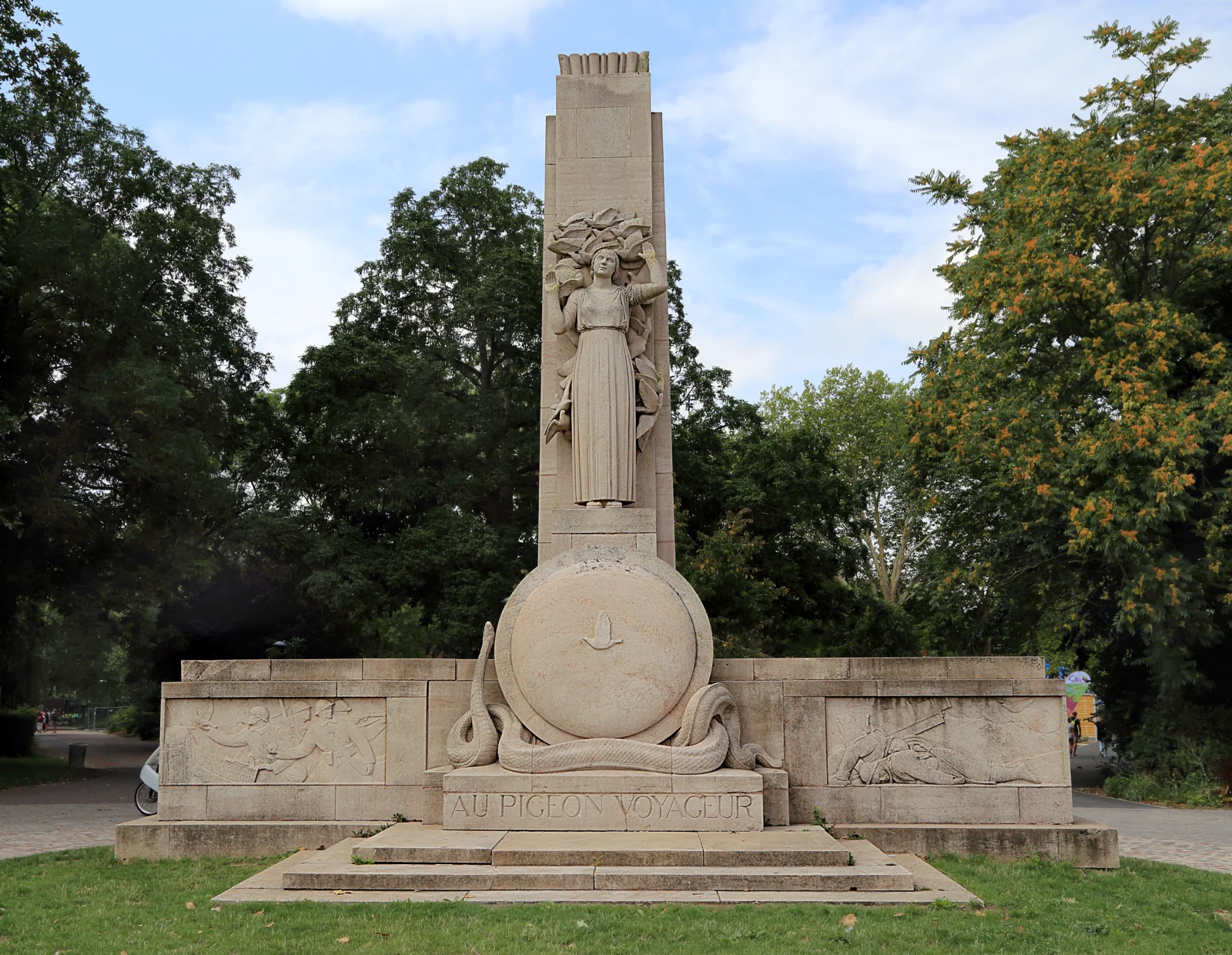
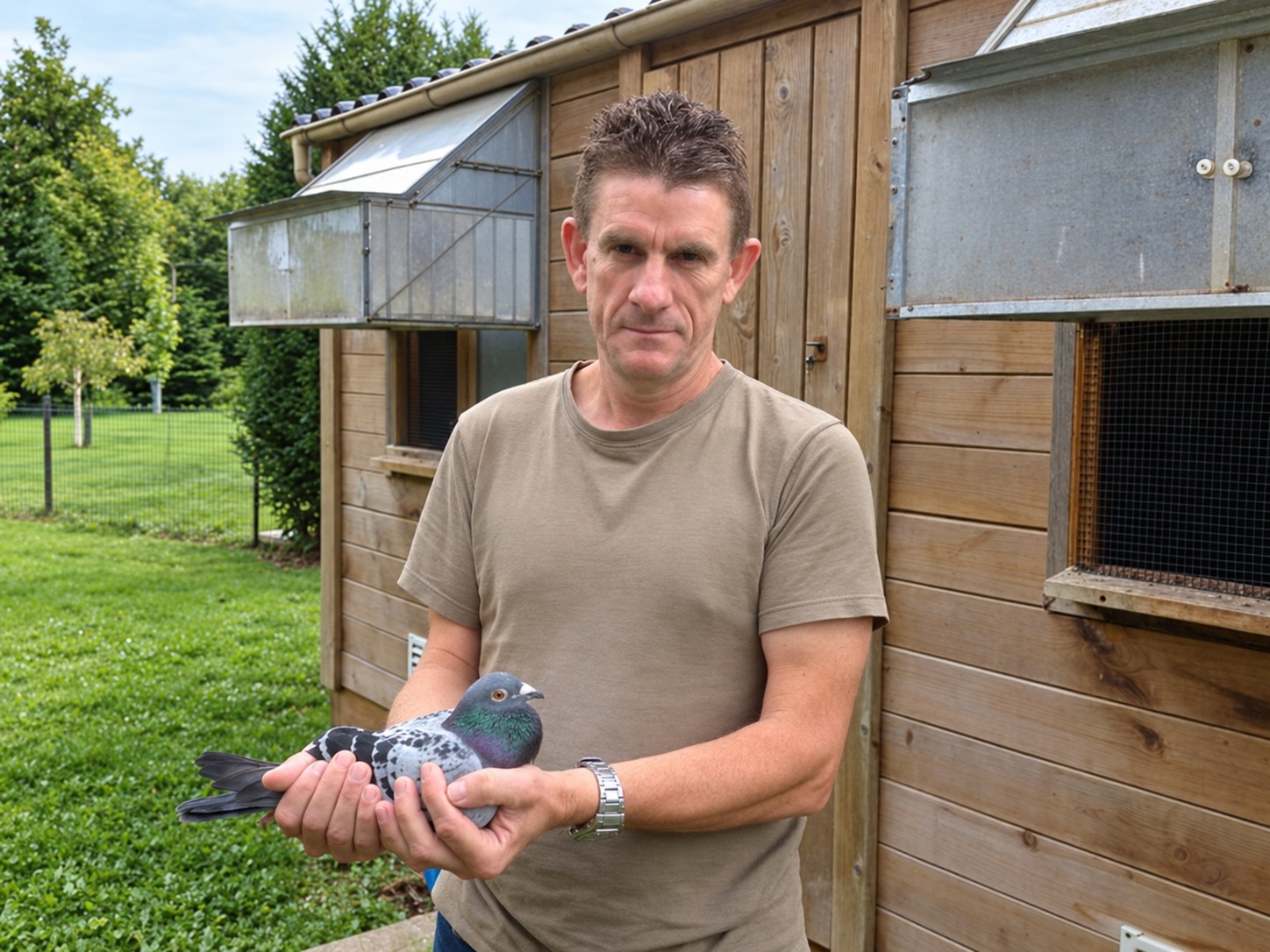








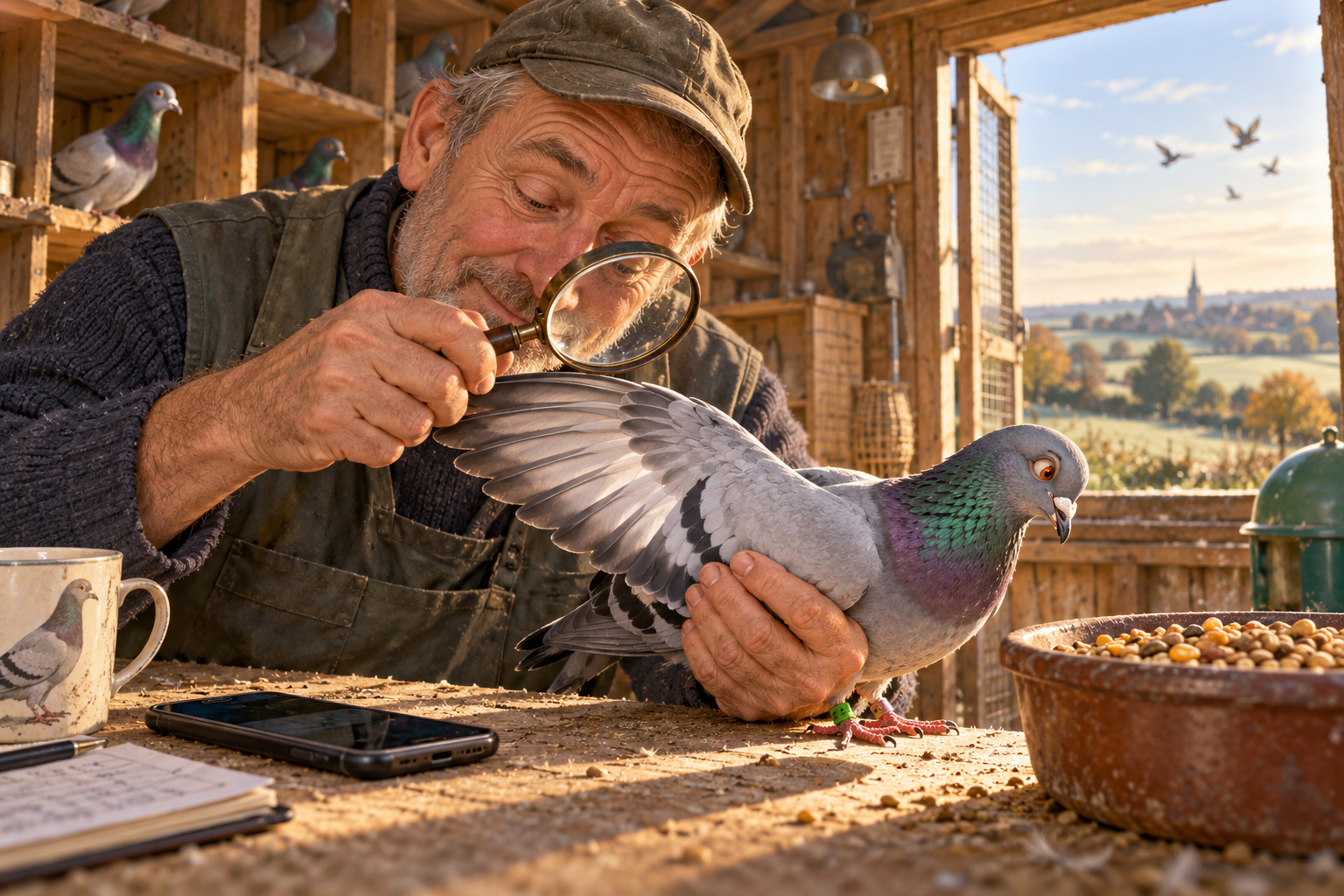
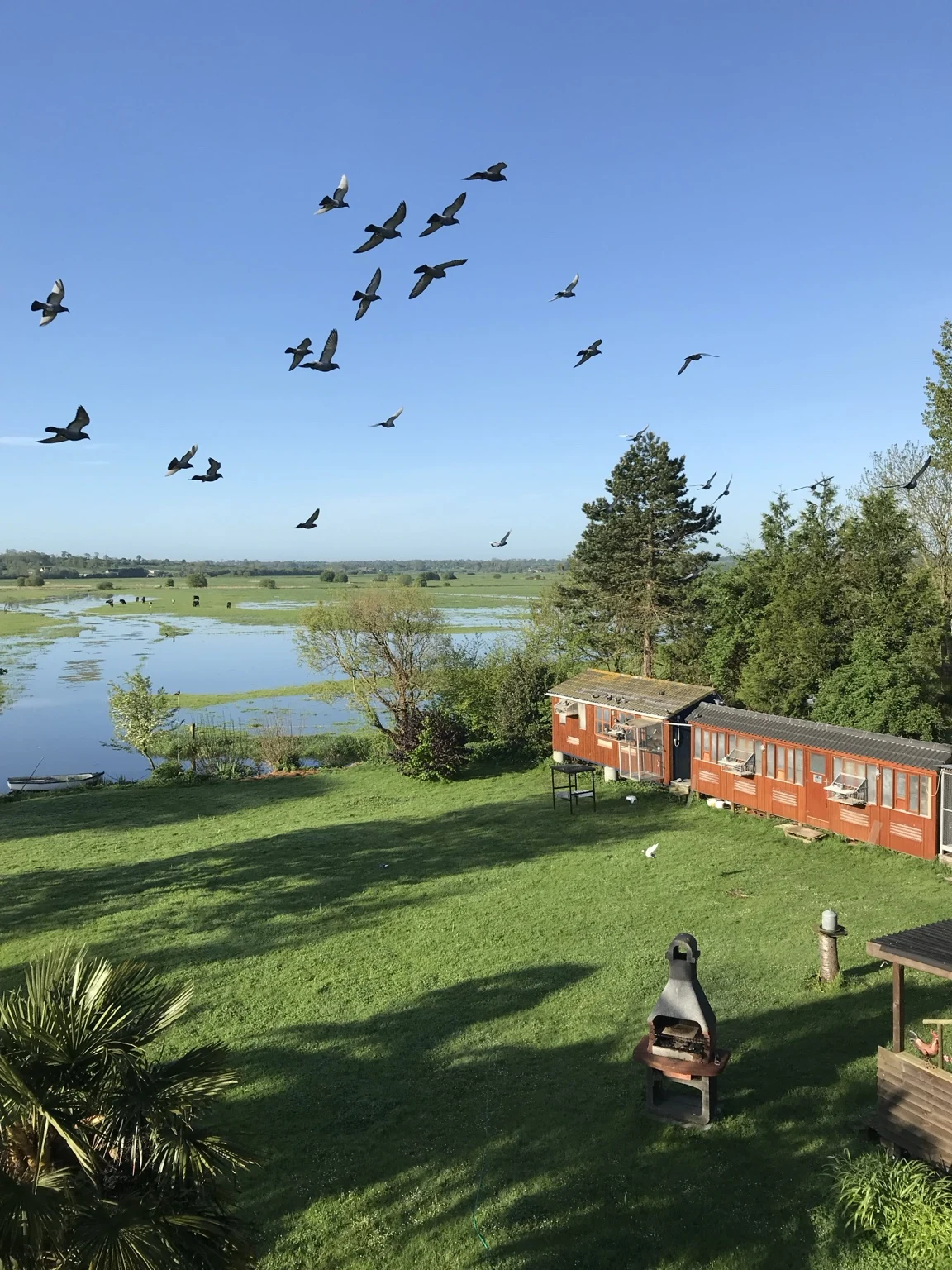
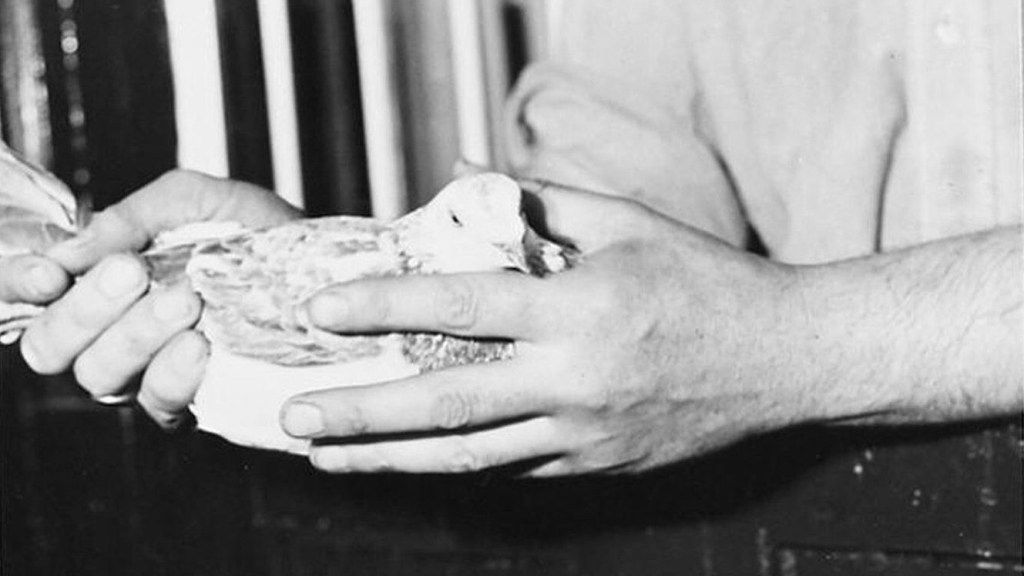



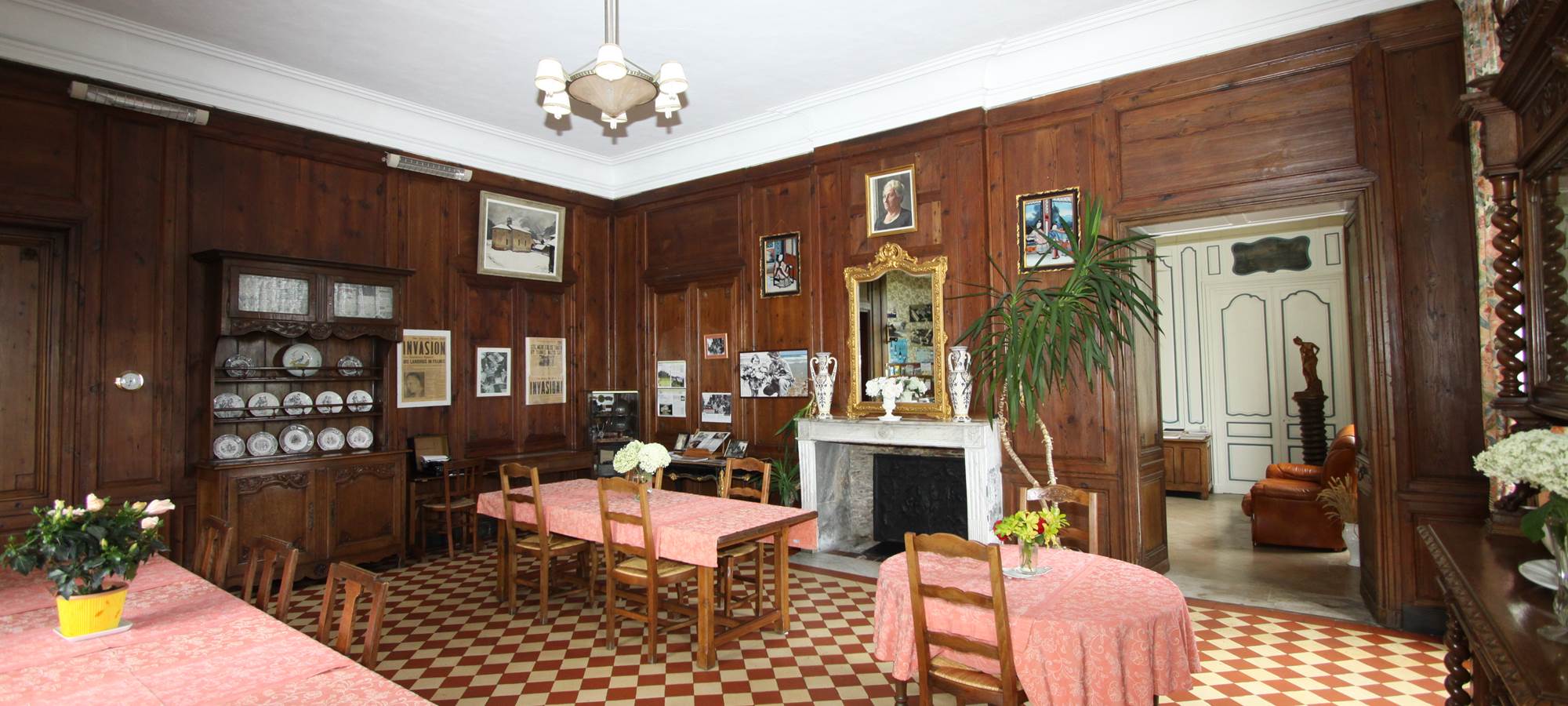







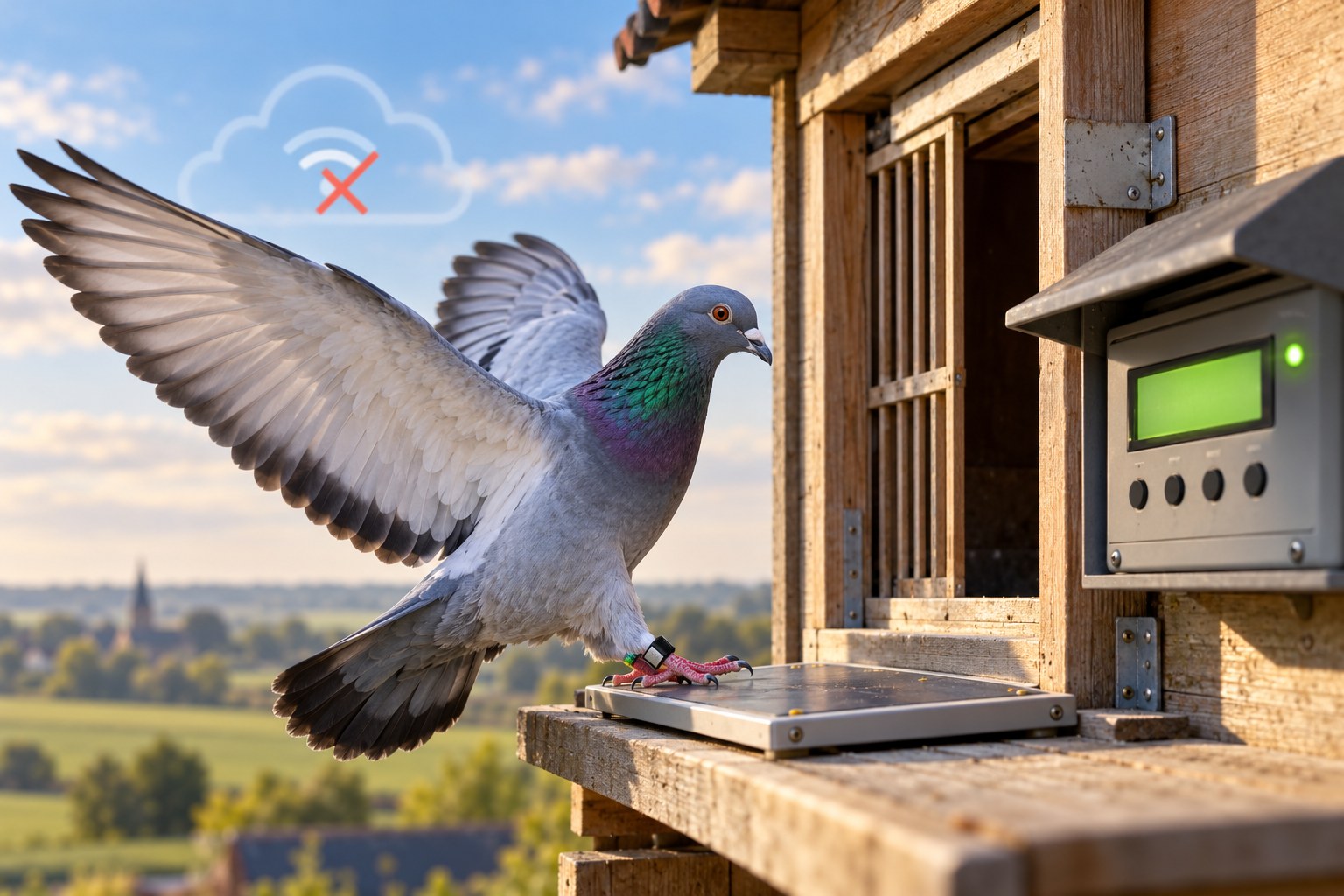





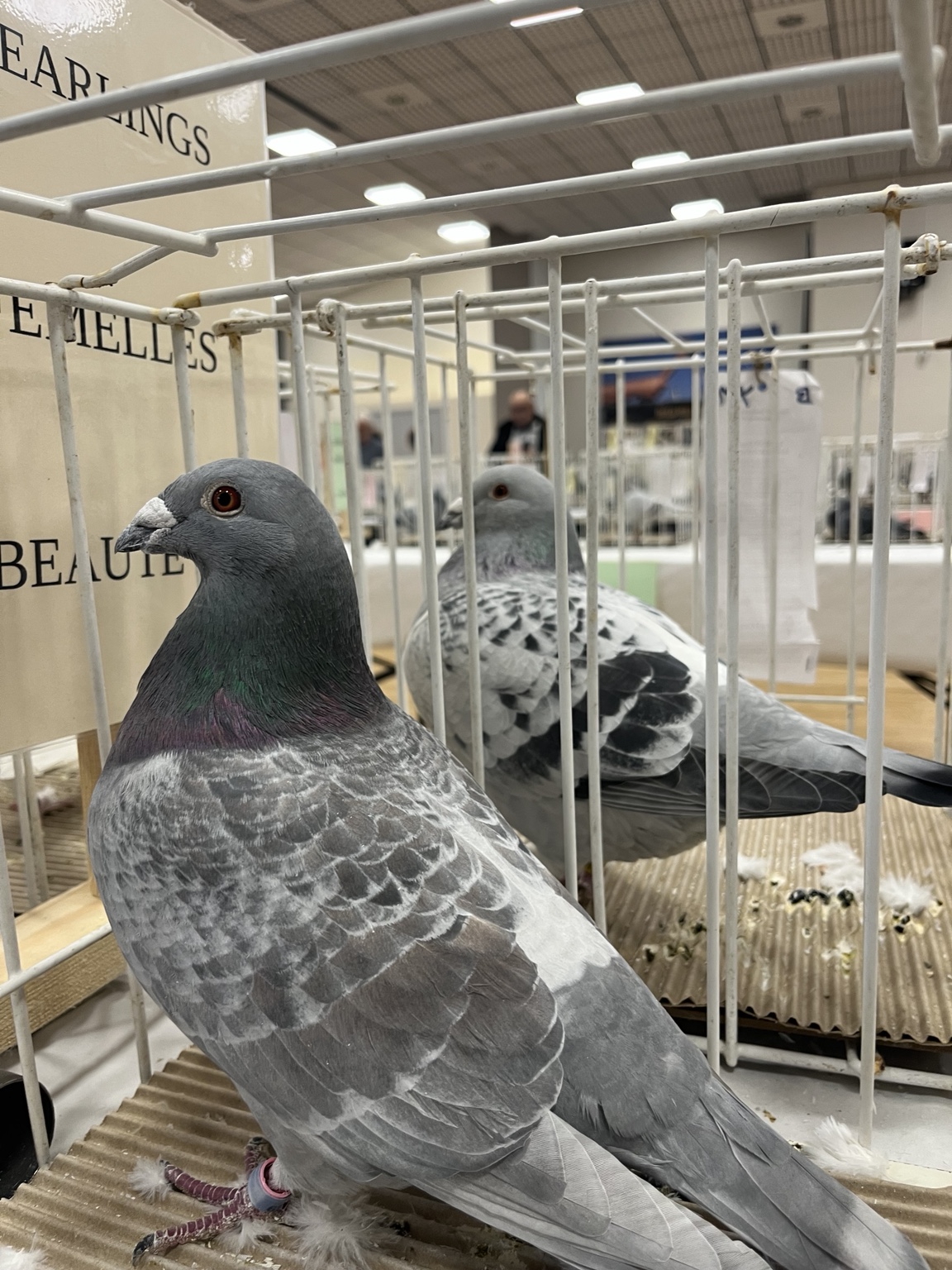



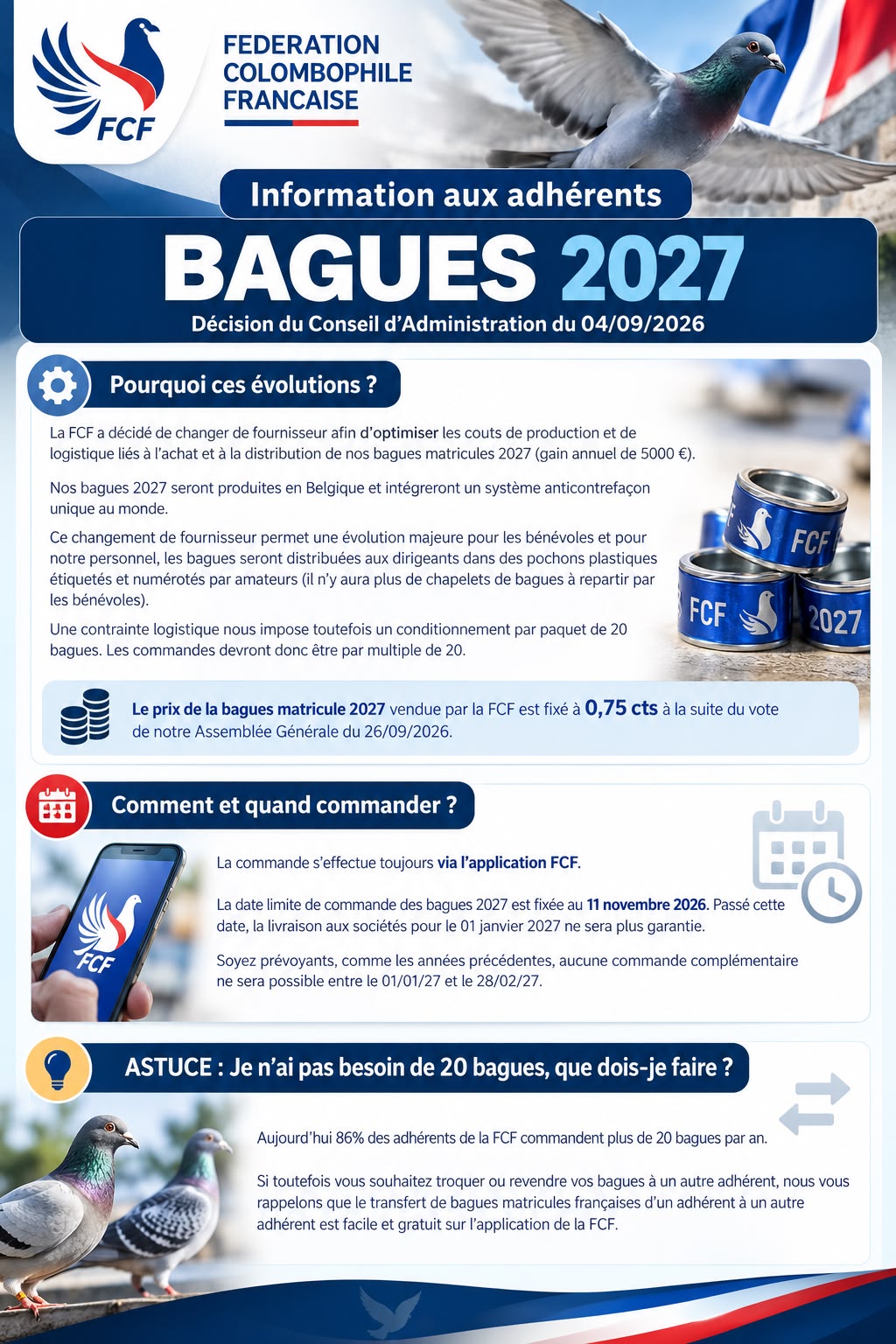

 2–6 December 2026 · Tampa, Florida, United States
 16–17 January 2027 · Blackpool, Britain
 21–23 January 2028 · Aveiro, Portugal